I don’t know about you, fellow readers, but this year has been a BEAST.
I’ll probably do a retrospective of everything later but you know what I, and probably a lot of you, need right now?
REST.
When December rolls around, I often find that my brain needs a break. So I read for comfort. In my case, that means reading lots of schmoopy romance novels and maybe getting through the last chapters of all the not-quite-finished books that have been laying around since May. Of course, I’ll be doing my annual re-read of A Christmas Carol, too.
For you, that might mean reading thrillers, a by-the-numbers murder mystery, or a really dishy celebrity memoir. (Do people still say “dishy”? Did I, ever?) Whatever you read for comfort–read some of that this month. And if you have any time in between holiday this and holiday that, finish up that book you almost got through back in June until you were distracted by something else.
What’s your comfort genre, fellow readers? What do you think you’ll read this month?
(Obligatory information: if you buy anything from a Bookshop link on this site, a commission will be paid. Thanks! )
The author of this speculative poetry collection is from Trinidad and Tobago. I’ve never been there, but I imagine that being islands, there are beaches there, with waves that flow across the sand and lap against the rocks in the same way that these poems flow across your eyes and lap against your thoughts.
It’s a very peaceful image and tone for a book of poems that are, in the words of the poet himself, based around the concept of the Elder Gods harassing American rappers for autographs. The concept is hilarious, and some of the poems elicit grins and smirks, but they’re also thoughtful, political, and in a few instances, beautiful and touching. These poems reckon with race, with sexuality, with culture, with utopia. They shine a light upward through the marginalizing shadows a certain famous creator of Mythos left lurking over horror fiction and if that light bounces back occasionally and points a beam or two back at the culture — why does J Cole say bitch so much, anyway?– it’s all part of the fun and food for thought.
It feels odd to review this, knowing that in order to really absorb and understand, I’ll need to read it again and again and again. It feels good to review this, knowing that I get to read these poems again and again and again.
You know the drill – I don’t star writers I’ve met. Instead, a drop of utopia and a special sharpie that writes on eldritch scales without bleeding to Can You Sign My Tentacle?
Listen. This horror novel has been out for two years now, so I’m just going to go ahead and start with a spoiler.
The monster is an elk.
If you’re like me and your initial response to that is to lean back and say “pfffft, LAME!”, then you should also read this book and enjoy a near-sleepless night speed-running the last 50 pages because you’re hoping to get the horror out of your head with the inevitable happy ending.
Whether or not that happy ending ever comes is up for debate, as is if that happy ending is even possible. When four young Blackfoot men go hunting in a restricted area, they’re not expecting the supernatural consequences of their actions to hunt them through adulthood. Still, it does, and they stumble through life poorly, never realizing that their selfishness and reactivity keep them from being the good guys they think they are. Their community–coworkers, girlfriends, local rez officials, an estranged daughter who’s had to have her dad banned from her basketball games–all clearly know and are disappointed in them, but they keep trying to maintain relationships and getting hurt. When vengeance comes, as horrible as it is, it’s hard not to feel as though our main characters don’t all deserve it to some extent. But the people around them suffer too, and that’s where the truest horror in this book lies.
Stephen Graham Jones pulls off a tricky thing in this book. He writes about some of the worst and scariest bits of a community without demonizing it or dehumanizing the perpetrators. The fallout from the bloody revenge delivered to the hunters hurts the women in their lives most. In the real world, indigenous women experience violence at horrifyingly high rates. Knowing that made parts of this book hard to read. But the violence never feels gratuitous or gleeful.
Instead, it feels like a reckoning, not only within the story but with what makes violence against Native women so distressingly likely in reality. This book is about revenge, it’s about grief, and it’s about grimly holding men accountable even while acknowledging that systems can marginalize them as well.
It also manages to have a whole chapter that’s nothing but a basketball game but isn’t boring at all.
(Fellow readers, this book is scaryscary. If you want to read it or other diverse horror books, check out this booklist in the Equal Opportunity Bookshop. Don’t forget–this blog has an affiliate relationship with Bookshop so anything you buy from a link on this site will earn us a commission. Hope you’ve had a great holiday, if you celebrate, beautiful people. Now–go read something good! Peace!)
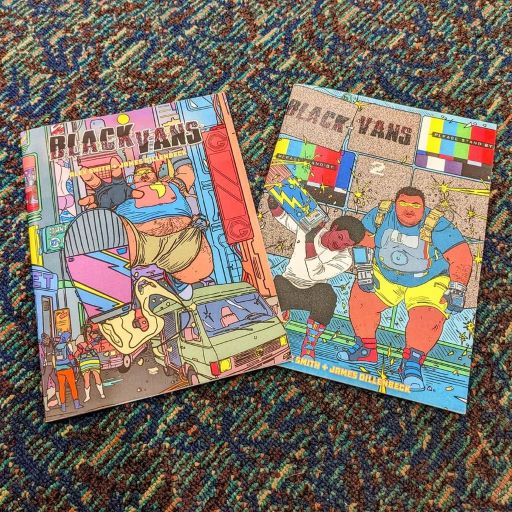
I’m having a hard time trying to figure out what I should tell you first about this cool, colorful indie comic.
Maybe it’s that these are INDIE-indie books. I literally bought them out of a backpack in a nightclub. It was the writer’s backpack, but still…
Maybe I should start by describing the main character Bo, a chubby gay Afro-Mexican hacker who spends his days providing intel for superheroes out of the back of an (oddly never pictured) black van. Bo isn’t the sidekick–he’s the main character. He’s sexy and vulnerable and flawed and bad-ass just like any other comic hero, but I think this is the first time I’ve seen anybody like him driving a series. In these first two issues, he’s mostly trying to figure out what’s happening, and I wouldn’t mind following his story further once he does.
Maybe I should talk about the setting of the comics and how wonderfully weird it is. The Black Vans world draws from cyberpunk, solarpunk, tech noir, progressive politics and queer club kid culture(is it still called that?), mixing them all into a delightful American champloo.
Or maybe I should tell you that I live in a carefully constructed nurturing bubble of my own design, where everyone is welcome as long as they are boldly, emphatically themselves and allow others the grace to be so. In that bubble, I sometimes forget what the world outside is really like, and reminders can be harsh. The latest was this weekend’s shooting at a gay club in my home state. When things like this happen, we grieve, we console, we rage, and we build and rebuild.
It’s books like this that can inspire us to do all of that, reminding me, at least, that others are out there building their own bubbles of hope, vision and inclusion, and that if we all build them big enough, eventually they’ll merge and true evils will have no space to breathe.
It’s a good comic: original, action-packed, and filled with folk who are unusual in books but totally normal in many of our real lives.
An order of bao to go and a superhero battle-cry to Black Vans.
(Beautiful people! Remember, these are extremely indie comics, so you can’t purchase them anywhere but the artist’s shop right now. However, if you want to support this blog–i.e., me and my reading habit–consider taking a look at the Equal Opportunity Bookshop. Anything you purchase there will earn a commission. Peace!)
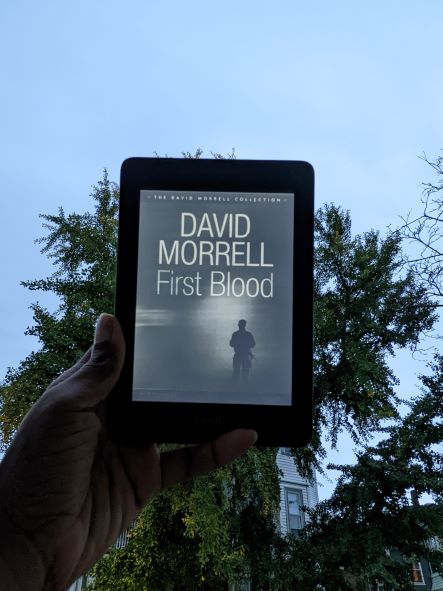
I remember thinking, the first time I watched the Sylvester Stallone film Rambo: First Blood, that it wasn’t what I expected at all. I expected a dumb, violent, muscley action flick. It is all of that, but wrapped around a surprisingly empathetic portrayal of a scared young Vietnam vet with PTSD using the only skillset he has to fight back against the authoritarian behavior of another PTSD-stricken vet from a different war.
All of the good parts of the first Rambo film are taken directly from the 1972 novel it’s based on. Every year on Veteran’s Day I tell myself to post a review of this book, which is widely considered the beginning of the action novel genre. Every year I forget, and this year I finally decided to post it late anyway.
Even though the book is about small-town conflict between a young homeless Vietnam vet (Rambo) and an older Korean war vet turned small-town sheriff, I wouldn’t actually recommend this to any of the vets I know. Even for me, who has not a lick of military experience, this book is triggering. It’s violent and gory and frighteningly intense at times. But perhaps for those of us who can be a bit self-righteously smug when criticizing the military and look down on soldiers, this could be an empathy-builder. War is hell, and it follows you home. That’s not a thing you can blame individuals for.
The events in First Blood are horrible. A police stop turns into a PTSD-triggered murder, a manhunt and a very tragic end for all involved. But while Rambo and the sheriff are both wrong, they’re also both sympathetic. They’ve both been scarred by combat and given no healing tools to reintegrate into society. Rambo is a scared kid, misused by his government. The sheriff is a man who never fully recovered from his own combat ordeals, and the two don’t understand each other until it’s too late.
This book is hugely dramatic and would probably be too broad for publication now. But like the movie it inspired, it made me think and feel past the violence. It’s also very well written. I can smell the mountains the characters are surrounded by, and the alternating points of view between the two main characters work well.
I’d say more, but I honestly don’t feel qualified to really unpack all that this book does. It shocked and surprised me, then made me fall into one of my empathy gaps, look around, and start mending my thinking.
A good therapist, a safe place to stay, and good post-combat support to First Blood.
(Beautiful people and fellow readers, this one isn’t usually my genre, but it was a nice stretch for my mind and heart. It IS very violent though, so reader beware. If you’re interested in this or any other books, please take a look at the Equal Opportunity Bookshop. We have an affiliate partnership with that site, and any books you buy will earn a commission. Thanks! )
Y’all, I know it’s late, but the month I’ve had, with all its glorious ups and downs? Bear with me.
Anyway, all whining and crowing aside(more about that crowing coming later) November is a great time to read poetry. The year is almost over, our brains are kicking into holiday mode, and at some point, more than a few of us are going to be struggling to read through turkey-induced somnolence.
For me, poetry is what I go to when it’s harder to focus or find time to read for long stretches. so let’s give our brains some grace this month and read poems.
However, this is still @equalopportunityreader so please put the poems about little sparrows, transcendent ponds, and icebox plums DOWN. Instead, check out a poet from a diverse community.
I think my book for this challenge will be Brandon O’Brien’s Can You Sign My Tentacle?, a speculative poetry collection about the elder gods seeking autographs from rappers, among other things. As a bonus, I went to World Fantasy Conference 2022 last week and got the poet to actually sign the tentacle on the first page of the book. *crowing commences*
If you’re looking for recommendations, check out this booklist. I’ll warn you though, that this list is woefully inadequate–poetry is vast and not my specialty, so I just put together some that I’ve read and hoped for the best.
What poet will you be reading this month, fellow readers?
(Friendly reminder, fellow readers–this blog has an affiliate relationship with Bookshopand if you buy anything from a link you click on this page, we’ll earn a commission. Go on…click. Buy. You know you want to. Write a poem about it, then come back and leave it as a comment. I’ll stop being creepy now. Peace!)
Happy Halloween, fellow readers. This week’s diverse bookish news update will be brief. Even though I no longer live in South Korea, I do still have a lot of friends there and have spent much of the weekend tracking down loved ones to make sure they’re safe after the tragedy in Itaewon. My heart goes out to those who survived, my condolences to those who lost loved ones, and if I’ve sent you a message and you haven’t responded yet, please get in touch?
Here’s a few interesting nuggets of diverse book news, then I’m going to go tell more folks I love them, as should we all.
Given how annoying James Patterson has been being lately, I feel very conflicted about the news that there’s a television adaptation of his Alex Cross series on the horizon. Aldis Hodge is set to star, and since I enjoy his acting, I’m even more conflicted. Just hire Black writers, y’all, please. [Deadline]
I had absolutely no idea that Mennonites have a historic presence in Central Asia, but writer Sofia Samatar–who has both Somali Muslim and Dutch German Mennonite ancestry–has just released The White Mosque, a memoir/travelogue of her own journey through the region, including insights on her ancestor’s travels. This sounds like a much better travelogue than the only other book I’ve read set in Central Asia, Apples Are From Kazakhstan. [LA Times]
I don’t know how this article manages to make the popularity of sexy romance novels on TikTok sound so deeply unsexy, but rest assured, the actual phenomenon is hot. Also, thanks to the specificity of TikTok’s algorithms, it’s pretty easy to find content in niches you enjoy, whether that be exclusively queer, racially preferenced, monster romance or whatever other legal, consensual thing you choose. [Huffington Post]
Last thing–no link here, but I am officially obsessed with the series adaptation of Anne Rice’s Interview With the Vampire., which is both like and thoroughly unlike the original series of books. I haven’t been so giddy to watch each new episode of a show since I was a kid and that was the only way to watch shows, whether or not I liked them. I can’t really put my finger on why I love it so much–I tried here but didn’t do a very good job–and none of the articles I’ve read encapsulate what I personally think makes the show so mesmerizing either. But if I had to, I’d say it’s because the center of the show isn’t the vampirism, it’s the relationships, which are a normal, relatable sort of toxic. The monstrosity of vampirism pales beside an eternity of abuse, but also makes that abuse and the way that it coexists with a love that is desperate to become healthy, much easier for us poor mortals to examine clearly. I could talk about this show for ages, but I’ll stop here and just say give it a watch if you can. [AMC+]
Peace, beautiful people. Tell the folks you love you love them, enjoy the last of autumn, and read something good.
(This blog has affiliate relationships with Bookshop and any purchases you make from links on this page will result in a commission being earned.)
This week I feel like doing an all-Black, all-excellent diverse book news update. Y’all down?
Let’s start with some iconic Black reader excellence. Legendary actor Sidney Poitier made a name for himself by starring in a lot of great film and stage adaptations of books, including Cry, The Beloved Country, To Sir, With Love, The Blackboard Jungle, and probably his best-known role, In The Heat of the Night(yes, that was based on a book.) Despite that, though, he apparently wasn’t much of a reader in his younger years and only got into books because it helped him train his accent. [Book Riot]
One thing that Poitier escaped neatly but Black artists still struggle with today is the representation trap. A recent article talks about how recent work by Black authors, including the boundary-pushing Luster, reckon with this. [New York Times Magazine]
Meanwhile in the speculative world, Black fantasy and science fiction authors–namely Tochi Onyebuchi and Leslye Penelope— are talking about how Black reality intersects with Black imagination. I feel like this is an endless conversation that often spawns bad or under-nuanced takes, but this conversation is actually quite insightful and I enjoyed it. It even made me want to read Onyebuchi’s latest novel, although the idea of a book about the dystopia left behind when all the rich white people leave earth isn’t appealing to me at all(with one exception.)[NPR]
Speaking of dystopia, this next story is grim and unreal, but true. Nebula-award-winning sci-fi writer Oghenechovwe Donald Ekpeki has been making the rounds of the conference circuit for this year and apparently has had to deal with visa profiling and alarming death threats. As Cardi B would say, what is the reason?! The article linked details his accomplishments and recent struggles, and links to some of his writing as well. [SF Bayview]
Black British author Malorie Blackman has finally finished her epic flipped-racism series Noughts and Crosses. She’s also released a memoir and judging from this interview, she’s one of the few who’s lived the kind of life that requires one. [The Guardian]
Last one; there’s only one week of October left and if you haven’t gotten your fill of spooky stories yet, go check out this list of horror stories by African writers. [Brittle Paper]
There we have it, fellow readers; an all-Black-everything book news update. If you are interested in finding diverse books by Black authors to read, click on the links above or check out the following booklists from the Equal Opportunity Bookshop;
I never had the chance to go on a Dark Side of Seoul tour when I lived in Korea, but they had a wide reputation as a scary fun time for English-speaking horror lovers. (In fact, I’m pretty sure one of the readers of this blog leads tours with them from time to time.) The company explores scary sites in the city with a special focus on ghosts and creatures from Korean folklore.
This graphic novel promises a book version of the same and is even bookended with tour guide narration vignettes. In classic horror pulp art style we’re ushered into ancient Korea, where an elderly hermit turns out to be to a fearsome ghost summoner. We then move to a tale that has echoes across cultures; one of a wise sister outsmarting an evil wizard. The stories are creepy, haunting, and well told. They also don’t skimp on the gore, which is not for everyone, so beware.
But… that’s it. There are only two full stories in this book and I was left wanting a lot more. I’m aware it was a passion project, funded by Kickstarter, with hopes of turning it into a full series eventually. It seems like the project has stalled, which is a shame because what’s here is quite good.
(This is a short one, fellow readers, but there’s really not much to talk about here. Check it out if you dare, and if not, please give this month’s diverse horror booklist a gander HERE. Don’t forget, this blog has an affiliate relationship with Bookshop and if you buy anything from a link you click here, we earn a commission. Peace!)
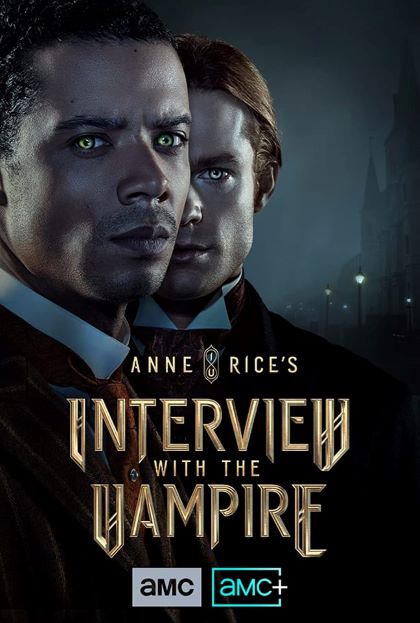
I finally got a little time to watch the first three episodes of the new television adaptation of Anne Rice’s classic monster novel Interview With the Vampire and so far, it’s excellent. I’m a crabby, critical person and I give the episodes I’ve seen so far 10 out of 10, no question.
This adaptation also doesn’t feel like an adaptation of Anne Rice’s classic novel at all. But that’s a good thing.
Hear me out. The trend lately has been to either do tediously accurate pitch-perfect book adaptations or go entirely the other way and do a far-out fan fiction version that claims accuracy yet pisses off all the fans. (Raise your hand if you’re mad about The Rings of Power or Wheel of Time. Amazon is not bringing us their best work lately, with the notable exception of The Boys.)
In contrast, AMC’s Interview With the Vampire feels like somebody wrote a much better vampire story, couldn’t sell it, then went back and retrofitted the character names, New Orleans, and the classic toxic bullshit that fans love about Louis and Lestat’s relationship in order to get the script produced.
It just feels so different and the changes made feel entirely organic to the story. In this version, fledgling vampire Louis is a Black Creole from turn of the century New Orleans. To keep his family’s fortune growing, he invests in brothels that peddle Black women to white men, an interesting contrast to his struggles with his own queerness and attraction to men. His Blackness doesn’t come across as tokenistic or didactic at all, and changing the time to the 1910s instead of mid-1800s offers a look at a period of Black history that is often bypassed. His presence in the red light district, his sexuality, and his mercurial personality are all presented in a way that doesn’t pander to stereotype at all, and I’ve been pleasantly surprised by how normal the character is within an extremely abnormal set of circumstances. Louis feels like a Black person written for a good story by other Black people. There’s a brief and hilarious moment when Louis complains about how Lestat–who is of course white, but French–doesn’t get American racism that was a little too normal and real, especially if you’re a Black American who’s dated a European or two.
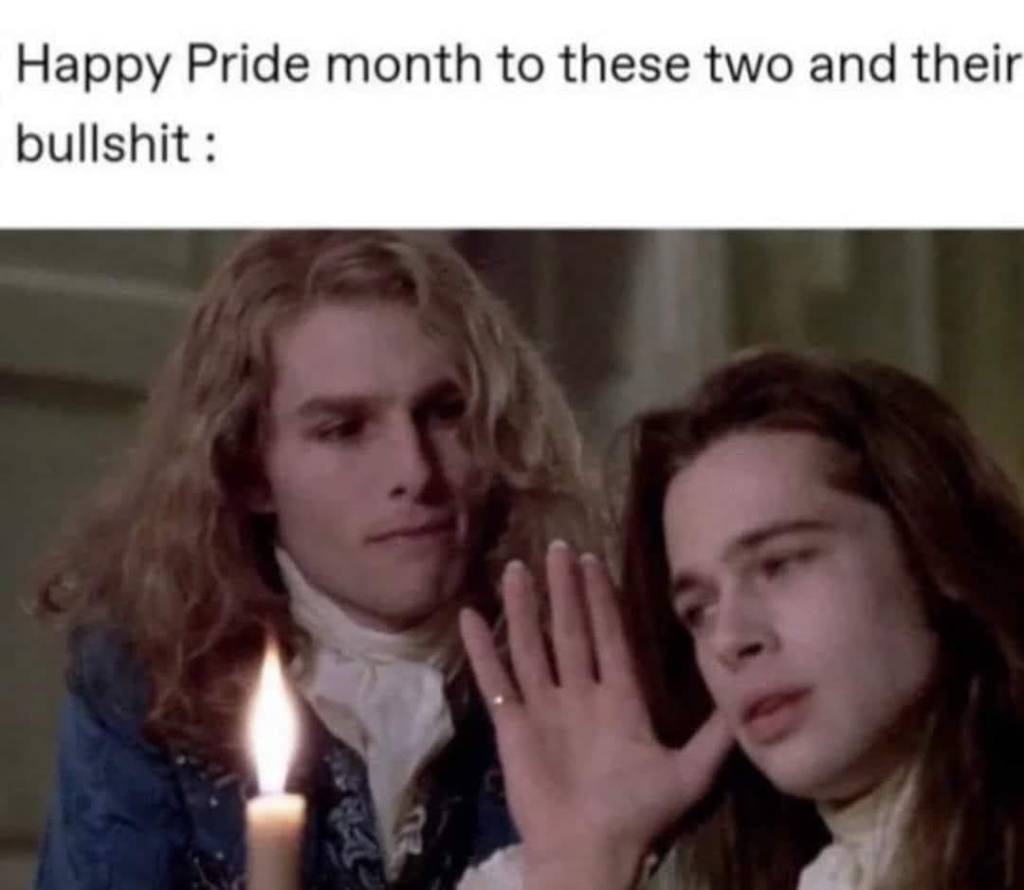
Source unknown
Speaking of –the series really embraces queerness and treats Louis and Lestat like a real couple. It’s an enormous improvement on the oblique angles of the 1994 film and it’s free of the romantic fetishization that marred the original novel. Instead of ruffles and emo glares and baroque proclamations of sexless devotion, this Louis and Lestat actually date. Aside from the whole blood-sucking vampires thing, they’re actually quite romantic and you can finally see exactly why the two of them have such a time-spanning, intense connection from the first. There’s attraction, seduction, and banter. At times the two of them are quite cute. They have a tendency to ruin it by suddenly eating people’s faces, but there’s a normality to their relationship–even the petty bullshit parts–that grounds the whole series.
This is helped by the fact that everybody brought their good acting to this party. I’d never heard of Sam Reid before and still photos of him were giving me nothing, but his performance as Lestat is mesmerizing. He goes from lovesick to terrifying to hilarious at the drop of a hat and is honestly amazing to watc. And Jacob Anderson? I’ve said before that I don’t usually like when British actors attempt to play Black Americans but he gets it right and brings a lot of nuance to the role. The scenes of him as a mature vamp living in Dubai contrast so well with young, scrappy, human him, and as a bonus, he can actually do an American accent. Not sure how New Orleans he sounds but he doesn’t sound like he’s from Transatlantia and that’s a relief.
I’m only three episodes in, but so far I’m really impressed. I’d watch this even if I’d never heard of Anne Rice or this story. There’s a lot more show to go–the next episode introduces Claudia and I really want to see how she’s portrayed because it could change everything for the worse if she doesn’t work. But I’m really into this and am excited about the rest.
Also–I think this is the first show I’ve seen that makes normal, general unobtrusive references to the pandemic.
Anybody else watching Interview With The Vampire?
(Beautiful people! This is an edited version of a quickie post from the Equal Opportunity Facebook, where I post bookish news and memes reflecting diversity. If you’re here looking for spooky season books that reflect our #ownnormal, I have a booklistfor you. As always, if you click and purchase a book from that link, a commission is paid to this blog which is how we buy our own books to pile on the nightstand. Enjoy your day, and read something good. Peace!)






 Equal Opportunity Reader