Something that I’m always learning is that discussions of trauma don’t always have to be epic. There is a time to dive deep into injustice, of course. But sometimes, it’s right to acknowledge something happened, commit to examining its effect on your life and community, and fold that understanding into the regular business of living so that it ends. Some things we mourn. Others we discover. Some we carry with us to remind us who we are now, and who people have stopped us from trying to be.
The latter seems to be exactly what this middle grade graphic novel is aiming for. There’s a lot going on in this sweetly illustrated story of Indian-American teenager Priyanka, who finds her immigrant single mother’s old pashmina in a closet and begins to crave connection to a country that she’s never seen. Domestic abuse, gender inequality, poverty, class exploitation, cultural alienation, third-culture discomfort and many other things are important to this story. Yet somehow, the tone of the book stays remarkably light, helped along by a few magical elements and Priyanka’s own innocence.
Sometimes all these different elements seem messy and clash, but they do so in a way that seems authentic to the ways that life is often complex and over-full. The art is cute and clever, and I’d easily recommend this to a preteen working through jealousy, culture clashes or any of the challenges of working through a complicated life influenced by things that happened long before they were born.
4 stars, a plane ticket, and a plate of mithai to Pashmina.
(This book is only available on Amazon, and y’all know how I feel about that. Still, as an indie, it gets the rare link-to-Amazon special–find it HERE.)
Does anyone remember when it was “weird” for women to read fantasy? I distinctly remember getting into an argument with a total stranger who walked up and started scolding me because “Lord of the Rings is for boys!” (Unfortunately for her, I was a grown and grouchy 20-something, not the teen she thought I was. She got more than she bargained for that day, and I still maintain she should have left me alone and ate her food…)
Things have really changed, as this new fantasy anthology for and about young women shows. 15 diverse writers have put together this indie anthology all about magical girls doing magical things. Most of them are Black; a few are Asian (although I think it’s worth pointing out that not all of these stories are #ownvoices). The stories are culturally, socially, and thematically diverse and I think there’s something in here for everyone.
That’s also where reviewing gets tricky. Anthologies are a little uneven by nature–with so many different writing styles and perspectives in one book that it’s rare to find one that’s 100% enjoyable for everybody from cover to cover. I won’t give this a star rating because while there were some stories here I didn’t care for, I recognize that they would definitely be appreciated by other genre readers.
That said, I really loved some of these. K.R.S. McEntire’s“Grace and Ghosts” is a great take on a crime solving medium tale, although the young Black heroes have slightly different concerns than The Ghost Whisperer would. Alice Ivinya gives us the beautiful fairytale “Wind and Silk” based on Chinese mythology. It includes disability rep and really sweet emotional authenticity in the midst of all the magic. “Faith”, by Sudha Kuruganti is perhaps the first urban fantasy with an Indian heroine I’ve seen, and has an interesting twist. And I need Amanda Ross to turn the funky Black 60’s monster hunter story “Funnel Cake” into a series stat — I’d love to see these characters do more together.
If you like magic and powerful girls, check this collection out–it has a lot to offer.
(Beautiful people! Thanks for reading, as always. For more books featuring women wielding magic, check out this booklist in theEqual Opportunity Bookshop. Also, don’t forget that this blog has affiliate relationships and if you click/purchase anything from here, a commission will be paid to the owner of this blog.)
I get asked a lot of questions about this blog/book portal. No, wait–I don’t get asked a lot of questions. What I actually do is field a lot of random assumptions about what Equal Opportunity Reader is, who I am, what I think, and what my political stances may or may not be. I don’t love explaining myself, especially on the internet, because herre bee trollz and I can’t bee bothered. However, I also don’t love being misunderstood, so I suppose it’s time to pull bits of my process from my brain and lay it out for perusal.
Welcome to my thoughts…or what passes for them, anyway.
I got a couple of messages lately. One of them asked me why I never critique literature from an “anti-racist” perspective.
sigh
I feel like I’ve blogged about this before, and I don’t want to downplay the importance of the concept of anti-racism or the work of Dr Ibram X Kendi and other scholars who champion it. However, I personally am more interested in whatever comes after anti-racism. I think it shows the lack of imagination in our culture that the best community response we have against racism right now is not another, positively defined, self-contained constructive thing–it’s just being actively against racism. “Anti-racism” says to me that our culture is still so backwards and still so centered on white supremacy as a foundation that we can’t imagine a solution right now that actually removes it entirely–only shifts it semantically. I’m not going to get into that any deeper at the moment, but I will reiterate I’m personally, academically and socially much more interested in what happens after anti-racism. It’s kind of like how for years everyone was talking about 1st and 3rd world countries, then developed and developing countries, but now because we have worked our way up to more equity based frameworks we’re using more accurate and egalitarian nomenclature like the minority and majority world. I hope and think that we’re going to arrive at better terminology than racist and anti-racist that is also more personally relatable soon, and I’m okay with waiting it out. I’m looking beyond anti-racism and I think it would be a little ingenuine for me to try and review books through that lens, no matter how popular the term is.
The other email I recently got simply demanded to know, “Why aren’t you speaking truth, Black woman! Where is your voice!?”
EXCUSE YOU?!
Okay. First of all, fool, I have a name. It’s Mel. Writing to folks and calling them by their demographic is not the flex you think it is. (Especially when you do not belong to the same demographic.)
Secondly, I am speaking. My voice is right here. Why aren’t you listening? Is it because I’m not saying the things you expect? Is it because I’m not saying the things that you want me to say? Is it because I’m not expressing everything from a framework of misery and you can only imagine Black women as perpetually oppressed and upset and downtrodden because that is how you feel about us? Is it because I read romance and repost memes making fun of old white classicists, which somehow doesn’t fit the narrative that as a Black woman who reads I should be sitting somewhere with a battered, tearstained copy of The Bluest Eye, weeping while I proclaim that I am Pecola and Pecola is meeeeeee…
Whatever, man. I read The Bluest Eyewhen I was 18 and got that all mostly out of my system back then. I find it interesting that even in the midst of #blackgirlmagic and “listen to Black women” t-shirts and so on, there’s still a very critical lack of recognition of our basic humanity and right to evolve and grow, even from the people who claim to be our allies and advocates. It’s strange how that filters down to even the books I chose to read. Something I constantly see as a Black woman with opinions on the internet is that people tend to think that I am stuck at the same state of understanding of Black women and our world as they are–yet these are people who just realized that Black women are real people three years ago. Miss me with that. I’m grown and while I’m not the smartest person in the world, I’m also not dumb enough to allow myself to get stuck at a single stage of development because it somehow defines my Blackness in other people’s eyes.
I suppose I should say I don’t get e-mails like this often–ever, really, although I have occasionally fielded similar criticisms from non-Black, non-white people in real life. This was a rare, one-off annoying message and I honestly expected far worse than this–I’m a 40 year Black lady, 100% average in every way, short afro, brown skin, wide nose. I’m fully aware that I operate in a body, a culture, and in spaces and times where people are often going to pack whatever I say or do into their existing stereotypes and projections–even when they think they’re on my side. I’m not only talking about racists–I find that everyone stereotypes Black women, even other Black women. Frankly, I don’t want to spend my energy convincing people of who or what I am or what I believe–you either get it or you don’t, and if you need me to aggressively shout about myself and what I do at you to be interested–you aren’t my audience, and that’s really okay.
But that said, I didn’t realize when I first started Equal Opportunity Reader that a lot of people would assume that I was either a nice Black lady trying to educate the masses on diversity or Madame Coon McShuckinJive, Corporate Sellout. The latter is laughable. My bank accounts aren’t fat enough, my white friends are all a little scared of me when I start to talk about race, and my last name isn’t Owens. But the former could stand some addressing.
If you’re hanging around the blog, the FB, the IG or elsewhere and you happen to learn some things, cool. But while I recognize that Equal Opportunity Reader has some educational components, that’s not my primary goal. I’m not really trying to teach a course on diverse literature or anything like that. I’m also not really trying to have the same liberal arts 101 conversations on race, class, gender, sexuality, disability and so on that the rest of the social justice internet seems to be constantly having. First of all, I don’t want to, and second of all (and more importantly), I don’t want to. That should be good enough, right?
Of course, it’s not good enough, so let me also say that I’m also not an activist and I didn’t start this site as a social justice project. Okay, let me clarify–I’m not a literary activist. I have been and am involved with activism and education, and in fact, all of my day jobs post 2006 or so have been actively engaged with community work in some way. However, I developed my politics and my sense of social justice long before social media activism and the way that people engage with this work generationally is very different. I learned social justice because I love people. I don’t always like people, but I love people and my lifestyle and choices are hopefully constructed in relational ways and centered on the actual living realities of people and the incredible sanctity, vulnerability and unpredictable nature of the human spirit and how that plays out in our interactions with each other.
What I’m trying to say is that I became involved in activism, politics and social justice because I loved people, not because I thought it made me ‘right’. There’s a huge focus on being ‘right’ in activism right now, and while I think that’s a net positive, it’s not necessarily how I think or how I work. I can’t really engage helpfully with the school of thought that operates in a perform-proclaim mindset. By that, I mean the habit of announcing you belong to a group that you believe is right and then performing the behaviors that create in group belonging and cohesion within that group with little to no accounting for organic relationship with others outside of these obligatory “right” behaviors. Again, there are positive aspects to this. If that’s how you get down, well, a house is built of many different bricks and we’re all needed. I’m just saying I came to the world of social justice a little differently and that approach does not work for me. Some of its ramifications are frankly off-putting. It’s what leads to people sending me demanding emails addressing me as “Black woman” and requiring ‘right’ behavior while ignoring the fact that my lived reality is right behavior. I’m not performing Black womanhood for internet approval, I AM Black womanhood in reality.
I’m getting kind of far afield into the nerd stuff here, but I’m saying all of this for a reason. I think there are a lot of online spaces that engage with education, with anti-racism, with social justice and with broader thinking on race and diversity and difference. I think these sites are critical and interesting and in many ways necessary, but I also notice that a lot of them either are made as a continual, angry, reflexive response to various supremacies or they seem to exist to teach people who are unlearning things like white supremacy, homophobia, ableism etc. Again, all of that is fine, it’s just not my ministry.
I feel as though all of this leads to a standard where people of “difference”–I say that because I can’t think of a better umbrella term for people who are not white, who are not men, who are not straight, who are not cis, who are not able-bodied, etc. and ‘minority’ is a stupid term to me because it’s just bad math–I feel as though this emphasis on reacting and teaching in our own self-defining spaces is actually pretty harmful. From the perspective of a bibliophile, I think it’s interesting that we are often reading each other through a literary or media analysis lens that defaults the white gaze. By this I don’t only mean the obvious. I also mean that whiteness always seems to function as an intermediary between for example, Black people and Asian people. We talk about each other in terms of how systemic white racism has taught us to see each other, ignoring the fact that many of our relationships and cultural links were forged outside of that. (It’s like Grace Lee Boggs never existed or something.) Transness is looked at through the lens of cisness, disability through the lens of ability, poverty through wealth, womanhood through manhood. All of this is counterproductive.
Not everyone does this and we should, of course, all try to do quite a bit better. We’re allowed to look at each other through our own cultural and experiential lenses and that shouldn’t be remarkable in any way. We are allowed to be our own defaults and define ourselves. We’re allowed to look at each other in solidarity, not competition. We can, and ideally we should approach others on their own terms, seeing everyone as their own self-contained normals, not using whiteness, cisness, straightness, maleness, middle-class-ness or anything else as some sort of othering yardstick. We’re smarter than that. You’re smarter than that, and more empathetic, too.
This applies to every cultural and social interaction but since this is a book blog, let me bring this back to land in the library. So, I’m a cis-straight, more or less able-bodied, not-particularly-interested-in-defining-myself-beyond-that Black American lady. I read books by South Asian women. I read books byArab men. I read books by Deaf white women. I read books by Latinx lesbian abuse survivors. I read books in translation by authors from all over the world. I read books by other Black women. I read them all from my own cultural and social perspective, with the intention of understanding other people’s perspectives as their own discreet self-defined things not dependent on the opinions of the mainstream, and SO SHOULD YOU. That’s what I am consciously doing, and it’s what I want to encourage others to do as well.
I’m not going to sit here and lie and say that white supremacy and American imperialism and wild capitalism have not in any way influenced my or your development or education. But I’ve been out of formal education for much longer than I was in at this point, and to assume that a person stops learning anything at all when they receive a diploma is really kind of jarring. I mean, if that’s how you live, sure, but…um…did you see where I typed that you’re smarter than that? I meant it.
I’ve been pitching a lot of reviews and short essays about reading and books and literacy to various bookish outlets lately and I often submit my work involving writers who are not also Black women–partially because I think a lot of my writing on those authors is better, frankly, but also because I notice that the trend now is to have reviews written by #ownvoicesor white people. At best these are white people who have a marker of difference when seen through a certain lens–so a trans white woman or a disabled white man, for example. Equal Opportunity Reader started as (and is still primarily) a Bookstagram and there are a startling amount of creators there who have massive followings based on the gimmick of being cis-straight-able white people who regularly acknowledge that other types people also exist and write books. I think what these creators do is great but it’s clear from IG and other spaces that the odds are stacked in favor of “minorities” who review and think about literature about themselves in the context of literature by cis-straight-able white people or in favor of those same white people who are doing the magnificent favor of noticing that most of the world is not them. I don’t mean that to sound bitter. I’m just pointing out that there seems to be very little open space for those of us who are not identified with “standard” demographics to talk about the fact that we experience the world and have globalized points of view outside of that very narrow imposed lens. (Think of the perspective of a Nigerian in China, a gay disabled Mormon man in Florida, a neuroatypical British Filipina in Saudi Arabia, an Anishinaabe in Ghana.)
The messaging being given by the current trends is really a softer, gentler, more woke version of the idea that everything still exists in contrast to whiteness, straightness, able-bodied-ness, neurotypicality and so on. We can talk about ourselves. White people can talk about themselves and us. But the idea that a Black woman might have something of value to say about a book by an East Asian woman, that my cultural and social foundation has something of real value to say about hers and hers about mine without using colonial whiteness as an intermediary is still seen as largely unrelatable in some ways and unmarketable in others. That blows my mind, because this is basic empathy and cultural competence for beginners. Imagine empathy being unrelatable and unmarketable!
I constantly say and write and even have on a shirt that “I am my own normal”. We are all our own normal and part of that normality is trusting our understanding of the world beyond us through our own context and not just through a lens of normality that we are educated and pressured to use. Once you get to a certain point of thinking–and I can’t say this for everyone, I’m really just talking from my own experiences as a Black woman here although friends and colleagues in different demographics have expressed versions of this–but once you get to a certain point of development socially and intellectually in this world that sees so many of us as somehow lacking or abnormal, you either internalize that outside perception so deeply that it warps you in irretrievable and ultimately soul destroying ways or you begin to normalize yourself and create your own lens. That doesn’t mean the outside perceptions disappear, it simply means you develop a sense of inner value and the freedom to see yourself as a very ordinary and acceptable part of the wider world rather than as a broken, defective or undesirable oddity.
But look, we all know this already, right? We’re readers. We’ve been developing our own understandings of things since we first got a library card, right? My point is that if we really do believe that there is something beyond simply “anti-racism” and if we really are looking at the world globally, it’s important to live and behave as though while racism, colonialism, human tribalism and the prejudices and oppression that they bring influence every corner of the globe to some extent, they do not have to be the only or primary way we see the world. We don’t have to see the whole world as a thought exercise consisting of “us and regular white dudes”. We don’t have to restrict our reading to books by us or books by white dudes unless that’s what we want to do. I think there’s something very useful and very central to un-colonizing minds and removing supremacist thinking in reading works from a variety of other backgrounds that don’t fit the supremacist lens because then you SEE how these plagues of isms and oppression and colonial thinking have wounded everyone and how tightly our liberations–in big and small ways, from the books we read to the governments we make–are bound up together. You also see that we are not collectively or individually defined by our oppressions, not entirely. We all have joy. I think it is important to recognize that joy is a part of the universal human condition and see that and acknowledge that and empathize with that in each other. I think it’s very easy to see everyone as an oppressor or the oppressed but the natural state of humankind is not that sort of sorrow–it’s joy. It’s togetherness. It’s creating the beauty that is human culture and expressing that because we are our own normals.
That, I guess, is what the point of this blog is. I feel like it’s a small thing for me to be a Black lady in the world drinking words not only from the wells I’ve been told are for me but sampling entire oceans. It’s a small thing, but if we all learn to look at everyone on their own terms and form our own personal sense of empathy through books, it could be a bigger one. This is one of my ways of practicing something I believe is true–that true equity and empathy lie in learning to relate to each other through shared perspectives, not through application of warped outside narratives.
But hey, what do I know. The truth is, I’m a regular person who likes reading a lot, is too stubborn to accept limits and spends way too much time on the internet, which is why I’ll end this here for now. Peace and joy to you, fellow readers. Go and read something good.
(This is where I have to obligatorily tell you that this blog has affiliate relationships and if you click and purchase anything from a link here, a commission will be paid. If you’d rather not click around a bunch, check out the whole Equal Opportunity Bookshop, and its booklistsshowcasing human diversity.)
(This book seems to be out of stock at Bookshop, beautiful people. To check if it’s been added since this was posted , please click HERE.)
There’s a moment in this book where our heroine Tarisai is awoken in the dead of night to go rescue someone. The scene isn’t really unusual in a fantasy story, except for the part where she takes off her silk headscarf and frets about her edges before heading into adventure.
It’s a simple scene but it got a big reaction from me–as in, whoa. Is this what it feels like to be represented in fantasy worlds? To have a regular–well, erm, magical, but otherwise very relatable Black girl as the heroine in an epic fantasy? The winner who beats evil, wins the heart of all the realms and sets the standards for all that is good and heroic in an imaginary universe looks like me and my folk? Wow.
I don’t know if I’ve ever seen this done so effortlessly in a book before. Viva la #readBlackjoy!
Tarisai heads a story that has many of the familiar tropes of fantasy epics. There’s an empire ruled by an evil Emperor and his magical council, and his heir who hopes to change everything by being cheerful and kind. There are diverse denizens of diverse realms, all with their own magic and cultures based on real life regions of the world.(Note that I said the world, not just Europe and Europe adjacent. Nigeria, Ghana, China, South Korea, India, Libya all get equal billing alongside Ireland and the Baltics.) Quests, magic objects, spiritual guardians, otherworldly beasts, snarky old mentors–you name it, it’s there. But Raybearer is also focused on justice rather than conquest, which is unusual for this genre but sorely needed. The story is one of hope, love and triumph. There’s no grimdark, gross outs, or tortured love triangles. No part of the hero’s journey depends on genocide, revenge, or hatred. Rather, this is a story about learning to use one’s gifts to make the world a better place, whether or not it’s expected in society.
It also helps that out of the recent Black fantasy releases, this is probably the best written. There’s not a slow moment in this book, and the worldbuilding is lush and imaginative. There’s a lot of subtle rep and diversity. Also, I am far too old for book boyfriends, but– SANJEET! My goodness. catches vapors 😊
(Beautiful people,so far my favorite reads of 2021 are this and The Gatekeeper’s Staff–both excellent fantasy novels featuring Black cultures heavily. This is a good year for #blackjoy, and I hope you’re reading your share of it! If you want to see more books like this, check out the blog and the Equal Opportunity Bookshop. Also, be aware that this blog has affiliate relationships, and any clicks/purchases will result in a commission being paid. Peace!)
(This title is not currently available for download. Find other works by this author at Bookshop.)
Around this time last year, there was a whole lot of sound and fury surrounding the Reclaim Her Name project from Bailey’s and the Women’s Prize, which republished 25 titles by famous women that had originally been released under male pseudonyms crediting their ‘original’ names. The series wasn’t particularly well executed and disappeared after some well-deserved controversies over deadnaming and soft misogyny. I managed to download it before it was unceremoniously scrubbed from the ‘net for being a sloppy mess and sometimes I rummage through the files. There have been a few nice surprises– Ann Petry’s 1939 short story “Marie of the Cabin Club” is one of them. (Petry eventually gained success under her own name with the 1946 bestseller The Street, but her early work was signed Arnold Petri.)
This story is, in many ways, nothing special. It’s a pulp adventure less than 10 pages long, involving a bar waitress who accidentally saves the life of the headliner at a jazz club and slowly falls in love, despite the fact that he seems enamored with a mysterious European customer. It’s a quick, cute read, but it seems to have drawn a lot of reviewer fire for being too short, too pulpy, not deep and nothing like The Street.
About 3/4ths of the way through my own read of this, I realized that this is a depression-era story by a Black woman featuring a regular Black girl hero who catches the eye of the heartthrob(also Black), has an exciting adventure, a close call, and a textbook happy ending. It’s nothing special, sure–in fact, it’s extra regular. But the main characters are Black, most of the action takes place in a Harlem jazz club, and none of it relies overtly on racism, trauma or oppression.
In other words, this short story is an unexpected slice of #readBlackjoy. It just goes to show that our history may include shared trauma, but it also includes shared romance, adventure, and pure entertainment.
It’s not deep or classic, but it is fun. 4 surprise stars to Marie of The Cabin Club.
(Thanks for reading, beautiful people. This book is sadly no longer available for download, but you can find other works by Ann Petry in the Equal Opportunity Bookshop. Just be aware that any clicks and purchases you make from this site could be to affliate links, and a commission may be earned. Peace!)
Danny Tozer is an awkward teenage girl surviving the worst part of high school. One day, while hiding behind the mall and painting her toenails, trying desperately to grab a few moments of peace, a superhero fight breaks out overhead. In Danny’s world, these aren’t unusual. What is unusual is the defeat of the world’s greatest superhero Dreadnought, who falls at Danny’s feet, mortally wounded. With his dying breath, he hands her his mantle, a mystical object that not only gifts its wearer with superpowers, but remakes them physically into their ideal self — bigger, stronger, handsomer.
In Danny’s case, the mantle makes her cisgender.
Yep. Not only is Port City’s newest hero a shy teenage lesbian, she’s also a closeted trans girl and has transphobic parents. Becoming her ideal self causes problems that superpowers can’t solve–especially when it turns out that some of the most powerful heroines on Earth are TERFs, her best friend is an undercover incel, and the Nemesis is coming–whatever that is.
Dreadnought is wild, y’all. I’ve never read anything quite like it before and while I’m not gagging for the rest of the series, I’m pretty sure I’m going to read it eventually. It’s a really well-balanced blend of eye-popping hero action, YA musing, and sensitive coming-of-age moments. The author is trans herself, and the way she writes Danny is a great example of how important #ownvoices writing is. I often find trans characters written by straight authors a bit emblematic or tokenized into trauma parades. But like most YA teens, Danny is all inner life rather than outward symbols, and I loved that. She really is just going about her business when her wildest dreams come true–with a catch. Her transness is not weird to her, but her superpowers are. It’s both funny and infuriating when some characters see it the other way around.
There’s some really good action in this book too. Watching Danny come into her superskills is edge-of-your-seat exciting, and her mentor–another teenage hero–is also pretty badass in a fight. This is a superhero story, not a “trans people display trauma for cis entertainment” story, and it lives up to its potential.
4 stars and all the nail polish from the mall to Dreadnought.
(This one was a surprise, beautiful people–I wasn’t sure what to expect between these pages, but I liked what I found. If you want to check it out for yourself, consider purchasing it from the Equal Opportunity Bookshop, but please know that we have an affiliate relationship and if you click/purchase a commission may be earned.)
Materena is a lot of things–a professional cleaner, a proud Tahitian, a devoted customer at the local Chinese store, the relative that is nice to everyone in the family, and Pito’s wife. She’s also the mother of three children–tough guy Tamatoa, sensitive mama’s boy Moana, and strong-willed daughter Leilani. It’s Leilani who challenges her mother the most– the two could not be more unalike in education, temperament, relationships and aspirations. Still, they love each other deeply. As Leilani grows up, their relationship shifts from parent-child to more of a friendship, and they inspire each other to grow and become better women in amusing, touching little ways.
I think the best thing I can say about this book is that as soon as I finished it, I immediately went to buy the other two the author has written about the same family. I love stories of community, stories of family, stories of growth and change in relationships. Frangipani is all of those things. You really feel like you’re living in Materena’s obsessively tidy house where leaves always need sweeping and ambitious Mama Teta or cousin Georgette (who, incidentally, is trans) might stop by and ask for a favor before dinner needs cooking. There’s a familial warmth and lightness to this book which carries over to the excellent writing. It’s the kind of novel that makes you forget you’re reading–it sort of sweeps you into its world and spits you out at the end, a little rumpled and homesick, missing your favorite character’s voice (and in my case, also wondering exactly what breadfruit tastes like.)
This book was a joy and I can’t wait to visit Materena’s little house near the Chinese store again.
(I loved this book, fellow readers–it was surprisingly comforting and cheerful. If you choose to purchase it through the Equal Opportunity Bookshop or any other avenue, let me know what you think of it! Also, be aware that this post and the blog in general contains affiliate links and if you click/purchase, a commission may be earned. Peace!)
The world seems to be slowly opening up again, doesn’t it? Travel is back on many minds and tourism is ramping back up in many economies, including here in South Korea.
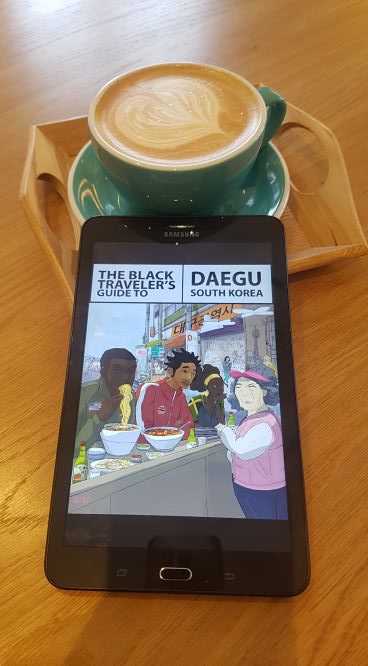
The Blerd Explorer is just in time with his guide to Daegu, a city in southeastern South Korea. Depending on who you ask, it’s either the 3rd or 4th largest city in the country. Every time I’ve visited I’ve had a good time. Even so–this book makes me feel like I’m missing out! There is a lot to do in Daegu and this guide does a great job of highlighting how much fun the city is. There’s good food, green parks, hiking trails, night markets, festivals and so much more, all captured in great photos and clear text with a few fun anecdotes mixed in. The author did a fair bit of research as well and includes COVID-19 restrictions and schedule changes in helpful places. All of the spots mentioned in the book are collected in a handy index in the back. All in all, this is a much more thorough and exciting effort than the previous guide in the series (for the city of Incheon); although both guides are helpful, this one made me actually want to book a trip to Daegu ASAP.
One of the most interesting sections is a handful of travel testimonials from Black people who either live in or have visited Daegu. Daegu has a reputation for being a bit chilly to outsiders that has only increased since the city was the epicenter of Korea’s COVID-19 outbreak last year. Additionally, Black travelers face a unique set of challenges when we’re abroad–everything from stares to hair product challenges. The testimonials, all from seasoned Black American travelers, are thoughtful, detailed and will probably go a long way to set a Black travel newbie’s heart at ease.
My only quibble with this book is that there are quite a few typos and formatting issues. The info included is so helpful that I was largely able to ignore them, but Mr. Explorer! DUDE. We’re teachers! Get it together! 😂🤣😂
(Thanks for reading, beautiful people–be sure to show The Blerd Explorer some love at his sites and by buying his book or requesting a copy at your local libraryWhile there are no affiliate links in this review, there are plenty throughout the rest of the site and if you click and purchase anything through one of them, a commission may be earned by Equal Opportunity Reader. Peace!)
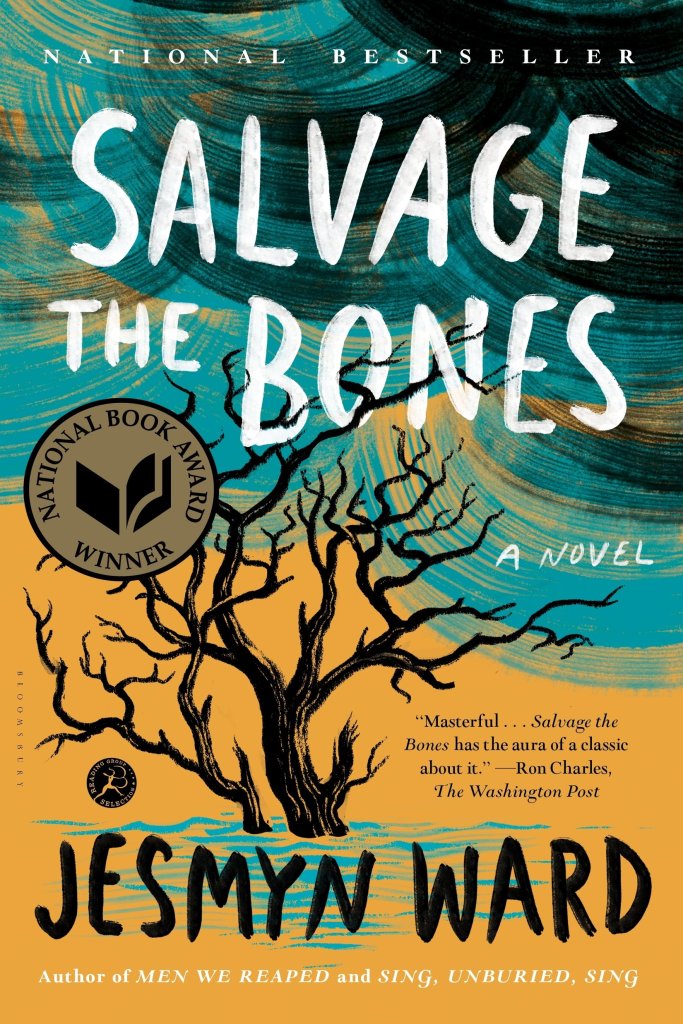
We all come from families and have family stories– whether epic, painful, dramatic, loving or joyful. It’s the last two that I think are particularly important to find in stories of Black American families, especially in the current climate. No matter the trauma and oppression we may face in America, Black families still have love, affection and happiness. They’re critical parts of our cultural narrative and should be appreciated. Here’s a mini-booklist of my favorite titles that feature the strength and love of Black families in the USA.
(The usual disclaimer: I am not a literary expert, I’m just a lady with a blog who reads a lot. Be nice if you comment, and for legal reasons I have to tell you that this blog has affiliate relationships and if you click and purchase anything from a link you find here, a commission will be earned.)
This may seem like an odd choice given its setting in the Jim Crow Deep South. However, the Logan family’s togetherness and love shields and nurtures Cassie Logan and her 3 brothers as they protect each other and hang on the family farm. This is part of a series that is well worth reading in total. It’s also the source of the quote in the title of this blog, which in turn comes from this song.
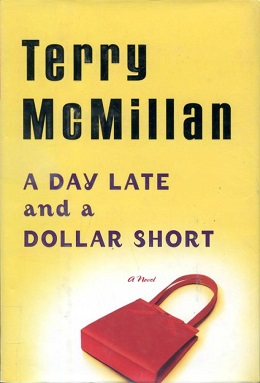
The multi-generational Price family in this novel have problems with addiction, abuse and money. Still, this is a very normal family dealing with the dramatic parts of life together–and while they’re culturally very Black, the book isn’t here to explain that, just the drama. This is probably my favorite McMillan novel, and it’s a lot of fun, too.
Ava moves in with her much older sister Joyce after a major health setback. Despite that–or maybe because of it–Ava finds a new partner and Joyce adopts an abandoned baby, and the sisters find themselves by forming family. Of course, their all-black Michigan town has a field day with the resulting drama…
I’ve written elsewhere about how personally inspiring this book was to me as a young woman. Find it HERE.
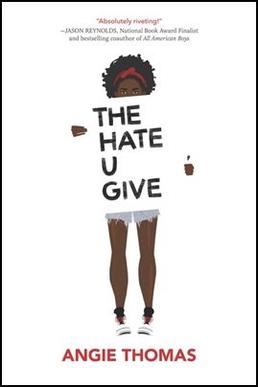
Strange choice, I know. This book is not about family–it’s about police brutality and a teenage girl’s response to it. Still, every time I re-read this book I’m struck by how loving and strong the Carter family is, and how real they feel. Star Carter’s family is what gets her through the devastating events of this book, and for that reason I include them here.
This is another book that is not just about a family. It’s about the tragedy of Hurricane Katrina. However, teenage Esch, her brothers and her father have such genuine relationships with each other and their neighborhood that you can’t help but focus on that. Even in the most harrowing parts of the story, you know they’ll get through it together.
Happy Mother’s Day to all my fellow readers who’ve added extra pages to their family books! I’ve been trying to think of my favorite literary mothers all day…and failing. Healthy parental relationships are not often the stuff of literature, are they? Still, here’s hoping you and yours had a fabulous day.
Also, for those of us who do have more, um, literary relationships with our moms–I know I do–I just want to say, I see you too. I understand how hard it is, and I see you, judgment-free.
Anyway, on to the books.
Jhumpa Lahiri was born to Bengali-speaking Indian immigrant parents in London, moved to Rhode Island when she was two, and after getting her Ph.D. at Boston University and becoming a globally-recognized author moved to Italy to learn the language, culminating in writing her most recent novelWhereabouts in Italian and translating it into English herself. Lesser folk could never. Also, I just realized that the character of Pushpa Sondhi in Sakesh Ratyal’s novel No One Can Pronounce My Name is totally based on Lahiri, and things make so much more sense now. [via The Guardian]
In the world of comics, there’s a new Captain America, and he’s indigenous. I want to like this because Darcie Little Badger wrote him and Elatsoe is one of my favorite books but also–I don’t like this. Indigenous Captain America? I mean, I guess. (For the record, I’m not crazy about Falcon/Black Captain America either. I just think the concept is not useful outside of subtle propaganda. But that’s another story for another day.) [Via Marvel]
On a more positive note, Black comic creators are having very insightful conversations on the current wave of diversity in comics and what it means going forward. Will it stay or will it just be another trend? [via LA Times]
Also, I’m sure this comes as no surprise, but Stacey Abrams recently revealed that publishers passed on her new legal thriller While Justice Sleeps not once, but twice. Of course, it’s now a best seller. [via Wall Street Journal]
Somewhere on my personal Facebook page, I wrote a long post about the surprising diversity of the television adaptation of The Wheel of Time series and laid an imaginary bet that manly tough hero dude al’Lan Mandragoran would be cast as an Asian guy. I WAS RIGHT! I can’t find that post now, but I called it. Even though this six-second clip gives us almost nothing to work with, I hope Daniel Henney does it justice, and seeing him here makes me a little more excited about the upcoming show. [via Amazon Prime Video]
Since it is after all Mother’s Day, I’ll leave you with a booklist of murderous mothers in YA fantasy fiction. Included is the fantasy novel Raybearer, which will be reviewed here soon and is fantastic, and An Ember In The Ashes, in which–well, there was SO much going on in that book it took me a moment to remember who the murderous mother was. Both highly recommended reads, though. [via Tor]
That’s it for this week, fellow readers. Remember–this blog has affiliate relationships and if you click/purchase anything from here a commission may be paid. Read something good, and peace!







 Equal Opportunity Reader