[REVIEW] Man, F*ck This House, by Brian Asman

(Buy this book here.)

Let me pause for a second while you all finish giggling the way I did when I first saw this title.

Okay, done? Giggles out of your system? Then here are the basics: this is a very self-aware indie horror novella that plays with a lot of classic tropes, mainly the creepy haunted house. Other tropes take the form of familiar horror story faces, including the doomed cop, ditzy spiritual old lady neighbor, and clueless family complete with creepy possessed youngest child, overwhelmed stay-at-home mom, clueless dad, and snotty teenaged daughter.

I really expected to laugh out loud all through this, but the truth is, I barely smiled. This is because instead of leaning into the humor, this book is actually a little scary and plenty gory. I hate to talk about a book in terms of my expectations–I prefer to just let writing be whatever it is and try to leave my assumptions out of it–but I really did think this was going to be mostly a parody of a haunted house story with a little horror sprinkled on. Instead, it’s mostly the opposite.

Add to that the fact that horror is mostly Not My Genre unless there’s a strong cultural component and this book was just okay for me. I could see someone very into horror movies really liking this, but mostly I just wanted the characters to stop bleeding on things and make me laugh. The setup was great and the final monster genuinely surprising, but I wish the whole book had the same tone as its title.

A gift card to Home Depot to Man, F*ck This House.

[REVIEW] A Fledgling Abiba, by Dilman Dila

(Buy this book here.)

Sometimes a writer has to work really hard to take the reader into another world, crafting and creating wonder out of both imagination and the collective fantastic.

Other times all a writer has to do is write what is familiar to them for an unfamiliar audience.

I think this novella actually does both.

Little Kuri is an abiba, a person of magical ancestry with the power to see thoughts, fly, and create magical objects. After being orphaned, she does her best to embrace her growing powers and find out where she truly belongs.

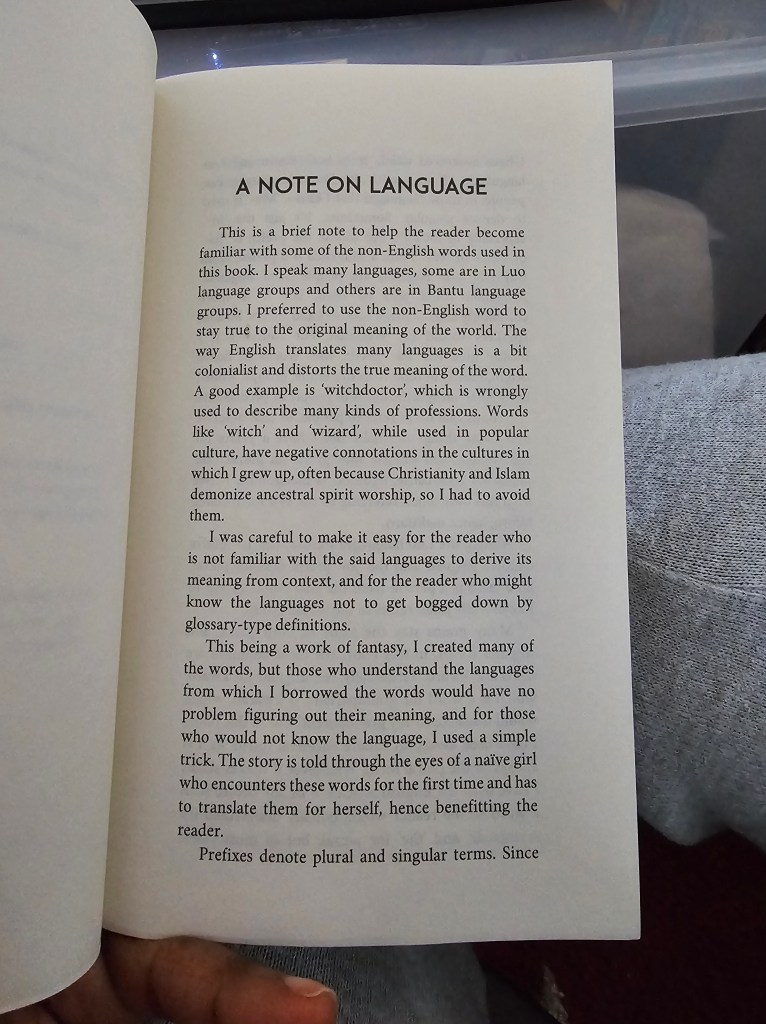
Uganda, where this book is set and author Dilman Dila is from, is a huge blank space in my head waiting to be filled in. I know virtually nothing about it and Ugandan culture isn’t really Google-able, so there’s a lot in this book that I’m sure I missed. I could sense the references and cultural imagery dancing just beyond my understanding. What tipped it over the line from “I have no idea what’s going on, help!” to “I don’t understand but I want to so let’s keep going!” is the writing. The prose is playful, regal, harsh and blunt by turns. There are quests within quests, missing mothers, magic fathers, places with wonderful names like the Island of Sin and The Forest That Sings. There are all kinds of beings I’ve never heard of, and beings I thought I knew doing utterly surprising things. The writing doesn’t always hit perfectly, but it’s always interesting and kept me turning pages just to stay involved. Also, Dila starts the book with a translanguaging boss move, and that always gets my attention and respect. See below:

This doesn’t mean that there weren’t times when things got a little too strange, even for me. In this book, magic users fight and fly by…okay, sit down for this…farting fire. That is not a metaphor. Our heroine is pejoratively called a “fire-shitter”, and there are dozens of blunt descriptions of fire coming out of people’s butts and being used in various ways.

This is, of course, hilarious.

But I’m not sure if it’s supposed to be. It reads very seriously, and honestly, that’s how far in the woods this book has me–I’m genuinely not sure if I should be giggling at all the flaming booties or cheering them on.

This was interesting despite my total ignorance.

Asbestos toilet paper to A Fledgling Abiba.

(Fellow readers, I don’t think there’s much more to say about this book. There are, however, many more fantasy books from around the world to read, which you can find on the Equal Opportunity Bookshop. Fair warning, though: if you buy anything from that link, or from any other link you find on this website, we’ll earn a small commission. And now that the legal eagle/keeping the internet lights on stuff is out of the way–go and read something good! Peace!)

[REVIEW] Milk Fed, by Melissa Broder

(Buy this book here.)

Rachel is a non-religious queer Jewish woman in L.A. By day she works for a talent agency. By night, she’s a stand-up comedian. She dresses well, goes to therapy, is politically progressive, and is probably the coolest person a lot of her friends know–at least until you factor in her toxic relationship with her mother, paralyzing insecurity, and eating disorder. When she meets a beautiful fat woman named Miriam who introduces her to the wonders of opulent fro-yo sundaes, kosher Chinese food, and Sabbaths in the embrace of a loving, supportive family, things begin to change at a rapid pace.

Not to get all #meetthebookstagrammer here, but I enjoy food. I don’t have a relationship with my mother, I’m straight, lactose intolerant, and formerly studied Christian theology. According to every white woman I have ever worked with, I am obnoxiously self-assured. I did do standup for a little while, though.

I tell you all of that to say that there is almost nothing I directly relate to in this book or its characters. There are large parts of this that I just do not get at all. But OMG I LOVED THIS BOOK.

Rachel is a mess, but a lovable, witty one. Her food escapades are simultaneously detailed, sensual, and disgusting (seriously, all of the eating in weird places like public bathrooms and dumpster alleys made me a bit nauseous.) Her love life is depicted similarly, both triumphant and disastrous by turns. All of this is held in a basket made of her mother fixation, her precarious mental health, and her desire to reinvent herself more authentically. And despite all the dietary self-harm, poor friend choices, and doomed relational decisions, you really want Rachel to win. Whether or not she does is…kinda up to you, and what you see as a happy ending, in a way.

There’s also this spiritual dream sequence subplot featuring a famous rabbi that I had to Google for a bit to really understand what was happening there and you know what? Just go read this book. When it was described to me, I was very sure I wouldn’t like it. It’s such a nice surprise that I did, and I hope you enjoy it too.

An all-you-can-eat kosher Chinese buffet to Milk Fed.

(Fellow readers! This was an interesting one–it snuck up on me through my library holds and made me really glad that I occasionally reserve something way out of my comfort zone just for fun. I don’t read enough fiction by Jewish writers to have a handy-dandy booklist for you today, but you can still do a search in the Equal Opportunity Bookshop and find some interesting titles. If you do that, or buy anything you find via a link on this website, we’ll make a small commission. TIA, and go read something good! Peace!)

[BOOKLIST] Complex Love; A Booklist of Diverse and Intersectional Romance Novels

Every year, Valentine’s Day rolls around, and every year, we all have to endure lists of monolithic romance novels about very boring people. Aside from the usual “hot blonde meets borderline emotionally abusive hockey player/CEO/pop star/cowboy/hometown hero” lists, there are also lists of Black romance, Asian romance, Latin romance, queer romance and all sorts of other romance that despite itself still manages to often be shockingly same-y and non-inclusive, even if the target community is *not* people who revel in being basic.

I’m the first to remind everyone that romance is a genre of comfort. There’s no need to think deeply about the plot of romance novels because a)there are maybe 5 total romance novel plots on earth and b)that is okay, because romance novels are all about character and depictions of personal happiness in relationships. We know they’re going to argue and nearly break up for good in the third act. We know they’re going to get back together dramatically and unrealistically anyway. We also don’t really care, because the point of romance is to see who is in love, not how. But in the real world, people are complex. Nobody is ever just one thing, and part of the beauty of love is people accepting each other’s multiplicities and uniqueness.

That’s why I find limited demographic romances so frustrating. One of the unsung triumphs of romance novels, (aside from being a genre largely focused on pleasure, happiness and joy) is diversity. I’m talking real diversity here, not just non-whiteness. Ignoring the very real (and problematic) possibility of soft fetishization and the massive importance of identifying with romantic leads for a moment, romance novels are one of the few places readers can find normal human levels of diversity and complexity without that being the entire focus of the book. Romance protagonists are also consistently more than one thing at the same time, and it’s often handled well because romance is about mixing personalities and exploring individual happiness, not thematic posturing for literary points. Romance novels are one of the few places where everyone deserves love and gets it, no matter who they are, or what their community is like.

Romance novels are also my second favorite genre of book after fantasy, so why not make a booklist of some of my favorite diverse and intersectional romance novels to share with the crowd?

A few disclaimers before I begin; I’m not an expert. I’m just a happy Black lady with way too many books in her house and a powerful need to discuss them. This list is in no way meant to be definitive or even all that up to date. I literally just pulled the first seven books out of my mental card catalog for discussion’s sake because I like books and so do you.

Also, as I put this booklist together, I noticed some glaring omissions that need a brief word of explanation. First, while I’ve dipped my toes in the waters of romantasy and monster romance, those genres tend to not be my cup of tea, diverse or not. I haven’t read anything in those sub-genres I’ve enjoyed enough to really discuss at length, and with a few happy exceptions, they seem to be glaringly, obliviously white and American which is also not my thing. I have liked some romantasy and monster romance, but their diversity and intersectionality is often cloaked in racialicious, problematic metaphors that make me uncomfortable.

A much more surprising omission is that I realized I don’t really read romance novels about queer women, although I’ve read quite a few titles where one or both of the main couple are queer men and there is a polyamorous romance on this list. This is a whopping big blind spot, and in lieu of explaining or doing some embarrassing performative word dance, I’m just going to direct you here to a booklist by people who know what they are talking about when it comes to sapphic diversity.

And now that the disclaimer-y bits are out of the way, on to the booklist!

(If you’re already tired of my blather and just want to skip straight to the books, they’re in a nice and tidy list in my shop here. Otherwise, buckle up!)


Signs of Attraction, by Laura Brown (Harper Collins, 2016)

This is an interesting novel to start with, because it uses my least favorite romance plot as its foundation; broken little bird and stern overprotective guy against the whole world. But as much as I don’t love that sort of plot, it takes on an interesting flavor here because it’s introduced through a deaf couple. One thing deaf people do exceedingly well in real life (at least in my experience) is recognize multiple identities and difference under the deaf umbrella, and that’s what happens here. Carli is hard of hearing, born into a working-class hearing family, and meets Reed through attempts to connect to deaf culture. Reed is a deaf Latino adopted by a loving, upwardly mobile Black/white interracial couple, which broadens and shapes the experience of deafness that he shares with Carli, who is white.

There’s a lot going on here, but the truth is there’s a lot going on with most real-life couples. It’s nice to see that reflected in a book without it interfering with the wish-fulfillment love tropes or the steam. And speaking of steam, I hope this comes along as appreciative and not creepy–it’s good to see disabled people in intimate situations without it being portrayed as weird or exotic. She’s hot, he’s hot, they get down and that’s all there is to it. Take note, [name of book that annoyed me by being weird about disabled sexuality redacted].

You can find Signs of Attraction here.


Take a Hint, Dani Brown, by Talia Hibbert (Avon Books, 2020)

Speaking of a lot going on, my favorite entry in the Brown sisters trilogy handles the beauty of finding love in the chaos of a regular life very well. Dani is a plus-size, bisexual Black professor who prefers hookups to commitment. Zafir is a Southeast Asian security guard with a minor celebrity past, generalized anxiety disorder and a history of being an ooshy-gooshy romantic. They’re both British. After a fake dating ruse turns into regular hookups, the two fall in love (as you do).

This book does a wonderful job of portraying what emotional vulnerability and good communication look like as two people develop a relationship. It also gets a gold star for making the relationship about attraction and emotion, not about their obvious culture and class differences. Cultural and social differences are important in any relationship, but not as important as having the safety to be vulnerable and the willingness to love and be loved.

You can find Take A Hint, Dani Brown here.


Opposite of Always, by Justin A Reynolds (Katherine Tegen Books, 2020)

A wise man once told me that all relationships are intercultural, and this book is an interesting example of that. Jack and Kate are Blerds who meet on a college campus but there’s a sense that they each come from very different parts of Blackness, and that features in their relationship in subtle ways throughout the book. I appreciate the portrayal of internal diversity, and the book also handles a few tricky themes well. Kate has sickle cell anemia, a common chronic condition that isn’t portrayed in Black fiction often enough. She’s also slightly older than Jack–a college freshman to his high school senior, which concerns his parents and hers. Both of these things are realistic parts of the characters and their interaction, but a lesser book would make this or their nerdish Blackness the focal point.

Instead, this is a book about grief and time travel. You read that right. This is a Black time travel romance with a slight age gap, a lot of grief, and a heroine with a chronic illness. And instead of being heavy, it’s actually so sweet that I won’t re-read it for fear of getting cavities.

Find Opposite of Always here.


Hold Me, by Courtney Milan (Createspace Independent Publishing Platform, 2016)

Believe it or not, I almost never read reviews until long after I’ve read the book in question. That’s why I was so blindsided when I went looking to see what other people thought of this book and found that it’s drawn quite a bit of fire for cramming too much performative diversity in its pages.

But listen. I’m an American who came of age in a multicultural neighborhood in the Western part of the country in the late ’90s, in a community that wasn’t particularly progressive. This book seemed utterly normal to me.

Maria’s an orphaned transgender working-class Latina math whiz. Jay’s a bisexual mixed-Asian physics professor who grew up in a mixed-faith technocrat household. The two can’t stand each other in person, but it turns out that their internet avatars have been good friends for years. All of their identities are presented undramatically as part of the backdrop to their romance. Because this couple live in a diverse community, nobody asks any stupid questions and there aren’t long explanations of obvious things for folks who don’t get it. It doesn’t feel performative at all, only situational.

I love that this book is about love between unique people without any un-necessary didactic ick. Milan chooses to write these two as a normal romance couple because they are. I can’t imagine why anyone would see this any differently. (Okay, I can imagine, but as I’ve discussed before at length, We Don’t Do That Here.)

Also, side note–if I find out that the mean reviews of this are why Courtney Milan still hasn’t finished The Cyclone Series, some of you are going to get some sternly worded Youtube comments. I need the Adam and Peter story, stat!

You can buy Hold Me here.


Let’s Talk About Love, by Claire Kann (Squarefish, 2019)

I’m never a fan of identity didactics in fiction, but sometimes a bit of explanation is helpful. This book does an exceedingly good job of personalizing explanation by diving deeply into the thoughts and feelings of the characters.

Alice is asexual but biromantic and trying hard to figure out what that means for her socially while also living up to the expectations of being an upper middle class Black college student. Japanese-American Takumi is straight, allosexual, and really into Alice–but isn’t sure what asexuality might mean for their relationship in the long term. Fortunately, they have a supportive community and family of both blood and choice to help them figure out what they mean to each other, and how to make it all work.

Again, we have a very multicultural California community full of diverse identities but it’s not played for performativity, it’s just a backdrop for a story that has a lot of emotional authenticity and sweetness. This is one of the most unique romance novels I’ve ever read, but also one of the most mature ones.

Let’s Talk About Love is Available here.


I’m So (Not) Over You, by Kosoko Jackson (Berkley Books, 2022)

I’m only about halfway through this second-time-around meets fake dating gay Black romance, but there’s a few things about it that make it stand out enough to belong on this list.

First, main guys Kian and Hudson are both from different parts of Blackness, much like the couple in Opposite of Always. The interplay between different parts of Black culture creates a lot of fun but also a lot of tension, and it’s nice to see Black people portrayed with social nuance in that way.

The other is that this book is an interesting example of how much thought regarding queer men, particularly queer Black men, has changed. While reading this I keep thinking of the Black gay classic Invisible Life and how sadly different the story of two men much like Kian and Hudson had to be told just 30 years ago. Race and class are much bigger issues than sexuality for this couple, and while that’s not necessarily always accurate to real life, we’ve come far enough for this to be a reasonable portrayal.

It’s also notable that the author of this book is actually a queer Black man. For a lot of reasons, published gay romance is primarily written by cis women and while that’s not for me to unpack, something hits different when you read queer Black love and joy by a queer Black person.

I’m So (Not) Over You is available here.


The Art of Three, by Erin McRae and Racheline Maltese (Avian30, 2017)

This is another book that showed up on my radar relatively recently. Once I finished giggling at the retro cover, I started paying attention to the buzz about it and it really does sound interesting. The relationships explored are international, polyamorous, and queer. They also promise to navigate the power dynamics inherent in age differences, national backgrounds, and class in a way that really got my attention just from the first few pages.

I haven’t read a lot of this yet, so I can’t say too much more about it, but it gets a spot here because of what it might have to offer. If not, trust I’ll let you know when I do finish it.

Find The Art of Three here.


And there you have it, fellow readers. Seven interesting intersectional romances. There are plenty of others, of course–I didn’t have space to talk about books by Alexis Daria, Alyssa Cole, Blake Allwood, Helen Hoang, Marcella Bell, just to start with. But I did put books by all of these writers and more into a handy-dandy booklist here, if you want to explore further. Also, this is where I need to tell you that if you click and purchase anything from a link on this blog, we have affiliate relationships and will get paid a little bit. I’m serious when I tell you that I’m not trying to sell you stuff(exceptions may be made when my book eventually comes out), but this blog does cost money to run and I have a pretty serious book habit, both of which your affiliate clicks and buys fund.

Hope you’re loved and fully yourself, in all of your identities, fellow readers. Now, go and read something good! Peace!

[REVIEW] Lunar New Year Love Story, by Gene Luen Yang and LeUyen Pham

(Buy this book here.)

Valentina Tran loves the holiday she’s named after. Every year she makes heart-decorated cards for all her classmates, and an extra special one for her dad, who’s still trying to cope years after his wife’s death. To the disgust of her realistic bestie Bernice, Val maintains a belief in romance so strong that Saint Valentine becomes her imaginary friend.

But as Valentina gets older and learns hard truths about life and her family, love starts to look like a trap, not a gift. Her saint becomes a sinister spook, and her first relationship brings up more doubt and doom than happiness. Only by going deep within herself and making hard decisions can Valentina find out what love really is.

I’m really surprised by how layered, complex, and culturally literate this beautifully drawn graphic novel is. LeUyen Pham‘s art straddles realism and abstractions so well that sometimes it takes a moment to realize that the tone has shifted from the literal to the figurative. So many motifs are woven through the story–Lunar New Year, Catholicism, Asian dragon myths, Christian saints, and fated meetings. The plot gets where you expect it to go by taking a vivid community of very emotionally present characters down a winding, authentic path that’s full of surprises.

This book is very Asian-American in ways I don’t often see in books but see in real-life friends and family all the time. (Makes sense, since it’s written by the author of American Born Chinese and that’s kind of his thing.) Not everyone is an immigrant or has deep ties to an Asian country or traditional culture. Family structures vary in closeness, strictness, financial means, and adherence to tradition just as much as in any other community. There’s a lot of internal diversity within the community, and all of the attendant rivalries, misunderstandings, and fusions that go with it. All these things make these characters feel real, even in some of the story’s strangest moments.

Love is hard. Relationships are hard. People will sometimes do what’s best for themselves and hope love happens anyway. Not every hurt can be forgiven, and not every ending is happy. This book doesn’t shy away from that.

But it also doesn’t shy away from how glorious love is when it goes right, how sweet it can be to take your time figuring that out, and how worthwhile it is to let yourself do that, even if you don’t have any good examples to follow in your family.

A handmade Valentine to Lunar New Year Love Story.

[REVIEW] The Mountain In The Sea, by Ray Nayler

(Buy this book here.)

Ha Nguyen is many things; a brilliant researcher who studies octopi, the best-selling author of a book on cephalopod thought, an orphan, and the latest addition to a small team assembled on a near-future Vietnamese island to study strange activity in the local tentacled sea life. The local octopodes, protected as part of a nature reserve, are behaving in eerily developed ways.

What she finds may change the world’s understanding of what it means to be human forever, but first, she has to navigate relationships with the world’s most advanced android and a Mongolian mercenary whose surliness hides her true self, all before forces as far away as Central Asia and as mysterious as the open sea sabotage her work entirely.

There’s so much happening in this near-future world with its ravaged climate, scientific capitalism, and shifting geopolitics. The story has a complicated setup but once you figure out what’s really happening a light bulb goes on and it all becomes simple. This is also one of the few science fiction novels I’ve read with a largely Asian cast that never really veers off into the Fetish Zone, either interrogatively or in that semi-naive exploitative way that was all the rage a half dozen years ago. It’s just sci-fi set in Asia, and therefore populated almost entirely by Asians, with no random white heroes–very normal, and weirdly rare.

The author is also a white dude, albeit well-traveled, multilingual, and by all accounts, a really nice guy who did a lot of research for this book. I was very suspicious going into this and very pleased by the end. I may have to give him what I dub the Chakraborty badge, for a writer who creates great characters of a different race or culture without being weird about it.

The book is also wildly well-written, full of twists and turns and really beautiful prose. The science is deep in a philosophical way, and the philosophy of the book is communicated best by the appearance of a character that I can’t tell you about because it’s a massive spoiler. I’ll just say that I gasped out loud at the scene where I realized who and how important she was. (And no, it’s not who you’ll think at first.)

This was a nice surprise, although I’ll never look at octopuses quite the same way again. Or humans, for that matter.

8 arms and carved symbols to The Mountain In the Sea.

(Fellow readers, this was a nice surprise. I wasn’t expecting to get as attached to the beings in this book as I did, but here I am, misting up at the potential future of a fictional consortium of octopi. Anyway, if you’d like to follow suit or just find more books like it, please check out the Equal Opportunity Bookshop. Just remember that we have an affiliate relationship with the site so if you make any purchases, we get a lil’ kickback. Now, go and read something good! Peace!)

[REVIEW] Worm, by Edel Rodriguez

(Buy this book here.)

If you haven’t heard the name Edel Rodriguez before, you’ve almost certainly seen his work. Think back to the bright orange cartoon of a melting Donald Trump on the cover of Time magazine in 2016, or subsequent images of the former president holding the severed head of Lady Liberty or draped in a Klan robe. Rodriguez is perhaps the most visible anti-fascist political artist working in America now. But 44 years ago, he was a Cuban refugee arriving on the Florida coast.

I’m in a generational and cultural crowd that saw The Motorcycle Diaries in arthouse theatres, attempted to read all 700 pages of the famous Che biography in college, and talked about communism and anarchy in public long before there was a “leftist” side of TikTok. My knowledge of Cuba is all broad political strokes drawn to score emblematic points against the USA’s foreign policy. I admit to not giving much thought to what the personal experiences of Cubans are like.

But that’s what Worm is about. The personal is political, as the saying goes, but the political is personal, too. In harsh tricolor panels, this graphic memoir gives us a view of how Cuba’s politics affect the daily lives of regular people, and the resulting refugee paradox–people who visit the country they fled to aid its economy.

The story of his early upbringing and his family’s flight to the US is interesting enough, but Rodriguez goes on to draw a direct line from his early life in Cuba to his loud artistic opposition to Trump’s presidency and the increasingly fascist flavors contaminating global politics now. He’s thoughtful and honest about some of the less pleasant truths about immigration, even though it’s also clear that coming to America was an enormous positive for Rodriguez and his community. There’s a lot of nuance here, which seems increasingly hard to come by in any discussion of history and politics lately.

All that and I still have no idea what I really think of this book. All I know is that it got me thinking and wondering and empathizing in a way I hadn’t before, and I appreciate the challenge.

Continued safe passage and sharp pens to Worm.

(First review of the new year, beautiful people! Welcome back! This was a nice start to the year, and if you choose to read it, remember that if you buy it here, we get paid a lil’ commission from Bookshop, and also that your local library probably has it for free. I’m excited for what 2024 has in store for us all bookishly speaking, so go and read something good! Peace!)

Last Week In Books: So Many Good Things Coming In 2024

Hello, fellow readers! 2024 is well and truly underway, which means there are many, many new reasons to expand our #tbr piles. Here’s my contribution to helping you keep those piles diverse!

  • I used to be a regular attendee at the Seoul Book and Culture Club, a monthly chance for English speakers in Korea to meet and engage with Korean writers, some of them quite legendary. The literary brains behind the club, Barry Welsh, has started a YouTube channel where he reviews English translations of Korean literature. [YouTube]
  • Why do y’all like this rant about Trans Batgirl that really isn’t about Trans Batgirl so much? That’s a serious question–that post has the second most views of all time, and it’s the most popular post of the year so far. I’m glad you like it, but why? [Equal Opportunity Reader]
  • Black-owned, Black-focused Oakland bookstore Sistah Sci-Fi is sponsoring the West Coast book tour for new YA graphic novel Ghost Roast, penned by sisters Shawnee and Shawnelle Gibbs. This means that book is about to be good. [Big News Network]
  • This is surprising and vaguely alarming, but makes a certain sort of sense — Salman Rushdie’s attacker’s trial may be delayed so that the attacker’s lawyer can read the book Rushdie wrote about the incident. [The Guardian]
  • So many lists of books to anticipate in 2024 and I…frankly don’t have the bandwidth to create one of my own. Here’s a few of interest from Lit Hub, for fantasy and across genres, though. [LitHub]
  • African Book Addict has also given us a list of books to anticipate from the entire African diaspora, across all genres [African Book Addict]
  • The stats on Korean-American novel releases are interesting. In 2022 there were 5 novels by Korean-American writers published. In 2023, there were 18! Minsoo Kang, whose debut novel The Melancholy of Untold History comes out this summer, rounded up the best of a happily expanding bookstore section for us. [Best of Korea]
  • Last thing for this week, fellow readers; I’m teaching another class! If you’re a Black woman who is surprised every time Luke Skywalker finds out who his real father is, fights the air whenever Rue dies in The Hunger Games, and wonders out loud why Frodo never met a Black elf, come join me this May as I give you a crash course on Black women in speculative fiction and how to learn from their work to create our own hopeful, joyful written worlds. Hope to see you there! [midnight & indigo]

As always, fellow readers, have a wonderful week. Don’t forget that if you purchase anything from a link on this site, we use the affiliate commission to stick it to the man. Now, go read something good! Peace!

Last Year In Books: Words I Adored In 2023

(Purchase these and other books I read this year here.)

2024 is only fourteen days away. In a total departure from the near-panic of previous years, I think I’m totally ready for it.

I do hear that there’s this thing called Christmas sometime in between now and the new year that I’m not at all prepared for, but hey–how important could it be?

Not-quite-jokes aside, 2023 has been an interesting year in reading. I’ve read 80-odd books on my own, and if you count the piles of screenplays and romance novels that I powered through for classes I took earlier this year, my true reading total this year is over 100.

As with any year, though, there were books I loved and some that I simply endured. This year’s beloved books, though, were a special breed. I read five things this year that I absolutely adored, and before I forget, I want to big them up one last time before I continue to talk about them just as much in 2024, probably.

Without further ado, here’s what I absolutely loved reading this year.


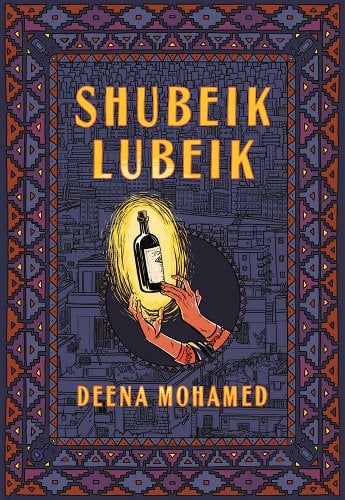
Shubeik Lubeik, by Deena Mohamed(Pantheon Books, 2023)

This is a gigantic, beautifully bound, and epically illustrated graphic novel, the title of which roughly translates to “your wish is my command.” It’s about an alternative Egypt where wishes are not only real but a vital, tricky part of modern commerce and politics. Three intertwined stories show how wishes infiltrate every aspect of human happiness, and that sometimes, having one’s wish come true isn’t the thing most needed.

Apparently, this was originally published in three volumes and won its Egyptian creator the 2017 Cairo Comix Grand Prize. Aside from that, Deena Mohamed is a brilliant young writer and designer, and the story of the comic’s genesis is fascinating as well.

I read quite a bit of magical North African and SWANA fiction this year without intending to. Perhaps it’s this book that set me on the path. To say it’s a magical story presented beautifully is true, but also an enormous understatement. By the time I’d gotten to the last page, I’d cried, cheered, laughed, sighed, and huffed at the world created between these beautifully embossed covers. I’ve been telling everyone I run across in physical space to go and read this, so I’d be amiss not to tell you all again on the internet–this book is the purest magic, that of a good story beautifully told. Wrap yourself around a copy on a rainy day, please. (You can buy Shubeik Lubeik here.)


The Lies of the Ajungo, by Moses Ose Utomi(Tordotcom, 2023)

One of the things I loved about 2023’s releases is that we seem to be rediscovering the wholesome adventure story again, with an eye for diversity and justice rather than conquest. In fact, if you count Shubeik Lubeik’s breathtaking last chapter, three of the books I adored in 2023 are fantasy adventures with simple stories but complex, rich settings.

The Lies of the Ajungo is mostly a simple story of a boy’s quest to find water to save his people and himself, but the West-Africa-based world that it happens in is so perfectly drawn that it elevates everything into a near-cinematic space. You can see the boy Tutu, his bad-ass adopted aunties, and his ridiculously-named camel traveling across the desert on their simple, essential quest, and you can also see that the world they live in is much more complex than just one task or one injustice. It’s a masterwork of a book, and I loved reading it so much that I made myself slow down so it wouldn’t end too quickly.

I met the author this October at a reading of the upcoming sequel to this, entitled The Truth of the Aleke, and it does not go where you’d think. I gasped aloud in the reading when I realized what was happening, and I have a sneaking feeling that it’ll make my 2024 favorites list. (You can buy The Lies of the Ajungo here.)


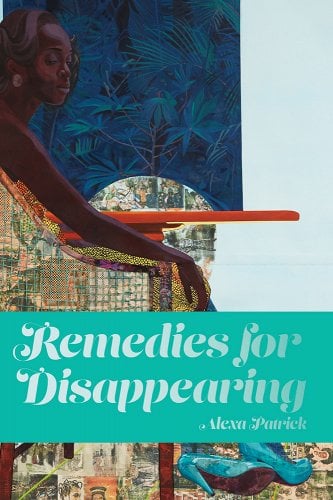
Remedies for Disappearing, by Alexa Patrick (Haymarket Books, 2023)

This is one of the best new volumes of poetry by a Black woman I’ve ever read. Representation is no longer rare, but the feeling of being seen and understood and felt on a level deeper than cultural performance and expectation still is. Fellow Black women–these poems see us. They feel us. They know us. Each poem magnifies a little moment of life into a cultural meditation, sometimes in unexpected ways.

The crowning moment is a series of beautifully poignant poems based on stories of Black girl prom nights gathered via Zoom during the height of US pandemic lockdowns.

By the way, a lot of the reviews and blurbs for this book use adjectives like sharp and gritty to describe these poems. They’re not, and that’s racist. What they are is soft, lush, vulnerable, feminine, and wonderfully, gloriously Black. (You can buy Remedies For Disappearing here.)


Fat Ham, by James Ijames (Theatre Communications Group, 2023)

Speaking of wonderfully, gloriously Black…

Fat Ham is both one of the best things I read and the best night out I had all year. It’s a play, a fat Black queer Southern retelling of Hamlet. I initially read it because a bookish friend sent me a copy and insisted, and I cried and laughed and screamed just at the script. Then I saw a live production and cried and laughed and screamed all over again, but for completely different reasons at completely different parts. Fat Ham is that rare piece of theatrical writing that sizzles on the page and explodes on the stage. It’s fun, it’s moving, it’s thoughtful, it’s wise, and at the end of it all turns the tragedy of Hamlet into pure fat Black queer joy. I absolutely loved it, and think you might too. (You can buy Fat Ham here.)


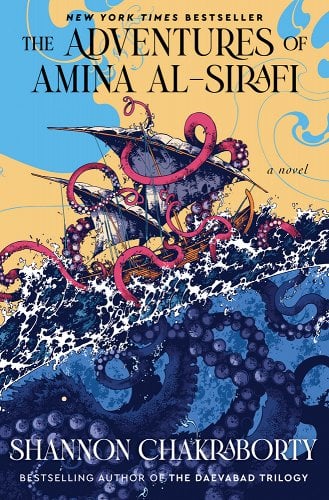
The Adventures of Amina Al-Sirafi, by Shannon Chakraborty

Shubeik Lubeik is thoughtful adventure and The Lies of the Ajungo is epic adventure. The Adventures of Amina Al-Sirafi, however, is delightful adventure, and that’s hard to come by.

I really don’t feel like anything I say does this book justice. It’s an epic fantasy story about pirates set in the Indian Ocean–primarily Yemen, Somalia, and Oman–during the High Middle Ages. It’s full of magic and fighting and scary villains and heroic derring-do.

But its protagonist is a middle-aged Muslim single mom who really just wants to retire and have her divorce finalized, and that’s not something you find in a fantasy adventure every day. The same for her compatriots, who are all comfortably middle-aged and deadly. This is maybe the most normally diverse thing I’ve read, and none of it seems tokenistic or performative. In fact–in its painstaking attention to historical multiculturalism, this book is one of the few things I’ve come across that also captures the sweet spots of modern multiculturalism as well.

But when all is said and done, it’s about a wild band of marauding pirates trying to make things right despite themselves, and that’s just fun. (You can buy The Adventures of Amina Al-Sirafi here.)


Fellow readers, I hope your year in books has had as many gems as mine has. If it hasn’t, you still have time to grab one of the above from your favorite indie shop or local library and ring in 2024 on a literary high.

(This is where I have to put the customary disclaimer stating that we have an affiliate relationship with Bookshop and if you buy anything there from a link you click here, we’ll earn a commission. Now that that’s over with, happy holidays to you, whichever ones you celebrate! Please go and read something good! Peace!(on earth, goodwill to men.) )

[HEAR ME OUT] I Don’t Think I Like the Film Adaptation of Killers of the Flower Moon

(Buy the book here. It’s better than the movie.)

If you haven’t read Killers of the Flower Moon by David Grann, you should. It’s an excellent work of non-fiction that illustrates one of many examples of how America’s present wealth and power were created by systematically disenfranchising and murdering Black and Indigenous people who assumed the system was actually fair and built wealth for themselves. It’s a history of the Osage Indian Murders hiding in a historical police procedural, and even though crime drama is usually not my genre, the book had me hooked from the first. The film, on the other hand, disappoints me.

Before we get any further into this, I’m going to point out something both obvious and necessary. While I, like many Americans, have Indigenous ancestry, my connection to Indigenous cultures and communities (even my own) is mostly as a guest and I am definitely not Osage. I did spend a lot of time reading, watching, and listening to Osage thinkers on this film after writing this, and I link to some of them throughout and at the end of this blog. If you’re impatient like me, go ahead and get started by watching Native Media Theory’s insights on the film. (I don’t think he’s read the book yet.)

Also, it goes without saying but spoilers, duh.

What Is Killers of the Flower Moon About?

In the early 1920’s the Osage were the richest people in the world, due to massive oil deposits found on the reservation lands in Oklahoma that they had been forcibly removed to in the 1870s.

Let’s put that in perspective. In 1923, the Osage nation collectively earned 30 million dollars from oil. In NINETEEN-TWENTY-THREE, when the average yearly income of an American was around $1300, the Osage were a nation of millionaires. They lived in mansions, drove fancy cars, and had all the latest innovations and infrastructure. Osage people studied and traveled abroad. They had (white) house servants and chauffeurs. The Osage reservation in Oklahoma, meant to be a place of shame, marginalization, and isolation, became a place of power and presence thanks to the unexpected bounty of oil money.

In response, the local white settlers conspired to control, then murder dozens of people between 1921 and 1926. (If you’re keeping track, 1921 is the same year that the Tulsa Massacre happened.) The headrights to oil money could only be inherited, never bought, so a wave of betrayal swept through the community as white people plotted to kill their Osage friends, lovers, and spouses and inherit their wealth.

It was years before an investigation was opened, and what federal agents eventually found was devastating. Killers of the Flower Moon is essentially about these murders, the investigations and how all of this led to the creation of the FBI. (Ironic, through a certain lens.)

So What’s Wrong With the Movie?

As I said, I enjoyed the book a lot. David Grann uses lots of meticulously gathered details to paint a broad portrait of life in Osage County before he focuses on individuals. He certainly gives the (mostly) white investigators their flowers, but he spends most of his page time with Osage people. Grann also worked meticulously with living Osage, including the descendants of the deceased, to accurately portray the culture, what was stolen, and what was lost through this genocide.

When I first heard of the film adaptation I was concerned that Grann’s wonderful work would be made into another bog-standard Hollywood Oscar-bait trauma film about a bunch of tortured white dudes with a token Native wife character. I was also worried that Osage people wouldn’t be the main characters of their own story and that they would be sidelined in favor of creating screen time for the star-studded white dude cast, including Leonardo DiCaprio, Jesse Plemons, and Robert DeNiro. Initial reports confirmed my fears, but then veteran director Martin Scorsese seemed to discover his act-right and the film was going to break convention and do history justice, for a change.

Unfortunately, that’s not exactly what happened. It’s easiest to explain what did happen by comparing the stories that the book and the movie tell.

In the Book:

Mollie Burkhart is born in a lodge to recently displaced Osage parents, survives residential school, and is suddenly surprised with enormous wealth and good fortune along with all other remaining Osage people when oil is discovered on reservation land. That is, until people begin to die. One by one her friends, neighbors, former lovers, mother, and all of her sisters are murdered. The crimes are ignored or chalked up to cultural indigence while the community grows more fearful. Pleas are made to the government, from the town sheriff all the way up to Washington, D.C., but still nothing gets done. Even the white friends she presses into aiding her are murdered in horrible ways.

Eventually, an experienced, honest white investigator named Tom White is handpicked by a young J. Edgar Hoover to take over the Oklahoma office of federal investigations and figure out what’s going on in Osage County. Working with a fascinating undercover team that includes Texas rangers, an insurance salesman, and a former spy from the Ute nation, he slowly makes a horrifying discovery–many of these brutal murders were carried out by Mollie’s white husband at the behest of his uncle, who had been integrated into the Osage nation as a guest and friend for many years. Even worse, Mollie’s next on their list.

Although the murderers were convicted, justice was not served. History tried to paper over the crimes, but the stain left in the culture of the USA was indelible, and the descendants of Mollie and her would-be-killer husband reckon with their ancestry and what their story means in the greater scheme of American relationships with indigenous people.

In the Movie:

Some bad white people victimize the rich, lazy, yet very culturally detailed Indians. Isn’t murder sad? But also kind of entertaining, because look at all these grimy white cowboys with recognizable faces doing grimy white cowboy things! Isn’t it wonderfully awful to look at them killing their own friends and wives and children like dogs? What an awful thrill! Look how sad it is that they murdered so many people, even though they got rich later and while that’s not fair and we’re not redistributing any of that wealth, the director certainly feels bad enough about it to make a guilty little cameo in the painfully clever and self-aware ending.

Oh, and there’s like thirty minutes of the investigators. These characters have no development, but we know they’re heroes because they’re white! (Except for one guy who makes up for it by being very, very handsome). There’s slightly more time spent in the Osage community, nearly always in the presence of a white person, often in unsubtitled Osage language, usually being victimized or disrespected in some way. They never really talk to each other about anything but death and white people. But pay no attention to that, look over here! More evil white people doing murder! Maybe one of them really loves his wife!

What’s Wrong With That?

I am tired of seeing stories about Black, Brown, and Indigenous people that center white feelings. I don’t care if those feelings are guilt. I don’t need any more nuanced portrayals of the villainy of evil white people of history. I need nuanced portrayals of the people they tried to destroy.

Look. The performances are great, which is to be expected. Glorified portrayals of gritty violence and conspiratorial murderers are kind of Scorsese’s thing and this is good filmmaking. This is also both the biggest budget and the most time Osage culture has had on screen, ever. The portrayals of the culture and the people put an enormous amount of effort into authenticity. This film is important. I get it.

But I don’t like it.

One of the uglier things about American culture is an unstated belief that acknowledging something is the same as atoning for it. Our present cultural climate is one of trying desperately hard to acknowledge that white supremacy has damaged us all while continuing to make white people the focal point of every story ever told about America. Mollie Burkhart was a badass. John Wren, the Ute federal agent who went undercover to help solve these murders, was a badass. Anna Brown and Lizzie Q, Mollie’s sister and mother–also badasses. Henry Roan, who is portrayed as a shrill, childish alcoholic in this film, may have actually been all of those things. But he was also a husband, father, a friend to many despite suffering from depression. He, and every other Osage person portrayed in this film, deserved to have this be their story.

Ernest Burkhart, on the other hand, was a bit player in the book and from all accounts, in the real-life murders as well, which were the brainchild of his uncle William Hale. In the film, however, Ernest is the only character given a full emotional life and arc. We spend almost all of our time staring at him and living inside of his head. I don’t care that he’s portrayed by Leonardo DiCaprio. I’m sure there’s an Indigenous actor who is just as good or better who deserves the chance at a nuanced, show-stopping Oscar-worthy performance too. Why, in a film touted as an act of just and restorative storytelling, are the best opportunities for such given to the white actors?

I’m sure there’s someone out there putting on their “well, actually” pants in order to share very basic facts about the film industry and how unadventurous the average film-goer is and how you have to have a big box office draw with a “relatable” story and so on. If this is you, first please know that I find you an annoying pimple on the face of the arts. Go away. Then, consider the following; if anybody has the power to make a movie that truly flouts convention, makes new choices, highlights new faces, and still sets box office records and wins awards, it’s Martin Scorsese. In fact, he’s done it before.

There’s also the argument that this film wasn’t made for Osage people but for others, who need the shift in focus to be able to empathize and understand what really happened. To that I cry: BULLSHIT. If somebody made a movie about Jack the Ripper’s victims that for some reason was told from the focal point of an African dude who showed up that day just to judge the Brits for being British, I–

Well, okay, I’d watch that. I’d watch that twice. But my point is that it’s disingenuous to pretend that a movie about Osage people can’t be entirely about Osage people without somehow driving away non-Osage moviegoers. I know some of y’all are racist and even more of y’all are intellectually lazy and unempathetic, but too bad. Get over it and learn to enjoy things that aren’t about you.

I think the only thing I really like about this film, in the end, is that it’s hopefully opened the door for much better films by, for and about Indigenous people to be made in the future.

What Should I Read About the Osage Indian Murders?

At the beginning of this blog, I promised you a list of resources from Osage and other Indigenous people about this chapter of history. Without further ado;

  • Start with this list of articles at the Osage News, an independent news organization based within the Osage Nation which has been faithfully reporting on events surrounding the film and the history since it was first announced.
  • The first book published about the murders is the 1934 novel Sundown by John Joseph Mathews. Mathews was an Osage writer who was born on the reservation just before oil was discovered there, studied at Oxford and the University of Geneva as a young man, lived through the murders, served on the Osage Tribal Council and the Oklahoma State Board of Education, received a Guggenheim Fellowship, and somehow had time to write a dozen novels, a four-volume autobiography, and countless short stories in between. I kinda want a movie about him now, but for now we have to settle for books like Sundown, which follows a young man dealing with the emotional and social aftermath of living through the Osage murders.
  • Osage writer Joel Robinson wrote a beautiful piece for Slate entitled Killers of the Flower Moon Is Not the Movie an Osage Would Have Made. You Should Still See It. That says it all, really.
  • YouTuber Alachia Queen has made a great video explaining why so many Osage women would marry white men to begin with. I found this helpful simply because I found this a headscratcher in both the book and the film. As a bonus, look in the comments–the great-grandson of Henry Roan, who I mentioned earlier, drops into the comment section with a few interesting bits of info too.
  • Christopher Cote, the Osage linguist who coached the actors in this film on how to speak his language, gave a great interview to the Hollywood Reporter about his mixed feelings about the film.
  • More generally: if you haven’t read a lot of Indigenous writers and need help getting started, I’ve made a booklist of writers from various nations that may be helpful. Full disclosure: if you make a purchase from any link in this post, I’ll earn a commission which I’ll probably use to buy more books. Speaking of which, you also might like some of the reviews I’ve written about books by Indigenous writers.

If you’ve seen this film or have additional resources to share, please drop them in the comments here. As for me, I’m going to go binge Reservation Dogs for a while. Peace!