⭐⭐⭐⭐/5⠀ 👤⠀ Few canon classics really stand up to the test of time. It’s nice when I come across something that does and H.G. Wells’ The Invisible Man was a nice surprise. ⠀ 👓⠀ If you live in an English-speaking part of Earth, you already know what to expect here. There is a man. He is invisible. Shenanigans ensue. The story has been told so many times, and in so many ways that it’s hard to imagine any surprises in the original 1897 serial novel. But there were a few! I was not expecting Griffin, our titular un-seeable dude, to start as a grouchy (yet amusing) invisible jerk and slowly reveal himself to be an absolute villain. The story starts as an odd bit of early science fiction full of jokes at the expense of English country people and ends as a thrilling criminal chase story with thoughtful moral overtones. The action is great and at the height of his character arc, Griffin is quite scary. One particular scene in a Victorian department store really had me on the edge of my seat. I don’t remember seeing it in any of the film adaptations of this story but it seems tailor-made for action choreography. 🎩⠀ The book is, however, a product of its time and there is some dated(and in one notable case, potentially offensive) language that mars it. I don’t think it’s fair to hold a book written in 1897 up to 2020 sensitivity standards, and every book has slang and cultural references that will eventually be forgotten. I wasn’t put off by this so much as annoyed at having a pretty good story occasionally interrupted with colonizer nonsense and forgotten fads. It’s not overwhelming, but since the second act of the story is already a little slow, the language kept this from being a perfect read.⠀ 🧥⠀ I enjoyed this far more than I thought I would. 4 stars and a gramophone recording of “Man In The Mirror” to The Invisible Man. 🕴🏻⠀
(If you want to read this for yourself, consider purchasing it HEREfrom Bookshop and supporting indie bookshops, sustainable small business, and this blog. )
I feel so many ways about this book. Let me start by saying that this is not an enjoyable read at all, but it is important. It isn’t dramatic, but it is realistic. And it isn’t entertaining, but it is necessary, I think. ⠀
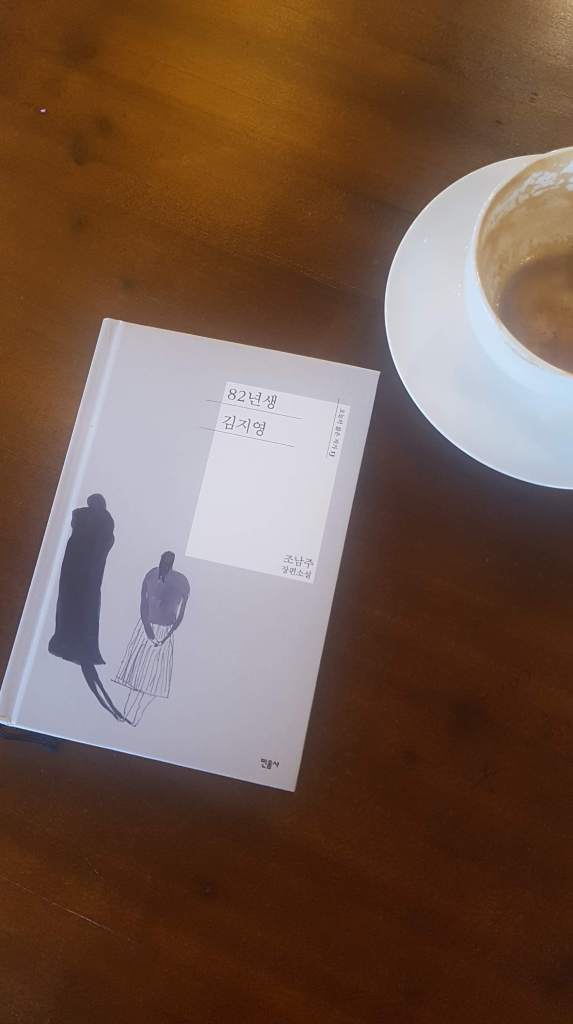
Kim Ji-Young was the most common baby girl’s name in Korea in 1982. Fittingly, the protagonist of this book is a very ordinary Korean woman. She’s a 33-year-old former marketer, well-married with a one-year-old daughter and a fairly pleasant, stable life. However, one day she starts channeling the voices and personalities of other women and her concerned husband takes her to a psychiatrist, who dutifully records her life history. If that story formed the bulk of the book it would be great, but instead, the narrative is mostly a very dry recital of Ji-Young’s childhood and coming of age up to the point of her breakdown. It’s stultifyingly normal, but there are moments that any woman can relate to–being forced to tolerate the bullying of little boys in school, being blamed for unwanted attention from men, the difficulties of moving up in the professional world and the thousand small irritations that come from marrying a well-meaning but basic man in a world determined to favor him over you. While there are a lot of Korea-specific cultural references, Ji-Young really is an everywoman and I’ve had many similar experiences to hers, even though I was born a year earlier and literally half a world (and another culture) away. One thing that resonated with me that a lot of book bloggers are assuming is Korea-specific were the scenes involving Ji-Young’s parents favoring her younger brother over her and her older sister. Miles away, at around the same time, my younger sister and I both had the same worries when our mother had a baby boy. Family jury’s out on whether or not she ever favored him, but the cultural framework was there for me, at the age of seven or eight, to talk to my mother about it with all the gravity I could muster up at that stage of development.
However, despite the familiarity of her experiences, Ji-Young herself is nearly impossible for me to relate to. She has an infuriating lack of agency and inner thought–she’s a perfect victim and it’s only her privilege as a member of a stable family who support her financially that keeps her life from being far, far, worse. I found myself frustrated by how safe and protected she actually was and how little she did with that foundation. She’s a flabby marshmallow of a woman who goes along with everything that happens to her and comes out far better than a lot of women do despite that. This is only highlighted by the fact that most of the other women in the story–her mother, her sister, her first boss–all have much more developed, layered personalities, in my opinion. ⠀
Photo 2020, M Watkins
This book is important, and I get that. It speaks to a nation, a gender, and a generation. But in the end, its dry style and meticulous footnotes on gender inequality seem to reach a rather cold conclusion–that women should be treated better because it’s good for the economy and social logistics, not because we are also living breathing human beings with minds and hearts and desires of our own. I recognized Ji-Young’s struggle, but through her story neither she nor I see any way forward for women in society. Fortunately, this is just a book and there are in fact ways to claim agency and equity as a woman in the world, but this book certainly doesn’t approach any of them. ⠀
An observation about the English translation of this book; I read the original Korean and the English simultaneously and can’t help but hope for a good clean re-edit for the next printing. The dialogue is strangely slangified in some places, the choices of which cultural points to explain over others is rather peculiar at times, and there’s a lack of attention to small details–for example, a few names have their syllables transposed–that shocked me. It speaks to the overall style of the original novel though, that none of these gaffes change the overall sense of the work, only muddling the details. ⠀
A few final notes; this book was made into a film in 2019. I haven’t seen it yet, but if the trailer is any indication, it’s gone a long way to make Ji-Young and her blandly progressive husband much more sympathetic human beings(which is what happens when you cast A-list actors, I suppose.)
if you find yourself wanting to read this book, consider doing so in a way that supports sustainability, community, and this blog–through your local library, or by ordering it from indie bookshop portal Bookshop, HERE.
(As a Bookshop affiliate, I earn a commission from all purchases at that link.)
That’s it for now, fellow readers. On to some fantasy fiction next.
3 stars and a banner of burning bras to Kim Ji-Young, Born 1982.
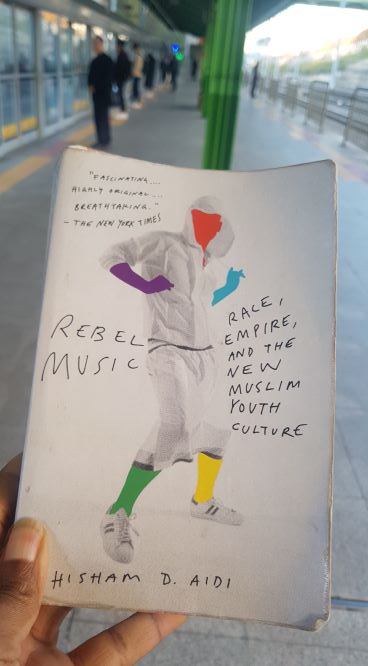
⭐⭐⭐⭐⭐ It is *really* hard to try and write a concise review of Rebel Music simply because there’s so much to talk about. In contrast to the polemics of a lot of popular writing about Islam, Aidi instead takes us on a cultural tour of music in and of the Muslim world.
It’s a vast and intricate experience with lots of stops along the way. Some of those stops–the US, the UK, France, Turkey and of course North Africa and the Middle East–are familiar and expected. Others–Poland, Belgium, Brazil–are full of surprises. All along the way Aidi interweaves threads of race, class, migration, politics and public discourse, but the focus always tilts back towards how that has shaped music and what the meaning of “cool” has been in Islamic culture in different places over time. A lot of it is connected to Blackness, specifically the American variety–I was surprised to see how tightly interwoven the stories of Black Americans and Muslim migrants have been at various points across history.
Even though I was pretty familiar with Islam before receiving this book as a gift, it still took me over a year to read it in slow savory bites that pointed me towards questions to ask and places to visit in the real world. This isn’t a particularly religious book but it’s heavy on the art/history/culture/race theory/music. I’ve learned a lot from it. I’ve also added about 10 new artists to my regular music rotation, like Algerian jazz supergroup El Gusto. (You’re welcome.)
This is a deep, intense, world-spanning read written by a true expert and I highly recommend it. Buy it HERE. 5 out of 5 stars.
(I am an affiliate of Bookshop.org— if you click through and make a purchase at any of the links on this page, I will earn a commission. Thanks for reading! )
It took me a long time to re-read The Bluest Eyethis go-round–not because it’s a difficult or complicated read, but because the prose is so dense and delicious that reading it is like eating an expensive dessert. I savored each sentence slowly, not wanting the book to end.
From the first simple sentence, (“Here is the house.”) Morrison immerses us in 1940s Ohio and the intense world of sad little Pecola Breedlove and her schoolgirl friends Frieda and Claudia. The girls are black and female in a time and place with no great love for either of those things, and Pecola is so marked by external and internal hatred that she longs for blue eyes. This takes her to the point of mental catastrophe–that isn’t a spoiler. If anything, it’s a trigger warning, because this book does get quite grim and it has nothing to do with Pecola’s eyes, in the end.
The story explores issues of race, class, gender, the impossibility of beauty standards, and the deep vulnerability and systemic victimization of women, specifically black women, deftly and painfully. More than that, though, it struck me on this re-read that this book is also an exploration of what happens in communities when people are made powerless by their desperation to be loved in a world which has no intention of loving them.
The prose is beautiful and the story is poignant and hauntingly personal while maintaining a respect for the people represented within. There is violence, abuse, assault, deep pain, misguided attempts at healing and all the horrifying aftermaths of those things–but there are also beautiful days, deep family bonds and enduring friendships. No one is entirely a villain, a hero, or any other trope. Ultimately, this book is a truthful and unflinching examination of a slice of humanity and well worth a read or re-read.
(If you want to read Pecola’s story, consider ordering it HERE from Bookshop.organd supporting indie booksellers and this blog. I am an affiliate of Bookshop and will earn a commission if you click through and purchase. Thanks! )
⭐⭐⭐/5⠀ 💑⠀ A while ago I re-read the classic, yet embarrassingly dated and racially insensitive Indian Romance Career Achievement award-nominated novel Brave Heart. Ever since then I’ve been keeping an eye out for something to read by an indigenous author as penance because there are alarmingly few Native American authors in my overall reading rotation. ⠀ 💏⠀ I first heard of Heartbeat Braves via a review by @thunderbirdwomanreadsand added it to my reading list immediately. It’s the first of a 4-part series about the love lives of workers at the fictional Crooked Rock Urban Indian center, somewhere in California. The author, Pamela Sanderson, is a citizen of the Karuk tribe. I’d never seen a romance novel written by and about indigenous American people before so this seemed like a great choice for something light and fun. 👫🏽⠀
It’s a typical romance novel. The central couple, Henry and Rayanne, are young but also relatively drama free–the main plot conflicts come from their jobs. They themselves have an astonishingly healthy relationship (emotionally), as romance novels go. However, Henry, our male protagonist is–sorry, y’all–kind of a loser. He doesn’t mean to but he’s got definite bum tendencies. His lady love Rayanne, in contrast, is very type A, organized, on top of everything and doesn’t ever seem dumb enough to fall for a dude who manages a band and squats in a condemned building just because he’s fine–yet she does. I guess opposites attract. There are plenty of real life couples like this, sure, but I didn’t enjoy reading about one in a straightforward romance, and it lowered the rating of the book quite a bit for me. Otherwise, it’s cute, light and sweet with some interesting cultural touches and a welcome sense of social awareness. 💘⠀ Three stars and gainful employment to Heartbeat Braves. ⠀ 😁⠀
(If you’re interested in reading this book yourself, consider ordering it HEREfrom Bookshop.org and supporting indie booksellers and this blog. I’m an affiliate of Bookshop and will earn a commission if you click and order! Thanks!)
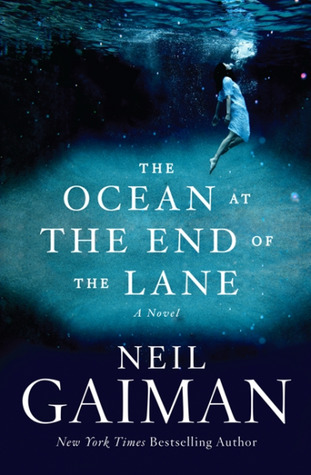
This book is like a collaboration between Stephen King and Roald Dahlafter a brief consultation with C.S. Lewis and H.P. Lovecraft. It’s weird and whimsical and dark and otherworldly and veddy, veddy British. It should be awesome but it’s mostly just…okay.
It took me a long time to get into this short tale of British farmhouse faerie and an abrupt end to childhood. The first quarter of the book is so rambling and aimlessly melancholic that by the time things really began happening, I felt unprepared. This is unlike anything Gaiman has ever written, and in that way is a bit disappointing for me as a long-time fan. I can’t help but think that if this is a reader’s introduction to him, they’d be disappointed by his other work.
It’s not a bad book, though. The ending is one of the more emotionally interesting ones I’ve come across lately, the story has a classic fairy tale grace and triumph, and it’s descriptively lush. It’s not particularly compelling either–as stated before, it takes too long to get going and the characters are all a bit too familiar–precocious children, mean adults and a lot of one-dimensional not-quite-women. It’s worth borrowing but not buying.
(However, if you insist on buying it, please consider doing so HEREvia Bookshop.org, supporting both indie booksellers and this blog. I am an affiliate of Bookshop and will earn a commission if you click on any of the links in this blog to make a purchase. Thanks! )
“I have spent most of my life adrift in hollow silos, a bee whirling around in an empty can.”
Landa Mabenge is a very interesting person. He grew up in an abusive home and struggled through alcoholism, poor mental health, and bad relationships as a young adult in addition to struggling to find support through coming out and getting gender affirmation treatment. Now, he’s an activist and advocate for transgender health issues and adult recovery from abuse. He describes this journey with such a clear desire for personal purpose that readers can’t help but be in his corner from the first page, even through some very dark experiences.
Despite the title, Becoming Himis not really a memoir about being trans. It is the memoir of a trans man–a small distinction but an important one, I feel. Mabenge himself says that the gender affirmation process was only one part of his life–an important part, but not his entire life. There’s a lot more to Landa than just his gender and he makes it clear that he’s very much a normal man living an extraordinary life. While there are abnormal and dysfunctional things in his story, being transgender isn’t one of them. He writes with himself as default, a powerful thing for a “diverse” writer to do, and very effective. Ultimately, the memoir is about recovery, affirmation, and moving continually upward through life towards one’s personal purpose. I personally found it very relatable and inspiring.
Relatable as I found this, it’s the first book by a Black South African writer I’ve ever read, and only the second book I’ve read about a transgender man.(The first was Parrotfish, if you’re curious.) I know that there were plenty of references to transgender experience and South African culture in the text that I missed completely. As it was, I looked up a lot of things while reading. I didn’t mind it since that’s part of why I read. I did mind the TedTalk tone of some parts of the book, and the Jedi hand waving over what seems to be an abusive streak in Mabenge’s own personality as well.
This review was originally written in 2019–imagine my surprise when I discovered that Mabenge has, in fact, given a TedTalk–and its quite good!





 Equal Opportunity Reader