I spent the first quarter of this Poppy War sequel trying to remember why I liked the first book. Main character Rin is probably the most despicable hero I’ve ever encountered. Sure, she’s a fire-wielding martially-trained shaman-powered genius badass who singlehandedly won a war. She’s also a genocidal maniac.(If you’ve read the first book, you know she was created to answer the author’s question “What if Mao Zedong was a teenage girl?”) On top of that, she’s a sellout who turns her back on her roots in order to chase after the favor of her empire’s elites–this book primarily deals with her work to assist her school rival’s father, an esteemed general, bring the beginnings of democracy to the Nikan Empire in the aftermath of war. The motley crew of shamans, warriors and strategists that follow her to the front lines of this new war are really not any better–sometimes, they’re worse.(There’s ONE glaring exception, and if you’ve read these you’ll know that if there was ever a character who deserved a better book it’s Chen Kitay).
But a curious thing happened as I got closer to the halfway mark, where I promised I’d quit if I was still disgusted. Despite how hateful I found all of the characters, I still got invested in their vicious, brutal war and all of the political manipulations involved. Some truly horrible things happen in this book–any content warning you can think of probably applies– but they moved the action of the war and brought home just how high the stakes of the battle for The Dragon Republic are. Rin is truly awful, but the narrative doesn’t avoid making her face the consequences of her choices and asking very hard questions about what it means to wield great power within the limits set by a vengeful human heart. By the time I got to the end, the inevitable betrayals hurt a little and the resulting deaths made me a little sad.
Basically, I started this book thinking there was no way in hell I’d read the third installment and ended knowing that I will.
It’s not perfect–the attempt at a romance was ridiculous IMO and in case I haven’t been clear enough — IT’S MEAN. IT’S GROSS. IT’S UGLY. But it’s also really good writing that drew me in despite all of that.
(Beautiful people and fellow readers! Don’t forget that this blog has affiliate relationships withother sites and any clicks/purchases you make from here may result in a commissioin being earned. If you want to intentionally throw a little cash my way, consider perusing and making an order from The Equal Opportunity Bookshop. Peace!)
Why yes, I did wake up and choose violence today. Why do you ask?
Let me first say that for the time, place and the politics of its day, 1984 was brilliant. It contained very pertinent criticism of post-WWII European governments, strong warnings about government surveillance and police states, and it revolutionized social science fiction for all time.
But if one more person tries to tell me that 1984 is a perfect mirror of current politics or that Facebook is rife with Newsspeak or that *insert opposing politician and political/social stance here* is a textbook example of Big Brother and doublethink, or any other whiny, uncreative application of Orwell’s very specific dystopic vision to modern times I’m going to whack them over the back of the head with a copy of Animal Farm and wait for the Thought Police to come and get me.
Full disclosure: I’ve read 1984 twice. The first time I was a teenage super-nerd who naturally found my way to Orwell after reading copious amounts of Heinlein and Asimov. I found it disappointingly narrow and politically limited, even then. I also found Winston a thoroughly mushy and unrelatable character who was somehow disturbing for reasons that I couldn’t quite put my finger on at the time.
I re-read the book in 2017 when it suddenly became a bestseller again and every other social media post by a wannabe politico was an interpretation of how any disagreeable social policy was somehow the new Ministry of Truth. This time I instantly realized exactly what bothers me about this book. I simply cannot get emotionally, politically or intellectually invested in an imagination that sees the worst possible thing for humanity being the loss of the ability to do whatever you want to do, whenever you want to do it, when that’s the present reality for a lot of actual people. If your vision of the end of the world still includes stable housing, steady work, three meals a day, and entertainment, I really can’t take your dystopia too seriously. If the worst thing you can think of is a loss of freedom that doesn’t otherwise impede your physical quality of life, I find it difficult to be invested in your struggle. If you’ve never had to seriously consider how to get free, then pardon me if I’m not impressed by your bland fantasies of oppression. The world has already been dystopic for many of our ancestors. Some of us are living our great-grandparent’s post-apocalyptic dreams, so excuse me if I can’t get excited about a fictional world in which the revolution is dependent on a very mediocre white dude and the shenanigans his sudden discovery of genital feeling and decent books lead him to. (I could write an entire essay just on how offensive I find it that in certain imaginations, even dystopia has to dance off the end of a white dude’s dick, but because I’m only choosing partial violence today, I’ll save it for another time.)
Look, all I’m saying is that if Roots isn’t the definitive dystopic novel, neither is 1984, ok?
Enough about books I don’t like, however. One of the things I love about the current literary diversity renaissance is that even the beaten-down trope of dystopia is being re-examined, re-contextualized and rewritten to include different perspectives. There’s also a lot of writing about what it would be like to survive them–a lot of these are more utopia than dystopia, which is in keeping with the historical context that a lot of people of difference (for lack of a better term) are dealing with. For many of us, the recent past is full of stories of people just like us who didn’t make it to the present in one piece, even in memory. We got here by embodying the wildest hopes of those who came before us, and it’s fitting that a lot of these dystopias are really stories of how we may eventually reach a better future.
And yes, there’s a very valid argument to make that dystopia is right now but I chose violence this morning, not depression. We’ll have to talk about that another time.
This would hardly be a list of diverse dystopias without first paying tribute to the OG, La Grande Dame of Science Fiction herself, Octavia Butler and her masterwork duology, The Parables. The books, released in the mid- and late 90’s and set in 2025, were eerily prescient in some ways–there’s a businessman-turned-president who exploits white rage and Christian terrorism and uses the slogan “Make America Great Again”, income equality and prison industrialism are slowly making slavery legal again, and climate change has ravaged supply chains and food production. Where they aren’t being prophetic, the books are hopeful in a strangely cold, logical way, embodied in their pragmatic, hyper-empathetic cult leader protagonist Olamina.
I realize there are quite a few contradictions in the previous sentence, and I encourage you to read the books to find out what I mean and why they fit. If novels aren’t your thing, the first in the series has been made into a graphic novel that captures the essential desperation/hope dichotomy of the original. Find them HERE.
The Parables are set less than five years in the future. Waubgeshig Rice’s slow-paced horror story about an Anishinaabe reserve cut off of from the rest of civilization feels like it might be set five weeks into the future. It’s a horror story about an old cultural menace in the body of a new interloper, who penetrates the isolated reserve’s fragile peace in a way that colonial history buffs will find sadly familiar. For all its horror though, this book has a remarkably hopeful resolution–although an unexpected one. Find it HERE.
As I mentioned in my review of Sultana’s Dream, the West has a weird hubris when it comes to all things speculative fiction, especially dystopia. Other countries have their own literary visions of decay and decline, but they’re usually not translated often enough or accessibly enough, which is enough for some people to assume they must not exist. Fortunately, this novella by popular Korean novelist Cheon Myeong-Kwan is pretty widely available, and you can read the first 20 pages or so online(click the link). It’s a sad story set in a hyper-industrial future that stems from Korea’s overwork culture and impending underpopulation. Its wry ending will be very familiar to fans of Korean film’s trademark dark humor.
This book has the distinction of being one of only two medical dystopias that I know of.(The other is Neal Shusterman’s Unwind.) In an age where medical distrust and paranoia seem to be increasing, this is a chilling story set in the very near future about a young woman who drops out of college to literally sell her body for experimental use in order to financially support her family. The setup–a nice, smart girl from a good family forced to do this dreadful, dehumanizing thing–is a heavy, horrifying statement on the struggles young, talented BIPOC’s face when trying to get ahead following the rules of the American dream. The “Black tax” is real and so are other setbacks of historical, generational oppression–this is a dystopia far more plausible than some of the other ones on this list. Find it HERE.
Speaking of plausible dystopia, there are elements of this near future story that seem a little on the nose until you realize they’re grounded in present-day realities found in parts of the majority world. The protagonists, Firuzeh, Bahadur and Kay, are all the victims of a global domino effect–climate change leads to floods, which leads to homelessness, which leads to large numbers of domestic refugees. A conservative government takes the opportunity to round up people of color, disabled people, and LGBTQ+ people in camps to isolate them from the rest of the population, and like any good modern revolutionary story, an uprising by media is the key to changing the world. (Imagine if Cinna was the main character in The Hunger Games and you’ll have some idea how this goes.) This book has characters that are usually only in this genre as comic relief or noble sacrifices take front and center stage as heroes. The result is a strong, touching story. Find it HERE.
It’s rare that I feature two books by the same author on a list, and a lot of people would argue that Patternmaster isn’t dystopic. However, I argue strongly that it is–the regimented, hyper-talented world of the Pattern is a warning that we should never let the type of folks who are simultaneously on LLC Twitter, MLM Facebook and pledged to the Divine Nine take over, at least not without a fight.
Jokes aside, what this post-dystopia really looks at is a world where strict meritocracy is actually valued and instituted. It’s a much grimmer, far less utopic prospect than most people would imagine but I think Butler was on to something here.(She always was.) I often hear well-meaning people express the sentiment that things would be better if “the smart people” ran things, but is smart all it really takes to make a better world?
Patternmaster is part of a longer, very ambitious series that also looks at the consequences of genetic breeding programs, the capriciousness of natural chaos, and gender equality in megalomania, among many other things. Check them all out HERE.
This novella is the only dystopia I’ve ever read that made me laugh out loud. It’s actually an unexpected bit of utopia disguised as dystopia, and so cleverly narrated and plotted that I wanted to cheer a little bit at the end.
There’s a pretty major twist that I think is critical to enjoying the book fully, so I won’t go into more detail. However, I will say that out of all the works on this list, this is the only one I’d tell everyone to buy ASAP and savor repeatedly. It gave me joy, a difficult and unusual thing for a dystopic story to do–so much so that I revoked my usual Amazon Clause for it. Find it HERE.
Walter Mosely is well-known for his detective fiction, but he’s also the author of some of the grimmest, most incisive dystopic fiction I’ve ever read. Futureland is a collection of short stories, all interconnected and set in the same crapsack future plausibly built from our own hypercapitalist, racially unequal, globally unfair present. The stories are infuriating, thrilling, terrifying and darkly hilarious, sometimes all at the same time. Mosely is also remarkably sharp when it comes to geography, culture and global politics and like Butler, he can be eerily prescient at times. (When I first came across this news story, I immediately thought of several stories in this collection that feature this exact living arrangement, and how claustrophobic and miserable I felt reading them.) Mosely’s dystopic work is also notable because Black men are often the main characters, and a wide variety of Black men, at that–intellectuals, criminals, cowards, heroes, everymen, romantics. It’s rare that you see Black men written so thoroughly and diversely into dystopia except as muscle or sidekicks, and there’s a certain flavor that these characters bring into Futureland that is really worth spending a little time savoring. For some reason, the book is difficult to find in print, but check your local library or used bookstore. If you’re a member of Team Audiobook, you can find it HERE.
Full disclosure: I haven’t read this one yet. Reviews bill it as absurdist, but it seems to be about an alternate Texas where multiple border walls have been erected, extinct animals are brought back to life to entertain wealthy patrons, and narcotics are entirely legal. Sounds pretty dystopic to me. Everything I’ve seen and heard about this book make it sound like it brings the cultural joy and humor of Emergency Skin and mixes it with the clever commentary of The Sellout and Interior Chinatown. It’s a highly anticipated read for me, so I’m including it. If you get to it before me, tell me what you think. Find it HERE.
Somewhere in between politics and trendiness, the idea that a dystopian novel is meant as a warning to fix problems within society has been lost, I think. For all my ragging on 1984, it does expose social and political problems and warns against them quite well. So do the nine books on this list, with the added benefit of hindsight from historical and cultural dystopias and apocalypses and a few hopeful predictions for better futures, as well. See them all here, and may they inspire you to contribute to better futures in your own way.
(Beautiful people! It’s been forever since I wrote a booklist, but finally and at last I’m back on my grind. To see other booklists, click HERE. To support this blog, check out the Equal Opportunity Bookshopand consider making a purchase. Full disclosure–this blog has affiliate relationships with Bookshop and other sites. Any clicks and purchases you makefrom links you find here will result in a commission being earned, which I will promptly use to buy more books, so we all win, here. Peace!)
Now look–I love a good trashy book. Y’all have seen my no-bodice-left-unripped romance novel reviews. A little bit of junk food never hurt anybody, and the same goes for books.
But this book is not Twinkies, Takis and giant sour pickles. This book is mystery Starbursts, plain Tostitos and those chalky pastel sugar wafers that come in a twisty plastic sleeve.
In other words, it’s neither good for you nor particularly enjoyable. Ostensibly, it’s a parable about consent and capitalism, highlighting how the drive to commodify oneself can warp personal sexual agency. Young Elisha lives in futuristic Baltimore, where debt is criminalized and people sell themselves into drugged, indentured servitude to avoid prison. The servants, called Dociles, are sometimes deeply damaged by the drug used to ensure compliance–so when Elisha sells himself to the highest bidder, he refuses to take it, and is very aware of the things his handsome new owner does to break him into a perfect companion.
Imagining chattel slavery as a sexy fun brand-named time is the whitest, most American thing ever and that ruins any points this book tries to make. I get that there are attempts to interrogate capitalist greed, healing from trauma, and nuances around consent issues here. They don’t work because intersectionality is ignored in order to shoehorn allegory into a bargain basement slavefic that repeatedly tries to make assault erotic.
Riddle me this, fellow readers–how exactly is it that this 5-minutes-into-the-future Baltimore seems to have completely eradicated racism yet still BROUGHT BACK SLAVERY?! And everyone’s okay with it, even the (numerous, over-described, hey-look-we-are-the-diversity) Black characters? How has homophobia become passé but coercion, grooming, and domestic assault totally ok? These critiques get handwaved because the author is queer and trans but trans people aren’t exempt from being racist and problematic just like Black folks aren’t immune to becoming transphobes.
There’s a lot of “sex” scenes that are really rape, a romance that is actually severe Stockholm syndrome, and a lot of pages devoted to the rich slaveowner tearfully realizing that maybe the slaves on mind controlling substances don’t really want to be his friends, so he should probably stop making drugs.
Yuck, man. 1 star and a psychotherapist to Docile.
(Yeah, give this one a miss, beautiful people. Or not–I can’t tell you what to do. If you want to find it, check out the links in the post, but be aware, this blog has affiliate relationships and any purchases you make at links you visit from here may result in a commission being paid. If you want to check out some other diverse speculative fiction without all the abuse and tone deafness, click HERE.)
Yadriel is a brujo, born into a powerful family of Latinx witches in East LA. The problem is, no-one believes him. Yads is also a gay trans boy and his community’s magic is gendered–therefore everyone insists he’s actually a bruja. His struggles to prove himself a man lead him to accidentally call up the ghost of a cute boy from school, discover a dark magic conspiracy, and face down saints and deities man-to-man.
This book is a triumph of representation. The author is a non-binary trans Latinx person themselves, and Latinx LGBTQIA youth take center stage in the story honestly and vulnerably. I’m sure there are people feeling seen through these characters. There’s a lot of cultural pride on display as well, although it bounces between strongly Mexican-American elements to a slightly confusing pan-Latinx-American identity that blurs tradition and language. (For example, I was a bit surprised to see a half-Haitian brujx family but no Dominicans. I get the sense that many of these characters are probably based on real people the author knows, but there were still cultural moments that didn’t mesh and missing elements, IMO.) A lot of important themes are worked into the story and there’s a strong sense of cultural reclamation through the descriptions of family, brujeria and Dia De Los Muertos celebrations. Also, I’ve followed the writer on Twitter for ages and they seem like a remarkably lovely, culturally sensitive person.
I hope all of that cancels out the bad review karma I’m going to earn with the rest of this post. There’s a lot of Moments of Awesome in this story, but the book just didn’t gel for me. Something about the proclamatory culture/gender infodumps, the red flag first boyfriend romance, and the overall writing just left me cold. I thought at first it was because I’m not the target audience and was missing context, so I reached out to a well-read Mexican LGBTQ community friend to chat about some of my thoughts. I even sent him a few pages to preview and got back the following terse response, shared with permission:
“The f*ck are you making me read?! Twilight for Mexicans?”
(Beautiful people! Good to see you here. Please remember that this blog has affiliate relationships and if you click/purchase from a link on these pages, a commission will be earned. Check out the updated Bookshop page, and go read something good.)
It’s rare that I can summarize a book with only one word, but for this one it’s easy–“delightful”.
Morayo Da Silva is an almost-75 year old Nigerian woman living in San Francisco. She’s funny, well-traveled, cosmopolitan, active, and young at heart. She was a college professor, a writer, a polyglot who threw parties, an ambassador’s wife, a poet’s lover. She’s also a single, childless older woman whose multiple degrees, epic book collection and vast network of international friends don’t count for very much when aging begins to interfere with her independence. But Morayo is so charming, friendly and open that it all (mostly) manages to work out.
To be honest, this book resonated with me because I see one of my possible futures in Morayo–the traveling, the teaching, the writing, and her constant unselfconscious engagement with other cultures are all very familiar to my own life trajectory so far. But Morayo is far sunnier than I am, and one of the things I loved best about this book is that it is unapologetically about an elderly African woman abroad who is joyfully living her best life. There are mentions of political conflict, immigration worries, aging and relationship troubles but this is a book that really chooses to be about joy and community.
Speaking of community, there are a lot of characters and wildly different multiple viewpoints included, even though the book is just over 100 pages long. If you don’t like lots of characters and minimal action you might not love this. I didn’t mind it, though–everyone is written well and distinctively. The switches in perspective and all of the different people woven in and out of parts of Morayo’s life are reminiscent of the messiness and diversity of real community. Even though we only get glimpses, I felt like I knew these people.
(Someday we’re all gonna be old, beautiful people–this book shows one of the better ways to do it, I think. If you want to check it out, consider ordering it from the Equal Opportunity Bookshop–and be aware that this blog has affiliate relationships, and any clicks/purchases made from here will result in a commission being earned. Peace!)
There seems to be this weirdly pervasive idea in popular thought that modernity is the sole property of the (white) West. There are similar backwards modes of thought about science fiction, feminism, utopia, dystopia and the examination of gender roles. Somehow, it’s acceptable in certain circles–sometimes unwittingly–to really believe that nobody but Europeans ever made any social or scientific progress, or even thought to.
But y’all know me. I live to discover books by people expressing their own normal and busting up regressive small-minded BS in the process. When I discovered a science fiction feminist utopia story written by a Bengali Muslim woman in 1905 I jumped right into it.
This is one of those cases where the story behind the story is perhaps more interesting than the book itself. Roquia Sakhawat Hussain, also known as Begum Rokeya, was quite a force even before you get into her writing. She lived in what is now Bangladesh but at the time was part of British India. She established the first school for Muslim girls in Kolkata and started the Muslim Women’s Association and the Bengal Women’s Education Conference(both of which still exist, at least nominally). She married a man who encouraged her to write not only in colonial English but in Bengali. I don’t have the space to list much more but the BBC listed her as the 6th greatest Bengali of all time and there’s a national holiday named after her in Bangladesh.
So is it any wonder that this novella pales beside all of that? It’s only 20 pages long and offers a quick utopic glimpse of a world run entirely by women. Hussain dreamed up autonomous farming, feminist Muslim theology, solar power and flying cars. (It’s worth pointing out for that last one that she wrote this 60 years before The Jetsons existed.) There’s not much to the story but if it had come from another place and another writer it would be considered a classic. This is remarkably innovative for its time and offers a perspective on the future from a viewpoint thoroughly unlike what we’ve been taught to expect for that era of fiction–feminine, religious, Asian, scientifically informed, and stunningly clever. It’s interesting to see where her vision meets and veers away from that of other proto sci-fi authors of the time.
3 stars and a place in history to Sultana’s Dream.
(We should really hear about this little book more, fellow readers. If you want to check it out, find it and more diverse books in the Equal Opportunity Bookshop. Also, please be aware that this blog has affiliate relationships and any clicks/purchases may result in a commission being earned.)
Back in 1999, I was an 18-year old nerd who spent way too much time reading.(Big surprise.) I was a soft, weak naive thing without an ounce of fight in me–but I hated this book and would have happily beat the brakes off of somebody like Winter Santiaga in real life.
The eponymous teenage protagonist of Sister Souljah’s hit urban lit novel is selfish, spoiled, mean, vain and materialistic. She’s a disloyal friend, a scammer, a hustler, a pathological liar. She brags about brand names and hairdos while death and chaos surround her. If Winter Santiaga was a real person, I’d have a hard time hiding my disgust.
And there lies the problem, really. The world has very little sympathy for Black girls to begin with, and while this book was meant as a moral fable, it does a better job of showing how society fails us. While Winter is an awful person, her sociopathy is not entirely her fault. Her drug kingpin father is arrested, her pampered world is dismantled and she does what she feels she has to do to survive using what she knows. Her beauty and ability to lie, steal and manipulate are her best bargaining chips–and that has awful consequences. If she was richer, whiter, more educated or connected to the right folks, it might not be that way.
So, reading this again 22 years later, I feel sorry for her, not judgmental. Winter is so unaware of how poor her choices are and has so little access to better ones that it’s hard to read some of her exploits. She’s abandoned by those around her–even the “good” guy, her father’s trusted lieutenant Midnight, treats her pretty badly. Social services, community figures and her friends all betray her horribly as well. Winter is awful, but what else can she be? What other choices are there for her, even decades later?
Winter as a character–all bad choices and obnoxious first person narration–makes this book train-wreck fascinating, but it isn’t very well-written. Souljah writes herself into the book as a main character and comes across as a bit of a magical hotep pick-me. This makes her portrayal of Winter seem ultimately more mean-spirited than cautionary. The book ends abruptly on an odd preachy note and there’s a lot of homophobia and ableism too–perhaps marginally acceptable at the time but very jarring to read now.
(Hindsight may be 20/20, but I didn’t like this book any more now than when I first read it, beautiful people. If you want to read it, find it and lots of other diverse books focused on diverse readers at the Equal Opportunity Bookshop. Please remember that this blog has affiliate relationships and any clicks and purchases you make may result in a commission being earned. Peace! )
I usually cleanse my mental palate with romance after reading horror. A British-Chinese duke in Victorian England is a pretty big switch from depressed teenage ghost hunters–but the cover of this really caught my eye and Courtney Milan’s name was familiar due to her role in calling out anti-Asian racism in the Romance Writers of America Association a few years ago. (I think it’s worth pointing out that the RWA situation was perhaps the best-steeped literary tea of the past 5 years. Romance/thriller author Alyssa Cole was also involved, and the whole thing got some OG Black romance authors–namely Vivian Stephens–some long overdue recognition.)
So, we have Jeremy Yu, the titular, wisecracking Duke in an alternate history Britain. (Think Netflix’s Bridgerton, but Asian and with more peasantry.) We also have Chloe Fong, a stuffy list-making businesswoman trying to live up to her dedicated single father’s expectations. So what happens? We know what happens, this is a romance novel! Romances all have the same basic plot, that’s why we read them! Nothing affirms a belief in love as much as predictability. Our leads meet as kids, fall in love, grow up, have a half-dozen small misunderstandings that seem Very Important, and solve them due to an obsession with each others clavicles and ankles because this is Victorian times, after all. (Jokes aside–there’s a pretty high steam level in this book despite its uptight setting. Note the cover.)
Despite being set in 1800s England, this book feels like it comes very much from an Asian-American perspective. There’s a very American POC-style focus here on reclaiming culture and identity and legitimizing them by placing them in a semi-plausible “white” historical context. Chloe and Jeremy are both children of immigrants–Jeremy is multiracial as well, and that is explored at length. There’s lots of nods to the diversity of Chinese immigrant diasporas–for example, Chloe’s father speaks Hakka, but Jeremy’s mother speaks Yue Cantonese. The kids, however, feel most comfortable in English and this leads to some interesting conversational moments that are well portrayed. Chinese foods are described in mouthwatering, loving ways–seriously the meals are described more viscerally, and with more of a sense of buildup and sensuality than the sex is. There’s also a monologue from Jeremy about how hard it is for him to be taken seriously in British society that echoes a lot of current Asian-American voices in a poignant, touching way.
The author’s note also describes Hakka Chinese culture, migration and her own Chinese family members–the info there is fascinating and she has some very salient insights about perceptions of Chinese culture so don’t skip it.
(Beautiful people! Hope you have some love, some good food and some good books wherever you are. Friendly reminder that this site has affiliate relationships with Bookshop, and any clicks and purchases you make from here will result in a commission being paid. Peace!)
16 year old Jake Livingston can see ghosts–but that’s not the most interesting thing about this book.
Jake is also at the intersection of a lot of difficult life positions, and like most YA protagonists, his main goal is to figure himself out. He’s one of only two Black kids at a very white elite private school.(The other is his thug-a-be brother.) He’s a shy queer kid surrounded by homophobes. He’s depressed and probably has some form of PTSD from past abuse. His teachers and fellow students bully him in the nasty, covertly racialized way that many of us have dealt with in real life. And, he can see ghosts–one of which wants to take over his body and kill everybody.
There are some book heroes that you kind of want to be. I’d rather be anybody but Jake. Of course, so would he, but circumstances conspire to make him get over that quickly so that he can save himself from evil possession. With the help of spirits, guides, and friends Jake is able to pause his identity crises and save himself.
This is an entertaining read with a lot of layers, representation, and a quickly paced story. The characters are very strong and there’s a surprise teenage boy romance to cheer for next to all the horror and astral projection mysteries. Black culture and queer milestones are woven so seamlessly and naturally into the characters and story that I sent a copy of this to a kid I know who needs to feel seen ASAP. I enjoyed this — however, the ending is one huge plot hole and while I loved seeing Jake finally step into himself, I wish it had been a little more tightly plotted.
Also, the book is told from dual perspectives. One is Jake’s, while the other would be too big of a spoiler to reveal entirely. Just know I didn’t care for him–the “evil racist white trailer park people” trope is far too convenient to fall back on in a cast of characters who are otherwise all complex and fully realized.
(You made it to the end of the review, fellow reader! Pat yourself on the back and be aware that this blog has affiliate relationships and any clicks/purchases made may result in a commission being paid. For more books like Jake’s story, check out the Equal Opportunity Bookshop. Peace! )
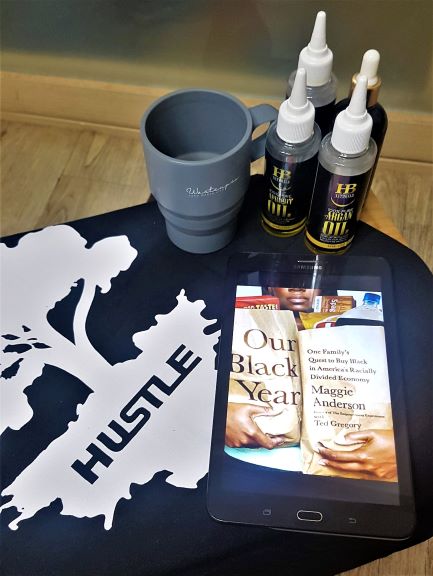
To cut right to the chase, this book really pissed me off. On its face, it’s a real life account of an affluent, educated Black family in Chicago who decided to spend all of 2009 buying from only Black businesses in order to demonstrate the ethnic disparities in America’s economy and drum up inspiration and support for aspiring Black American entrepreneurs. Proceeds from sales of this book go to a foundation that supports Black business owners, and the author hasan impressive website of resources for economic empowerment in the Black community.
However, the tone of this book is often so classist, judgmental and bougier-than-thou that I’m a little shocked it ever made it to print. The author espouses the role of the Talented Tenth, looks down on single mothers, and describes every Black neighborhood without a contingent of light-skinned Ivy-league grads as a filth-ridden war zone. It’s exhausting to read so many good intentions and historical and economical research sandwiched in between quotes like “We are the affable, token Blacks at the dinner party…That status can make us almost celebrities at these gatherings. People flock to us, asking about our backgrounds, where we live, even why my hair is ‘different’ from most African American women’s hair.” and “I endured the pain of buying Black to prove the power of buying Black.”
This was supposed to be my final #readBlackjoy review for June, but as you can see, it gave me anything but good vibes. I almost didn’t finish it, but I wanted to be kind and I genuinely do respect the effort here enormously. Still, I struggled through the last 50 pages of this Frankenbook and its paper bag test, fine tooth comb shenanigans.
Anderson’s quest to buy only from Black-owned businesses in Chicago for an entire year should have been exciting and empowering. Instead, it leaves the author bitter and sad and she has no qualms about blaming the pain of the experience with her audience. Even after beautifully breaking down the data behind retail redlining, discriminatory lending practices, racist domestic terrorist attacks on Black business owners, income disparities, and industry shut outs, the main conclusion she seems to reach at the end is “blame Black people”.
This is where I fall out with a lot of the dominant narratives about Black business in the US. No-one makes money in a vacuum. The immigrant communities that a white supremacist lens tries to set us against in fake minority business wars first make their money from outside groups–often Black folks!–and then recycle those dollars within or spend white–because like it or not, most businesses and nearly all essential services in the US are owned by white people and that’s where the vast majority of every minority and immigrant dollar goes. The missing link in Black business is not Black responsibility–it’s cash flow from outside of the community and equitable policies. Even though the data is all there in her book, Anderson never makes this connection. Many of us don’t.
What makes this worse is that Anderson is an educated, upwardly mobile Afro-Cuban who spends a lot of page time highlighting her connections to Black movers and shakers in politics, media and academia –yet instead of putting pressure on policymakers and pundits, she punches down, continually blaming Black people for somehow not doing enough to not be oppressed.
I find it very telling that in the last chapter, it’s revealed that Anderson’s child care provider, auto mechanic, financial planner, bank, tailor, bookstore, fast food restaurants, thrift store, winery and quite a few other businesses the family patronizes are all Black-owned. Yet most of the book is about how bad Black grocery stores in the hood are and constant judgment of working class and poor Black people. (There’s a self-righteous rant at a man selling food stamps that made me feel physically ill.) Instead of truly uplifting the Black businesses she found, Anderson just chastises them on not doing business the way others do–a disappointingly common attitude.
I give this 3 stars because the appendices are full of truly helpful information and the data is good, even though the narrative is obnoxious.
Other Black-owned businesses local to me that I recommend (keep in mind I currently live in Korea): Anxiety & Kimbap Songtan Mugs
(So this was a disappointing read, beautiful people. If you buy it, I recommend doing so from the author’s site and supporting her foundation. If you don’t want to buy it but want to read it, search your local library. As always, for legal reasons I have to tell you that this blog has affiliate relationships and clicks/purchases from some sites result in a commission being earned. I am Black, though, so if you want to support a Black business directly please check out the Equal Opportunity Bookshop, where all clicks and purchases are greatly appreciated and no homeless men are ever lectured about class.)


 ) There’s not much to the story but if it had come from another place and another writer it would be considered a classic. This is remarkably innovative for its time and offers a perspective on the future from a viewpoint thoroughly unlike what we’ve been taught to expect for that era of fiction–feminine, religious, Asian, scientifically informed, and stunningly clever. It’s interesting to see where her vision meets and veers away from that of other proto sci-fi authors of the time.


 Equal Opportunity Reader