[Last Week In Books] Immigrants, Refugees, Colonizers, and Serial Killers

Hello fellow readers! I turned lots of pages last week because I broke my phone. The resulting all-analog experience has me wondering…how did any of us ever live without a computer constantly in the palms of our hands?

If the last week of my life is any indication, apparently we read far more books.

In any case, I still managed to hop on the internet regularly enough to collect a few bits of news about diverse books and diverse readers, so without further ado…

  • Let’s start with the most important thing. Nikole-Hannah Jones’ Pulitzer Prize winning 1619 Project has been revamped and expanded into a book that will help present learners with a recontextualized, more accurate and inclusive picture of American history. Bookshop is helping affiliates sponsor book drives–you can buy a book to donate to a school, and I’ll get 10% of the value in commission, which I will then use to buy more books for donation. My link for donations is here. Please click through and think about helping to get this book into as many schools as possible. [Bookshop]
  • The world is full of immigrant stories, and this list does a good job of curating some good ones from the backlist. Immigrant trope mainstays Nigeria, India and Ireland are all featured, but there are also stories from Turkey and two very unique stories of Chinese immigration included as well. [BookTrib]
  • Speaking of migration, Keum Suk Gendry-Kim has created a new graphic novel about a South Korean family reckoning with the long-ago trauma of migrating from North Korea during the war. It looks like necessary reading for anyone with a serious interest in Korea. [Los Angeles Times]
  • As you know, I’m always on the lookout for #ownnormal stories and this list of queer stories in rural settings definitely fits the bill. The only book on the list that I’ve read is On Earth We’re Briefly Gorgeous which is pretty much required ’round these parts, and that’s enough to make me want to check out the rest of the list. [Book Riot]

That’s it for this week. As always, there are SO many more things I’d like to share, but only so much space. If you want more regular updates, feel free to follow on Facebook or Instagram. If you want to support this site, please check out the Equal Opportunity Bookshop–any purchases through that link and any of the affiliate links on this site will result in a commission being paid. Thanks for reading!

[REVIEW] The Haunting of Lin-Manuel Miranda, by Ishmael Reed

(Buy it at Bookshop.)

I loved Broadway’s Hamilton despite myself. The songs, the sincerity, the hammy hip-hop–it all got to me. I went in scoffing at the idea of Founding Father fan fiction and came out claiming George Washington as my new bae. I don’t hate the play, but I can see its problems just as clearly as I can hear its tunes.

You know who did hate the play, though? Toni Morrison. She hated it so much she helped fund Ishmael Reed’s low-budget critical counterpoint, which is formed around key historical and anti-colonial critiques of the Broadway show. The resulting Haunting is actually pretty kind to Hamilton. It’s even kinder to Lin-Manuel Miranda, who, as the main character in the play, finds himself haunted by the ghosts of enslaved Africans, displaced Indigenous people, and a pesky Ambien-wielding agent. The play is cheeky, self-aware, well-researched…and probably unbearably didactic in performance.

It doesn’t call Hamilton an outright bad show, because it isn’t. It does call it out for egregious ahistoricity, and calls Miranda in for being a sincerely bad researcher. It pokes fun at Hamilton’s cheesy rhymes while also admitting that Haunting’s playwright spent a mortgage payment on tickets to it. It provides a lot of historical context into who Hamilton, Schuyler, Jefferson et. al really were, and how badly they would have thought of–and treated–nearly every actor in the show that recontextualized their names. It does what good theater should often do — it provides perspective. Just because something taps into the zeitgeist perfectly doesn’t make it unquestionably good, even if there’s not much better out there.

Of course, just because a critique is perfectly poised doesn’t make it good either. I wouldn’t pay to see this play. It’s full of long preachy woke-coded monologues and while there are some clever lines, not a lot happens in the dialogue. Reading it is a nice thought exercise though, and a bit gratifying for those of us who never could love Hamilton with our whole hearts.

Four stars and ironic box seats for 1776 to The Haunting of Lin-Manuel Miranda.

(Beautiful people! This is the part where I tell you that I’m glad you’re here, I hope you’re reading something good in a comfy fall location, and any clicks and purchases made from links on this site may result in a commission being paid. If you want to check out more diverse books for diverse readers, the Equal Opportunity Bookshop awaits. If you want to read more of my reviews of plays, click here. Whatever you do, enjoy it! Peace!)

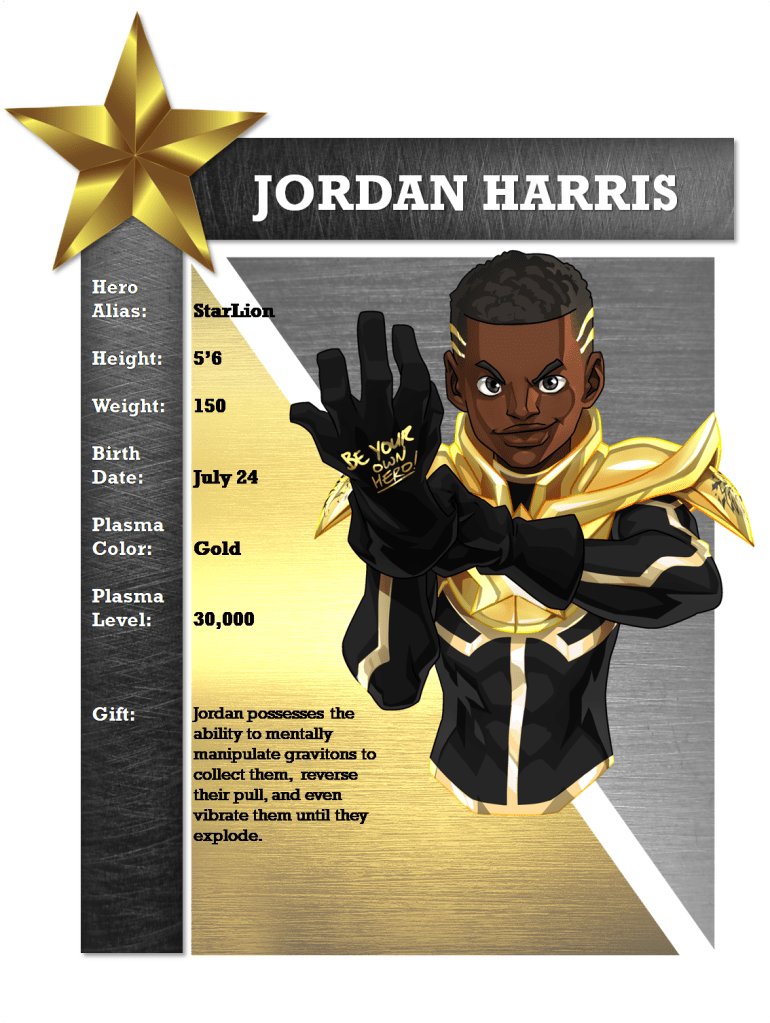
[REVIEW] Starlion: Thieves of the Red Night, by Leon Langford

(Buy it here from Bookshop.)

What do you get when you cross Sky High, The Avengers and Yu-Gi-Oh? Toss in a little Harry Potter and Percy Jackson too and apparently, you get this fun middle-grade superhero fantasy novel by indie author Leon Langford.

It’s about Jordan Harris, a supernaturally gifted Black boy in an alternate Houston where the gods of mythology are real and have passed their gifts down to numerous heirs. The best and brightest go to superhero school. The less supported become vigilantes, running the risk of jail and permanent disgrace. It’s to avoid this disgrace that Jordan agrees to stop his solo crime-fighting activities and go undercover in a super-school to find a pair of villains trying to replicate the greatest tragedy in recent history. With the help of good friends, new teachers, and his stern, motherly older sister, Jordan has no choice but to increase his power levels and save the day.

I’m leaving loads of details out of this plot synopsis, but with good reason. This book is complicated — but in the best kind of way. The lore is deep and detailed, with anime-style illustrations to match. Preteen nerd me would have lived for a universe like this to lose myself in, and I think current young readers will have the same response. It’s a fun read with the kind of complexity trading cards and movie tie-ins are made of(*AHEM*), and I hope the book blows up into a series. The illustrations reflect this merch-readiness as well–I’ve included a few of them in this review, with the kind permission of the author.

There are also a lot of little Black cultural touches authentic to the real world included in the book that I appreciated–the strained affection between Jordan and his absentee superhero uncle, in particular, touched me. Some of the supporting cast are Latino and Southeast Asian as well. There are nods to heritage throughout this book that don’t distract from the action and adventure–rather, they add to it. The author explained his vision for this in an email exchange, and I have to say, I’m all here for it.

My personal mission with this book, was for audiences, young and old, to see themselves in a more powerful light. I owe so much of my childhood to Marvel, DC, and Shonen Jump properties, and I wanted to craft a universal experience for my audience that sent them on the same super-powered adventure. Starlion is driven by characters that were always marginalized or featured in a supporting role, and I wanted to flip the usual narrative and show that no matter, your race, age, or background, anyone can be a hero. 

I love that there are so many fun, joyous books out featuring Black and Brown boys now, and I recommend this for your little comics lovers. It goes on my fun Black fantasy kids shelf along with Raybearer Tarisai and TJ Young.

Deepest thanks to Leon Langford (@starlionbook) for the digital ARC of the book and his epic patience with me and the havoc my international move wreaked on the timing of this fair and impartial review!

(Beautiful people! I’m loving how much fun Black heroes are having in fantasy books for all ages these days and hope you are, too. If you want to find more books like this, please check out the Equal Opportunity Bookshop, but be aware that all purchases made if you click through to that site result in a commission being paid. Peace, and go read something good!)

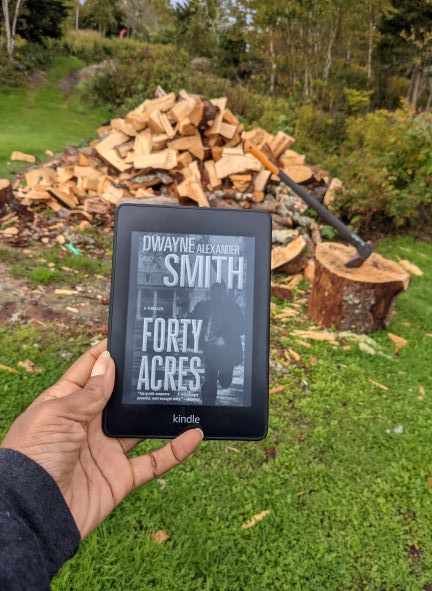
[REVIEW] Forty Acres, by Dwayne Alexander Smith

(Buy this on Bookshop)

I had to think long and hard about what to say about this book and to be honest, I’m still not sure.

Let’s start with the premise. (Warning: I’m going all in with the spoilers for this one.) Martin Grey is an up-and-coming, black and bougie New York attorney. When he wins a case against a hotshot celebrity lawyer he finds himself invited to hobnob with some of the best of the Black and wealthy set. While drinking whiskey, puffing Cuban cigars, and getting pointers on how to handle the money and fame sure to come his way he’s invited to a rafting weekend, which turns out to have sinister intentions. Under the direction of the mysterious “philosopher” Dr. Kasim–a strange hotep-ish character mashup who reminded me at times of of Dr. Sebi and Lord Jamar–a group of rich, talented Black men are annually invited to live out a complicated, brutal revenge fantasy on a secret resort plantation where the descendants of white slave owners are held as slaves themselves and every Black man must be called master.

This is where I run out of intelligent things to say that aren’t vaguely horrified. The premise is so wild that I turned the pages just to see what else the author had come up with but the whole thing made me extremely uncomfortable. Even though Grey turns out to be the only sane man in his group and plays double agent to free Kasim’s captives, the descriptions of revenge-based brutality are pretty graphic and honestly–I’m not sure why they’re there. I don’t know a single Black person who’s wished for white people to be brutalized the way we were–the general cultural feeling is that we wish it hadn’t happened and want to heal the damage. The premise of this book is so weirdly antithetical to what I and most people truly believe will heal Black communities that I just don’t get the point. If you want a take on reverse slavery, Steven Barnes did a much better job in his meticulously world-built alternate history Lion’s Blood, with a much more purposeful story. As a thriller, the premise could have worked but the execution is too on-the-nose to have much of a thrill to it, in my opinion.

Besides that, the explicit nature of the book doesn’t mean that the writing is good. The characters are the sorts of bland brand-name obsessed caricatures of Black success you often see in urban fiction and a lot of the plot doesn’t really make sense outside of shock value. I read this in a constant haze of “WhaaAat?”, but I don’t think I could recommend this to anyone.

I don’t even know what to rate this, but I felt like I needed to be re-emancipated once I turned the last page. Travel these Forty Acres at your own risk.

(So…this one was a dud, fellow readers. If you want to check out some books by Black authors that deal with our struggles throughout American history, check out this booklist on the Equal Opportunity Bookshop. Please don’t forget–this blog is a labor of love, but we do have an affiliate relationship with Bookshop and any clicks and purchases you make from here will result in a commission being paid. Peace!)

Last Week In Books: Reviews and Adaptations

Time again for our biweekly roundup of diverse book news, fellow readers. This week I’d like to highlight reviews of upcoming and recent releases by some of my fellow bloggers, and also get into a few of the apparently ENDLESS film and television adaptations of books being released this fall.

Let’s start with the reviews;

  • Bob on Books is one of my book blogging inspirations; his review on the re-release of William Pannell’s 1993 book The Coming Race Wars is thoughtful, as usual and made me interested in a book that initially turned me off with its title. [Bob On Books]
  • Meanwhile, over on Open Americas, another thoughtful review, this time of Mansoor Adayfi’s memoir Don’t Forget Us Here: Lost and Found In Guantanamo. Adayfi was a prisoner in Guantanamo, subjected to torture and interrogation, all due to a case of extremely mistaken identity–authorities insisted that Yemen-born Adayfi was an Egyptian general of some renown, even though Adayfi was nineteen years old at the time of his imprisonment. *whew* Not sure when I’ll have the stomach to read this, but the review does a very good job of providing the political and historical context for what is surely a gripping and infuriating read. [Open Americas]
  • Another personal inspiration of mine, Bibliophile on a Budget, has a great writeup of the fabulous-sounding essay collection Care Free Black Girls by Zeba Blay. The book is slowly inching to the top of my never-ending #tbr and Bibliophile’s review moves it up a notch. The book’s not out until October 19th, but it promises such a timely take on freedom and joy for Black women and girls in pop culture that I’ve already pre-ordered it. [Bibliophile On A Budget]

Now on to the adaptations…

  • Netflix thriller YOU is back for a third season. I’ve only read the first of the series of books by Caroline Kepnes that inspired the darkly hilarious series, but I’ve watched every episode(some multiple times). I admit it–I’m fascinated by the story of Joe Goldberg, whose bookishness covers a multitude of sins. [Netflix]
  • Teasers, trailers and thinkpieces abound for Amazon’s adaptation of Robert Jordan’s The Wheel of Time series, and it isn’t even being released until November 19th. I was lukewarm on the books (I didn’t even finish the series) but I’m pretty excited for the show, admittedly because of the diverse casting and multiculturally inspired design vision. [Amazon Prime]
  • Apparently the adaptation of The Three Body Problem is still happening, despite a murder scandal among the production team and the author’s nasty habit of cosigning genocide. Okay then. [Deadline]
  • The new Dune film has been out in Europe and Asia for over a month now but I moved back to the US and therefore have to wait until October 22nd to see it. Much appreciation to global fans who have told us it’s amazing without actually giving any spoilers. I’m already stockpiling my snacks for Friday night. [CNET]

That’s it for this week, beautiful people. Don’t forget to check out the Equal Opportunity Bookshop–all clicks and purchases result in a commission being earned, which keeps this blog going. Enjoy your week, and read something good! Peace!

[REVIEW] White Ivy, by Susie Yang

(Buy it on Bookshop here.)

I moved to Boston recently, and as a result I’ve been slurping up books set there. Most of them are not diverse, to put it mildly. White Ivy, a book about a Chinese-American immigrant in the city, was a refreshing surprise.

There are a lot of reviews of this by Chinese-American readers on Goodreads, and you should definitely give them some time if you want a deep cultural analysis of this book. My perspective is empathetic, but limited. It doesn’t help that the book is a bit of a chimera.

I’ve seen it billed as a coming of age, a thriller, a racial commentary, and a gritty immigrant story. It’s all of those things and none of them. Ivy joins her parents in America when she’s five. They’re cold and grim, her younger brother is the favorite, and when Ivy’s beloved grandmother joins the family later, her contempt for America leads her to develop a peculiar hobby–petty theft. Ivy picks up the habit out of a desire to fit in with her white, well-bred classmates and gain the attention of her golden boy crush. When we catch back up with adult Ivy, her juvenile dishonesty has morphed into adult sociopathy. Ivy will do anything to be accepted by the Ivy League & summer cottage set, and when the kids she idolized in the past re-enter her life as impossibly acceptable adults, things get dark very quickly.

I empathize with Ivy, honestly. There’s an awful pressure in being the poor, “ethnic” smart kid surrounded by peers whose future is guaranteed and whose parents actually contribute to their success, rather than just demanding it. Ivy does terrible things, but you can clearly see why and how she gets there. I’m not saying her behavior is ok–I’m just saying I understand.

This book has remarkable characters who subvert stereotypes and have really intriguing, sensitive backstories that they all remember in completely different ways. There’s a lot of layers to the story and although I expected the two big twists at the end, they were still very interesting to read. My only real gripe is that I wanted a bit more drama from the ending and that last twist–whew. I needed that to be unpacked within the novel, not just alluded to and suddenly dumped on us in the last few pages.

Still, this is a hell of a first novel and a really good read. Four stars and some self-acceptance to White Ivy.

(Fellow readers, thanks for all your support! Please remember that this blog has affiliate relationships with Bookshop and any clicks/purchases result in a commission being paid to lil’ ol’ me. Go read something good!)

Last Week In Books: You Think You Can Stop Me, Mr. Zuckerberg? Think Again!

Been a long time, fellow readers. Facebook’s little BSOD moment has reminded me not to put all my eggs into one platform’s basket. So, in order to keep bringing you diverse book and diverse author news even in the case of a social media apocalypse, let’s try bringing this back on a biweekly basis, for now.

Without further ado…

  • Y’all know I have a deep and abiding love for all things TJ Young. This interview with author Antoine Bandele offers great insights on the hard work it took to get TJ and friends onto the published page and into all of our hands. [A Healthy Dose of Fran]
  • Speaking of love, romance writer Jasmine Guillory has revealed the cover and premise of her upcoming new novel, By The Book. Apparently it’s a retelling of Beauty and the Beast with a Black woman as the lead. Be still, my pre-teen romance reading heart. [Collider]
  • And speaking of pre-teens, there’s a lot to love about Book Riot’s take on re-assessing the children’s book canon, including their call for broader diversity in the books and their authors. I, too, would love to see titles like The Birchbark House, Julian at the Wedding, and Bodies are Cool suggested to all English-speaking little readers, everywhere. [Book Riot]
  • I ran out of cutesy lead-ins for this so–nope, wait, got one. Speaking of diversity(whew), the #ownvoices movement is coming under a lot of scrutiny lately and its creators are doing their best to retire it. Why? “Same old, same old: privileged folks tried to take power away from the marginalized. Writing, of course, is a business. #OwnVoices was created to market, promote, and sell the works of marginalized authors. But eventually the marginalized authors and readers who empowered that term were no longer dictating its parameters.” [Quill and Quire]
  • Last one for this week, lovelies–legendary Nigerian Nobel Laureate Wole Soyinka gave a rare interview to the NY Times to promote his latest novel and–y’all. Go read it. Enjoy it. This man has lived a LIFE. [New York Times]

That’s it for this week, fellow readers. If you want to support the blog and see more frequent news, reviews, and booklists, consider heading to the Equal Opportunity Bookshop and adding to your #tbr–we have an affiliate relationship with them and earn a commission from your purchases. But purchase or no purchase, as always–go read something good!

Peace!

[Review] Life After Death, Sister Souljah

(If you don’t love yourself today, you can buy this here at Bookshop)

Did any of y’all ever read Christian end times spec-fic? By that I mean books like Left Behind, This Present Darkness, and other religious novels focused on spiritual warfare, heaven, hell, and salvation. There are a lot of odd things about evangeliculture but in hindsight, these books are one of the oddest. They were meant to be uplifting but were mostly just a lot of mean-spirited judgement, self-righteous crowing, and infodumps disguised as holiness preaching. There were always side characters who had the nerve to be pretty, spoiled women who weren’t saved and they were always tortured and vilified in horrible ways to prove that even women with personalities can be forgiven for existing if they just suffer enough, or something like that.

Life After Death is basically the Black hood Muslim version of those.

The spoiled pretty girl is the main character and the afterlife theology is all Islamic, but other than that, this is just another fundamentalist shamefest disguised as a novel. The reviews of this were bad, beautiful people, and while I don’t put too much stock in reviews(ironically), I found myself thinking that even the most scathing opinions of this were far too kind.

The best way to tell you exactly how bad this sequel to The Coldest Winter Ever is just to summarize it plainly. Winter Santiaga, as unlikable as ever, gets a reality show contract fresh off of the fifteen-year drug bid that ended the last book. While filming the first scene of the show, she’s fatally shot by a false friend and gets sent to a sort of purgatory. While there, she experiences relatively low-grade physical torture until she gets into a relationship with the son of Satan, whose given name is–and I apologize, but I could not make this up– Dat Nigga. Descriptions of brand name fashion fly around constantly because apparently even hell has shopping malls. They have lots of very graphically described anal sex and he turns her into a snake, then a dog. Bestiality ensues. (Yuck.) She escapes him, is rescued by a bunch of Catholic nuns, makes friends with a white feminist and a college girl, and they escape the weird purgatorial convent, steal a car and go to a…nightclub??? For some reason purgatory has a nightclub and not only does everyone know where it is, no-one is freaked out by the literal giant demon DJ even though all of these people are very aware they are dead and not in heaven. While in line for the club, she meets Satan, then goes to seduce Satan. Eventually she finesses Satan into agreeing to let her open a fashion label in hell but the whole deal goes south because Winter is the same sociopath she was in the previous book and all of her schemes eventually go sour because even demons get tired of her personality. As a result, she almost gets thrown in hellfire, but is ultimately rescued by her incredibly preachy unborn twin children that she aborted in the first book and completely forgot about. (I also forgot.)

And then, believe it or not, it gets even weirder and worse.

The bad reviews are ALL TRUE, beautiful people. I should have believed them– don’t make my mistake. One star and a one-way ticket to hell for Life After Death.

(Beautiful people and fellow readers–I actually felt bad about including the affiliate links in this post because I do not recommend this book. There are plenty of others I do recommend though, so feel free to take a peek at the Equal Opportunity Bookshop if you’re looking for something good to read. Any purchases made at that link or any other link on this site may result in a commission being paid to this site because we have affiliate relationships. I promise those funds will not be used to purchase any other Sistah Souljah books, ever. Peace! )

[REVIEW] Parable of the Sower: A Graphic Novel Adaptation, original text by Octavia Butler, adapted by Damian Duffy, illustrated by John Jennings

(Buy it on Bookshop here.)

I just moved back to America, and man, it is weird.

Watching the news from America in preparation for my return sometimes felt like watching a large angry monster run towards a cliff with someone you love strapped to their back, screaming. I haven’t lived in my country for 15 years. I was scared of returning to it. But I missed it and the people it (poorly) shelters, so I’ve been back for 20 days, and so far it’s okay.

I remember reading Octavia Butler’s Parable of the Sower for the first time in my early 20s and feeling horrified but also strangely vindicated. The people within–families of different races, religions, and household structures working with the knowledge that their internal tensions were nothing compared to the chaos and hatred outside–were dystopic projections of communities I knew. The negligence-enabled oppression under a profiteering government was also something I saw and struggled with, eventually leading to my departure from the US back in 2006. (I’m not saying Butler made me leave America–I’m just saying she was one of several confirmations that it wasn’t a bad idea.) Parable of the Sower begins in 2024, and I’m worried that it’s grimly prophetic. Climate change, corporate abuses, police corruption, and so many other issues from 2021’s headlines have all taken their toll. People who would be seen as upwardly mobile middle-class in earlier times live in gated communities, hiding their fragile prosperity from the world outside. But walls have gates and fires can burn away a lifetime in a second. 18-year old Olamina survives the total destruction of her small world and ventures out into chaos, gathering friends and allies under the idea that God is change–but building strong communities can shape God.

My brief description and commentary on this novel does it no justice, and the graphic adaptation adds nothing new unless you love the art (I don’t.) The only reason I’d read this over the original is because it’s a little less disturbing– it simply shows us the horrible things Butler left to our imaginations. But do read this, in some form, please.

5 stars to Parable of the Sower, 4 stars to this adaptation.

(Beautiful people, the only way that things truly change for the better is through communities working hard to make it so. If you want some books about how to do that, I made a list here. If you want to support this blog–and even if you don’t–please be aware that Equal Opportunity Reader has affiliate relationships with sites like Bookshop, and any clicks/purchases made from here will result in a commission being paid. I use it to buy more books and give change to this one homeless dude I know. Peace!)

[Review] The Dragon Republic, by R.F. Kuang

(Buy it on Bookshop here.)

I spent the first quarter of this Poppy War sequel trying to remember why I liked the first book. Main character Rin is probably the most despicable hero I’ve ever encountered. Sure, she’s a fire-wielding martially-trained shaman-powered genius badass who singlehandedly won a war. She’s also a genocidal maniac.(If you’ve read the first book, you know she was created to answer the author’s question “What if Mao Zedong was a teenage girl?”) On top of that, she’s a sellout who turns her back on her roots in order to chase after the favor of her empire’s elites–this book primarily deals with her work to assist her school rival’s father, an esteemed general, bring the beginnings of democracy to the Nikan Empire in the aftermath of war. The motley crew of shamans, warriors and strategists that follow her to the front lines of this new war are really not any better–sometimes, they’re worse.(There’s ONE glaring exception, and if you’ve read these you’ll know that if there was ever a character who deserved a better book it’s Chen Kitay).

But a curious thing happened as I got closer to the halfway mark, where I promised I’d quit if I was still disgusted. Despite how hateful I found all of the characters, I still got invested in their vicious, brutal war and all of the political manipulations involved. Some truly horrible things happen in this book–any content warning you can think of probably applies– but they moved the action of the war and brought home just how high the stakes of the battle for The Dragon Republic are. Rin is truly awful, but the narrative doesn’t avoid making her face the consequences of her choices and asking very hard questions about what it means to wield great power within the limits set by a vengeful human heart. By the time I got to the end, the inevitable betrayals hurt a little and the resulting deaths made me a little sad.

Basically, I started this book thinking there was no way in hell I’d read the third installment and ended knowing that I will.

It’s not perfect–the attempt at a romance was ridiculous IMO and in case I haven’t been clear enough — IT’S MEAN. IT’S GROSS. IT’S UGLY. But it’s also really good writing that drew me in despite all of that.

4 stars and a vomit bag to The Dragon Republic

(Beautiful people and fellow readers! Don’t forget that this blog has affiliate relationships with other sites and any clicks/purchases you make from here may result in a commissioin being earned. If you want to intentionally throw a little cash my way, consider perusing and making an order from The Equal Opportunity Bookshop. Peace!)