[READING CHALLENGE] Read Disabled Writers!

(To skip straight to a booklist, click here.)

I’m super late with this month’s reading challenge, but it’s here, fellow readers!

First of all, how are you all doing? I took last week off from reading and blogging because I am TIRED. I’m also in that lovely part of reverse culture shock where I absolutely do not want to be in my own country but also can’t be bothered packing to move somewhere else again, and so I complain constantly, read sporadically, and make everyone who doesn’t know basic geography absolutely miserable with my sneering know-it-all-ism.

*ahem* But anyway, hope y’all are fine.

This month’s reading challenge is inspired by the fact that July is Disability Pride Month and my recent decision to take a course on audio description for the blind and visually impaired. If all goes well, I’ll be assisting blind theater patrons during shows next year.

Meanwhile, disability remains a pretty large blind spot for me. I’d venture to say that if you are not disabled, it’s probably a big blind spot for you as well–even if you don’t realize it. So, for this month’s challenge, let’s read something by a disabled author.

Disability is a broad term. It ranges across physical differences to mental impairments, sensory processing differences, and invisible illnesses. There are so many experiences, and therefore stories of disability that whatever you read will just give you the beginnings of understanding.

I also want to point out that not all books by disabled authors are about disability. Two of the most popular diverse romance novel authors–Helen Hoang and Talia Hibbert–are both neurodivergent and disabled. Science fiction writer(and amazing renaissance woman) Day Al-Mohamed is visually impaired and writes about space libraries. Humor essayist Samantha Irby writes about her disabilities but she also writes about how much she does not want to go outside when it’s hot out and that’s far more interesting.

Of course, plenty of people write about their disabilities too, and those books should also be read. There’s a booklist in the Equal Opportunity Bookshop if you need a place to start.

As always, tell me what you read in the comments. Peace!

[Hear Me Out] The Handmaid’s Tale Is Not The Book We Need To Read Right Now

(To skip straight to the books, click here.)

So on Friday, despite widespread public disapproval following a leak back in May, the US Supreme Court overturned 1973’s landmark Roe vs. Wade ruling, rescinding the constitutional right to an abortion.

Naturally, there’s been immense public outcry from many of us with uteruses, both virtually and in reality. Protests have sprung up across the country. Supreme Court Justices Alito, Thomas, Coney Barrett and Kavanaugh have been the target of considerable (deserved) criticism as well.

Online comments are all over the place, which is normal for the internet. I’ve noticed in particular that there are a lot of memes featuring Margaret Atwood’s 1985 dystopian novel The Handmaid’s Tale, and images from the television adaptation of it.

I get it. Atwood’s Gilead is a vision of a racist, fundamentalist America built on the principles of male supremacy and violent denial of bodily autonomy and reproductive justice to the few remaining (white) women. It’s a short step from Friday’s ruling to fretting about our rights and how fragile they really are. It’s easy to look at the current state of the country and begin to prepare for the worst in a resigned, doom-filled way.

However, I am here to tell you to knock that shit off.

We’ve been over this before. Doom is mostly an indulgence of English-speaking white people, and y’all need to get over it. Whether we like it or not, the future is coming, and only a fool puts all their energy into imagining the worst versions of it without also putting sincere effort into building something better. Additionally, the television adaptation and published sequel to Handmaid highlighted some problems with the original text that don’t really fly now.

But what should we be reading, in the face of a world where nearly every government seems determined to drag us backwards into hell on earth? Let’s talk about it. But first…

A Practical Note…

This may seem a bit strange coming from me, but this is a situation where books are only going to do so much. Of course, you should read and educate yourself with facts and empathy. However, now more than ever, it’s important to put your body where your brains are. That means putting the books down and taking some action.

I know, I know. I’m feeling fine, I swear. I checked my temperature and everything after writing that.

It would be very naive of me to not point out that for everyone who is upset, infuriated or saddened, there is at least one other person who is overjoyed and sees this as a win. Those people aren’t out here trying to win with knowledge and booklists. Instead, they’re taking powerful action to influence education and personal freedoms for everybody.

To combat this, here are a few small but powerful actions you can take:

Learn the stats. If you’re fuzzy on the facts and need some cold, hard data to help you understand what’s going on and what the possibilities for fighting this thing are, I recommend checking the Guttmacher Institute. They have the facts, reports and shareable infographics to get you up to speed quickly.

Get political. Here’s where your feet need to start meeting the street. Check out We Won’t Go Back for local protests and rallies you can attend. If you can’t get to a rally or don’t feel comfortable going to one (because COVID-19 still exists!), you can also find virtual events on the site. Also, while I won’t lecture anybody about voting, I will say that it’s a good idea to contact your local senators and members of Congress and urge them to take action to undo the damage. There is actually a lot that can be done, and we need to put pressure on those who can do it.

Donate. If you’re able and willing to help financially, there are a lot of organizations putting in overtime that could use some extra cash flow right now. Whatever you do, don’t throw your money at your local Democratic party office–they have plenty, and using this as a fundraising tactic is tasteless on their part and ensures your money won’t be used well. Also, quit sharing those memes about “camping trips”. There are well-established, systematically sound organizations that are already doing that work. Instead, put your “camping trip” gas money in the pockets of Brigid Alliance, a non-profit that provides travel assistance, child care, and other logistical needs for women who need to travel to have an abortion. Also, it goes without saying but Black and Indigenous women, people of marginalized genders and their families will be hit hardest by this issue. If you want to support organizations with a track record of helping holistically in communities that need it most, I recommend Voix Noire and Indigenous Women Rising

Prep your medicine cabinet. Mifepristone and Misoprostol are two drugs that can be used to induce a medical abortion before the 11th week of pregnancy. For now, they can be safely accessed and ordered online without a prescription in much of the US, and in most cases have a shelf-life of up to two years. To find out more, check the Plan C website.

Back To The Books…

Now that we’ve acknowledged the need for real-world practical action, let’s get back to Handmaid’s Tale and the books that are actually helpful right now.

First of all, let me say that the Handmaid’s Tale isn’t a bad book, exactly. I have a lot of appreciation for it. As I said in my review of The Testaments,

 The Handmaid’s Tale was a masterpiece, a haunting, terrifying dystopia intended to warn us not only of the dangers of sexism, fundamentalism, and their policies but also to alert 1980s us to the unjust present reality of women’s lives in many parts of the globe. At the time of its writing, Handmaid was shocking, incisive and challenging. I first read it in my teens and was both horrified and vindicated by the content as I began to understand the difference between what I actually wanted and what I was expected to want as a young woman with a fundamentalist Christian upbringing. It’s a critical, necessary work and a bit of true genius in the landscape of feminist novels and dystopias.

But time marches on, and so do social sensitivities, concepts of dystopia and understandings of the broader world. 

Basically, it’s no longer enough to imagine the horrors of the end of the world without envisioning solutions, if it ever really was.

There’s another problem, too. In the original author’s note, Margaret Atwood admits that every horror in The Handmaid’s Tale was based on something that really happened or was happening to women somewhere in the world. The tone-deaf, pandering train-wreck sequel and the nauseating television adaptation proved that the series was never about liberation, freedom and equity for all women–rather, it was about white women’s horror of being treated like many other women were already being treated. It isn’t even about action, because Offred is passive and weak and is ultimately saved by the men she sleeps with.(I slated Vox for this same plot point, not realizing it was directly inspired by the source material.) When you zoom out and look at Handmaid’s Tale in the context of what women really have to do to survive, it’s a remarkably weak, selfish story.

Now that Roe Vs Wade has been overturned, I need y’all to put down the imaginary sisterwives passive not-really-resistance manual and pick up some other books. I’m not interested in these posts being passed around that center self-victimizing narratives or sackcloth, ashes, and end of the world grieving. None of that is helpful right now(That whiny shit about deleting your period tracking apps? NO. Ditto for sex strikes, casually moving to another country, and anything that centers helplessness or privilege.)

This is where women need to harness the power of community. This is where we need to use our enormous social and professional capital to enact change rather than sitting somewhere making sniveling jokes about Gilead and deleting apps. Some of us are lawyers, some of us are community organizers, we work in government, journalism, public policy, activism, spiritual work, social work, advocacy, and health care so GET MOVING. We use the power we have now, while we still have it, instead of retreating into powerlessness.

If you need a book to inspire you as you do this, here are a few.


Parable of the Sower & Parable of the Talents, Octavia E. Butler(Grand Central Publishing, 2019)

This duology, originally published in the late ’90s, was eerily prescient about the state of the world today. Climate change, inflation, education inequity and religious demagoguery have reduced America to a starving, wild shell of a country and in the midst of it, a young woman named Lauren Olamina dreams of a future where clear, loving communities find their homes in each other and in the stars. Despite harsh opposition and the terror of life in uncertain times, she creates these communities around the tenet God is change.

Butler was a prophet of sorts, and these books offer not only a grim dose of reality but a stark pathway to hope. Only by working together, creating, and embracing change and difference can humanity survive in the grim future America that Butler writes. I personally believe it’s much the same in reality. (Additionally, these books were originally set in 2024 which is…soon. Yikes.)

While reproductive justice is not an explicit focal point in the books, unequal treatment of women as chattel by fundamentalists is, and…whew. It’s rough, and real, and despite the horrors depicted, there is still inspiration, hope, and redemption presented.

Let me put this another way; Atwood’s Offred was captured, tortured, separated from her child, and kept a diary of living passively and only being proactive about manipulating men through sex until eventually she was rescued by one of them…sort of.

Butler’s Olamina was captured, tortured, separated from her child and kept a diary of proactively organizing her people even as the worst happened until the day she was able to kill her captors and get all of her people free, safe, and healing. If you’re taking inspiration from a fictional woman in a dystopia, take it from Olamina!


The New Handbook For A Post-Roe America, Robin Marty(Seven Stories Press, 2021)

As I was putting this list together, it occurred to me more than once that our current situation didn’t come out of nowhere. Informed, passionate minds have been warning us and waving flags to head us off at the pass for years, which is the case with this book. Robin Marty is an activist and journalist who has dedicated her entire career to issues of abortion, healthcare and reproductive justice. In 2019 she wrote the first edition of this book, and two years later, things were dire enough to require an update.

This book covers a lot of legal and practical ground, but Marty recognizes the personal, intimate nature of reproductive health and choice and acknowledges that sensitively throughout the text. Marty was prepared for this, and did her best to prepare us all. If you’re looking for ideas on what to do next–whether that’s personal, political, social or all three–this is the book to read.


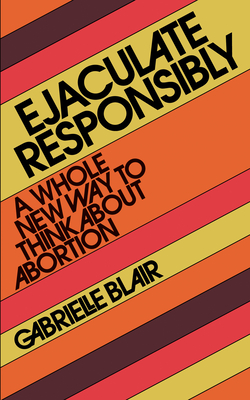
Ejaculate Responsibly: A Whole New Way To Think About Abortion, Gabrielle Blair (Workman Publishing, 2022)

Fellas, you didn’t think I’d leave you out of this discussion, now did you?

This book won’t be released until October 2022, but it does something very necessary. It brings men into the abortion debate and thoughtspace not as agents of control, casual bystanders and milktoast allies, but as accountable parties.

Ejaculate Responsibly began as a viral Twitter post you’ve probably already seen a dozen times on social media over the past three years of so. Blair, a Mormon mother of six, solidly makes the case for unwanted pregnancy being an issue of men’s responsibility, not women’s health. The conclusions she draws in the original thread drew a lot of fire for ultimately proposing solutions for men as just as backwards and draconian as forced birth is, and I’m pretty sure that’s what this book explores. The Twitter thread was enough to pique my interest, but the focus on holding men equally accountable as opposed to constantly demanding effort from women is what really makes me think this will probably be worth a read.


A Womb of One’s Own, Jane Doe(Self-published)

I share this last one carefully, hesitantly and with a gentle caveat; make sure you’re reading books, not letting them read you. This is because A Womb of One’s Own contains information that could be dangerous if applied in unwise ways. I share it as a resource only, not as a definitive source of advice or a recommendation.

With that said, Womb is a self-published guide to reproductive health management for people with uteri that’s been making the rounds on the internet for free since at least 2014. Written by an anonymous author, it covers contraception, fertility and abortion from a variety of perspectives. Not only does it give basic legal and medical information, it also delves into herbal methods, women’s wisdom and old wives’ tales. Be careful here. I’m not saying that the less official information in this book is wrong–I’m just saying don’t do anything stupid, desperate, or outside of community when it comes to anything medical.

To its credit, the book also repeatedly warns us all not to do stupid home-based things and also addresses emotional and logistical issues that other written resources don’t often approach, like building networks of trust and support to hold us up whether we have children or not. I also include it here because it does a good job of demystifying reproductive health for those of us who come from backgrounds where comprehensive sex ed was not encouraged or outright denied.

The book is available as a free .pdf at the link provided. You’ll also find it offered as a printout in a few places for a small fee, but because neither the author nor appropriate organizations receive any part of that money, I’ve chosen not to link them here.


There are, of course, many other books on this subject that you can and should read. To see them, click here.

There are also plenty of things to do, and for that I’ll direct you to this article from Elle Magazine.

Peace, fellow readers. Love someone hard and read something good today.

(For legal reasons, this is where I have to tell you that if you click and purchase anything from the links in this post, I’ll earn a commission. I’ll donate whatever I earn from books on the Not The Handmaid’s Tale booklist from now until August 1st to Voix Noire. Again, peace!)

[REVIEW] Hold Me, by Courtney Milan

(Click to buy this book.)

Courtney Milan is a romantic genius and let me tell you why.

Hold Me is a pretty standard romance novel in a lot of ways. The premise plays off of how normal it has become to have long acquaintanceships, friendships, and even romantic relationships online without ever meeting each other in person, or even knowing if you’ll actually like each other face to face.

Driven, focused actuarial student Maria Lopez moonlights as the creator of one of the world’s most popular nerdy blogs. Driven, focused physics professor Jay na Thalang is one of the blog’s biggest fans and most frequent commenters. The two begin to chat behind the scenes and quickly strike up a friendly flirtation that leads to something more, so they start thinking about taking things analog.

However, they don’t realize that they’ve already met in person–and can’t stand each other.

I’m sure you can guess what happens next.

But here’s where the genius bit comes in. Maria is Latina and transgender. Jay is (mixed) Asian and bisexual. But NONE of those things are the point of the book. The romance is!

Y’all know I’m a big fan of people being their #ownnormal and that’s exactly what this is. There’s no icky stereotyping, awkward genital-based interrogations, shoehorned-in identity proclamations, confrontations with prejudiced local yokels, and they never have a “haha we’re interracial my parents will hate you btw what do you eat?” conversation. Maria and Jay are a regular romance novel couple with good chemistry, plenty of steam, and the right combination of complicated meet cute madness and predictable relationship patterns to make this a pretty good read. It’s their personalities that make up the conflicts and joys, not their identities–because who they are is totally normal if you’re not a shallow bigot.

There are a lot of reviews claiming the author crammed too much diversity into this book but for those of us who ARE the diversity, I think this book will seem…well, normal. Diversity is normal, and it’s totally possible to be lots of different things at once. In this book, it even manages to be pretty cute.

The only reason I’m not giving this five stars is that as much as I love nerds in books and real life, there are a few too many moments where Jay gives too much “uptight jerk who comments on blogs late at night” and not nearly enough “sexy professor having a bad day”. Also, it’s the second book in the Cyclone series and the first one, Trade Me, is such an absolute delight that this sequel has a hard time measuring up.

Four stars, a pair of high heels and some grant money to Hold Me.

(Don’t forget that any links you click on here will lead you to the Equal Opportunity Bookshop, where your purchases will result in a commission being paid to moi this site. Thanks for visiting, and go read something good! Peace!)

[REVIEW] Black Girl, Call Home by Jasmine Mans

(Click here to buy this book.)

I am once again asking publishers, editors, and readers to let Black women write beyond sadness in America. Please?

sigh

This collection of poetry from a queer Black woman starts strong. It’s put together very well in a technical sense but it all feels kind of by the numbers to me. There are a few pieces about difficult relationships, a few about the dangers of existing while Black in America, then a little detour into critiques of Kanye West and veneration of Whitney Houston. There are explorations of being queer and Black, of having Black daughters, Black mothers, Black lovers. Of course, it also has a few short snippets of spirituality and lots of attempts to be emotionally pithy.

All of the right stuff is here but that vital spark, that thing that makes poems reach out from the page and shake a reader around by the face, just isn’t present. Part of it is a lack of imagination, IMO. These poems are very point A-to-point B in their construction and imagery, as though anything more outside of the lines than a Black queer femme identity was too much for the final product. Also, without the celebrity references, a lot of these poems read like they could have been written in the 70s and 80s. Surely thought has shifted since then? I mean…Nikki Giovanni, Maya Angelou, Gwendolyn Brooks, and June Jordan all did this already, earlier, better, with fewer resources and arguably less raw cultural material to work from. Frankly, I’d rather just read all of them again.

I wanted to like this–just look at that cover!–but I don’t think it was for me. It’s familiar, affirming, and bold in its expression of social place and identity. But there’s nothing new or illuminating in the ideas here and I feel like maybe something vital was removed between conception and publication.

I’m slating this book, I know, but I wanted a lot more from this than I got. 3 stars and an extra infusion of Wild Growth Oil to Black Girl, Call Home.

(Beautiful people! I feel like I’m being a bit harsh here but this collection was just ok for me. If you want to see some poetry I recommend, check out the booklist Poetry Vibes. There’s lots more like it on the Equal Opportunity Bookshop. Don’t forget that we have affiliate relationships with them and any purchases you make after following a link on this site will earn a commission. Peace!)

[Reading Challenge] Read #BlackJoy for #PrideMonth

(To skip straight to a booklist of Black Pride and joy, click here.)

Y’all knew this was coming, right?

I’m not an ally, I’m an accomplice. In the roughest, toughest parts of my non-ambiguously Black nerd femme life, my gay, lesbian, trans, and non-binary fam have always jumped in the trenches with me, helped me shoot down my demons, and had my back while I crawled to safety. Ever since my days of being the only straight girl at the ball back in the 90s, I’ve done my best to return the supportive energy and get in alongside LGBTQIA+ people against the struggles society imposes on the community. Our liberations are all bound up together.

So, just in time for both Pride Month and Juneteenth, let’s all read something super gay, ultra-queer, and gender non-conforming this Pride Month. Specifically, let’s read something joyful, Black, and all of the above. Emphasis on “joy”, which doesn’t mean just happiness and good vibes–it means taking pleasure in all that you are.

I emphasize the joy part because in the LGBTQIA+ community, as in the Black community and all intersections thereof, there’s a tendency for even the most well-meaning ally to see their friends and acquaintances as entertainment. Even folks who really think that they are down for the cause sometimes see people who are “different” as givers of fun, rather than fully realized people who deserve to enjoy their own normality. There’s a difference between being tolerant and celebrating someone else’s human sovereignty, and I’m challenging us all to read joy in Pride month in order to do the latter.

Try reading something like Hari Ziyad’s Black Boy Out of Time, about growing up queer in a Black Hindu-Muslim multifaith family in Ohio. Or Junauda Petrus’ The Stars and the Blackness Between Them, an intercultural Black YA lesbian romance. If you want adventure, try The Taking Of Jake Livingston, a ghost story quest in which a neurodivergent gay Black kid saves the day and gets the guy. Or go classic with some Audre Lorde or James Baldwin.

If you need more suggestions, check out the list I made on Bookshop. What are you going to read for this challenge, beautiful people? Spill it in the comments!

(Friends, neighbors, fellow readers–hope you’re having a great day! As always, thanks for reading. Don’t forget that we have an affiliate relationship with Bookshop and if you click on a link you find here and buy something there, this blog gets a cute little kickback that helps us buy more books and add more bells and whistles to the site. Be joyful, be proud of all that you are, and go read something good!)

[REVIEW] Anne-Marie The Beauty, by Yasmina Reza, translated by Alison L Strayer

(Buy this at Bookshop.)

(I am aware that something awful happened this week, as it does every day of every week in America, and that everyone is talking about it. I do not have the emotional bandwidth to discuss it outside of a few safe small places offline, and so I am choosing to lose myself in books in this space. I hope you understand.)

“Now that I have nothing to do, monsieur, I thought time would lie heavy on my hands. It’s just the opposite, the days and nights gallop along so fast it makes me dizzy.”

Anne-Marie was an actress once. Then she married a stable (boring) man, had a son she doesn’t like much, and got old. She had a friend named Giselle, who was more talented and successful than Anne-Marie, but also less virtuous, to hear the beauty tell it. She also had a childhood ritual of watching the actors leaving the local theatre and reciting their names in a dreamy mantra that bookends her life.

I’m familiar with French-Iranian writer Yasmina Reza, but only as a playwright. They’re very good–her work Art was the first play in translation to win a Tony Award. It’s fitting that this short novella reads a lot like a long monologue. Anne-Marie has a clear, authentic voice. As she rambles about the past and the present (sometimes in the same sentence) you really get a sense of who she is and was, and how she hasn’t changed.

There’s something sad about this book. Maybe it’s the bitterness and unfulfillment that peeks through the stories of the not-so-good old times. Maybe it’s the fear and helplessness that comes from getting older, becoming a widow, and being the last living member of your friend group. Anne-Marie lays these things out then whisks them away to lay out gossip-y little stories about her acting days. The book is a bittersweet little tale of a bittersweet little life, and while it isn’t long, it is really thorough. There are so many little details and habits shared that you really feel as though you’re in a little French apartment, politely nodding while your hostess gossips about someone long dead while chewing cough drops.

It’s short. It’s sweet. It took my mind off of the day while simultaneously grounding me deeper in reality.

4 stars and a packet of Ricola to Anne-Marie the Beauty.

(Beautiful people, I hope that you are doing what you can where you can to make the world a better place. I also hope you have time to be whoever you are freely, much like Anne-Marie. Beyond that, if you’re looking for something to read, check out the Equal Opportunity Bookshop. We have an affiliate relationship, so any clicks and purchases may result in a commission being earned. Peace!)

[HEAR ME OUT] It’s About Damn Time We Had A Trans Batgirl

So the other day while I was trying to do the opposite of doomscrolling by finding positive things on the internet, I came across the image above, shared by everyone’s favorite cosplaying drag queen, Dax Exclamation Point.

I haven’t read a Batman comic in ages, although for years that was the only DC book I followed. I knew enough to know that the character depicted was probably Alysia Yeoh, who I vaguely remember is roommates with Barbara Gordon(aka OG Batgirl). I didn’t know Alysia is trans, and I haven’t been keeping up with the storylines aside from that very boring new film so I had to go look up the character to know exactly what was happening in that panel.

All of this to say, when this image floated across my screen, I looked at it for a minute, checked the captions and the ‘fit and said to myself, “Hold the hell on…Batgirl is trans now?”

Alysia Yeoh isn’t the only transwoman superhero in comics. She’s not even the only one in books. To be completely fair, she isn’t even the actual Batgirl, she’s a member of the League of Batgirls in an alternate timeline. But she’s still something unique, although also completely normal–a trans, Asian superheroine, streetwise but also soft and smart and surrounded by a community of her own making.

Let’s talk about this, though. This one panel and its one throwaway line made something dawn on me. A trans superhero in an inner-city, diverse space would make SO much sense. I mean, think about it–how many trans people of color are real-life heroes and heroines in urban areas? Think Marsha P. Johnson, Miss Major Griffin-Gracy, Stormé DeLarverie, Sylvia Rivera, Tamara Ching, Willy Wilkinson, and countless unsung others.

Back in the day when I used to hang out in all kinds of unorthodox spaces and places in an attempt to understand the world from the “bottom” up, trans folk were usually the first people to stand up for soft naive Black femme me, the first folk to speak up for me when I couldn’t, and the first to protect me. I remember the time a trans woman who I barely knew at the time stopped a whole conversation in a bar, asked me what was wrong, walked me six blocks over to her apartment, put me in her car, and drove me all the way home one night because I was having a very bad time and the family member who promised to meet me to talk stood me up. I remember the talk she gave me on that drive about how as women, we deserved to be loved and protected just as much as we loved and protected the men and boys and children in our lives. I also remember her saying that there was also no shame in protecting myself if I had to and that in fact, I should and could and there was a way to do it that wouldn’t compromise anything about who I was as a woman. It’s taken me close to twenty years to really learn that lesson, but sometimes I still hear her voice when I have to chop someone down for trying to block out my light.

It was trans women who taught me how to carry a weapon safely, and how I should use it in a pinch. I’ve never had to, but I still know how.

Even when I was still very transphobic and prone to bringing the tyranny of fundamentalist religion into conversations without being asked, trans women were often the only people who would give me the space to be soft while also being smart without having to be “tough”–because they understood what it’s like to be continually denied the fullness of femininity by other people’s assumptions, and the fullness of your intellect because you are feminine.

A trans woman taught me how to properly order a martini. She taught me how to tell someone they were hateful and unwelcome in a way that made them laugh while they were leaving. She taught me that in her culture as in mine, femininity is not solely performed but also intrinsic. It was in her memory, many years later, that I truly understood how and why all women are valid and shook off(I hope) the last of the misinformation I’d been fed that had me out here hurting other women in the name of validity.

What I think I’m trying to say is this: a long time ago, I had a friend from Guam named Frances who was a superhero, and it’s ABOUT DAMN TIME somebody realized that trans women deserve space in the superhero gallery too.

But the first person this Batgirl needs to crack over the head is Batman. We’ll have to talk about that later.

(Beautiful people! Thanks for reading! This post really wasn’t very much about books, but if you want to read more books by transgender writers, I’ve got a list locked and loaded for you in the Equal Opportunity Bookshop. Click to find something good to read and don’t forget that we have an affliate relationship with the Shop of Books and will receive a commission for every book you buy at our links. Peace!)

[Reading Challenge] AAPI Writers With A Twist

(Check out the booklist here.)

We’re a two weeks deep into AAPI Heritage Month and I’ve already scrapped two other versions of this reading challenge in order to go with this one.

I think that non-Asian Americans are slowly familiarizing themselves with some Asian cultures. Indian, Chinese, and Japanese Americans have always been recognized, if not appreciated. Korean culture has a well-earned seat at the youth culture table right now so people are becoming more familiar with Korean-Americans as well.

But y’all…Asia is a BIG place. It’s no more a country than Africa is, yet we tend to flatten the diversity there into a few East Asian and Indian stereotypes writ large on the American psyche. For this reading challenge, let’s rewire our brains a bit, shall we?

Let’s try and read books from Asian-American authors whose ancestry is NOT Chinese, Japanese, Korean, or Indian. Fortunately, that still leaves us spoiled for choice. Poet and novelist extraordinaire Ocean Vuong is Vietnamese. Anthony Veasna So, author of the bittersweetly funny short story collection Afterparties was Cambodian-American.(R.I.P.). There’s also Rumaan Alam (Bangladeshi American), Meredith Talusan(Filipina American), and many, many more.

If you get stuck, check the list I made on Bookshop for recommendations. But if you’re not–what are you going to read, beautiful people?

(Beautiful people! Diverse reading isn’t just reading what you know of diversity–it’s reaching beyond, to unfamiliar and unknown viewpoints too. If you want to see more diverse booklists, check out the Equal Opportunity Bookshop. Remember that we have an affiliate relationship with Bookshop and other sites, and if you buy anything there after clicking on a link here, we’ll make a little cash and buy more books with it. Now, go read something good! Peace!)

[REVIEW] A Woman Is No Man, by Etaf Rum

(Buy this book here.)

This book is all about lovelessness, and I wasn’t really ready for it.

When Isra is 17, a man from New York comes to Palestine to marry her. She has hopes, dreams, and an overwhelming desire to be loved, but when she returns to the US with her husband her inner life is quickly crushed by having too many children too quickly amidst the realities of life as a Muslim immigrant in 90’s Brooklyn. Despite it all, her deepest desire is to love and be loved, even if it kills her.

The women closest to her are also led by love. Her daughter Deya wants to know if it’s possible. Her mother-in-law Fareeda refuses to hope that it even exists. All of their lives revolve around marriage–getting married, being married, trying to marry each other off. Unfortunately–marriage makes none of them happy or safe, and ultimately each woman has a different approach to how they handle this unhappiness.


It’s a strange and painful thing to live in a world that demands that women be soft, then does its best to kill us if we are. This book explores that conundrum deftly, but the conclusions it comes to are mostly sad, hopeless ones. These women don’t like themselves at all, and rarely like each other. Love is out of the question. The one character who manages to get out of the system is still too hurt by it to truly succeed. While the last chapter introduces new hope for Deya, after the trauma conga line that dances through the rest of the book I was too suspicious to be happy for her.

This is a simply written, fast-moving read that jumps through all three women’s thoughts over a period of about twenty years. When I finished it I felt… lonely. Ironically, I felt that way because that’s how everyone in the book seems to feel. It’s partly due to the oppression they’ve suffered as Muslim Palestinians, partly due to continuing trauma responses, and partly from their own choices. That all adds up to characters who are hard to like, but very easy to pity.

As far as this being a story of a Palestinian-American family? It is, in the same way that The Color Purple is the story of a Black American family and The Joy Luck Club is the story of a Chinese American family. Those weren’t happy, well-adjusted families with good stories and neither is this one. However much like those other books, A Woman Is No Man is a story of the trauma women are sometimes forced through in the name of culture and how they endure it. Like those books, I think it can be criticized for a very unflattering portrayal of men in the culture it portrays, although not necessarily an inaccurate one.

I can’t say I enjoyed this, exactly, but it was touching and emotionally provocative. It’s the sort of book that is empathy technology at its finest. It’s a perspective on love, gender, and unresolvable trauma from an Arab-American woman that doesn’t flinch away from hard truths or difficult moments.

Four stars and a box of tissues to A Woman Is No Man.

(Friends, Romans, fellow readers and generally beautiful people; hi. Thanks for reading this review, and I hope that wherever you are, you are loved or on your way to being so. If you want to read this book or more like it while supporting this blog, check out the Equal Opportunity Bookshop. This blog earns a commission for every book sold there, and Bookshop also donates a portion of their proceeds to supporting indie bookstores in the US. Whatever you do, read something good while you do it! Peace! )

[REVIEW] Rootwork, by Tracy Cross

(Get more information about this book here.)

(Full disclosure: Tracy and I were in the same master class at Under The Volcano this January, and she graciously sent me an ARC of this book in exchange for a fair review.)

Something about Rootwork feels like it’s from another era. While I was reading, tendrils of the story dug their way into my brain and wrapped themselves around totally unrelated thoughts, creating some pretty weird comparisons.

It’s like if Mildred D Taylor’s classic Roll of Thunder, Hear My Cry was a supernatural horror.

It reminds me of the far-out fests that @scott.reads.books is always reviewing.

It’s like if Lovecraft Country was about pre-teen girls.

All comparisons aside, this is a story of three sisters – PeeWee, Ann and Betty – in segregated Louisiana. A few summer days spent in the woods with their hoodoo-practicing aunt Teddy turn into revelation, tragedy, and bloody revenge, and the girls’ lives lead in very different directions when all is said and done. This is a coming-of-age story with some heavy horror elements, written in a style you don’t often see now. It’s reminiscent of 70s and 80s YA– lots of long character studies, a little messy around the edges, with genuinely creepy elements that pop up seemingly out of nowhere and change everything.

Horror and revenge tales are emphatically not my thing, but for someone who isn’t a yellow-bellied chicken with a joy fetish, I could see this being a good read.

I don’t give star ratings to books by folk I’ve met, but I will give some gardening tools and a very special book sleeve(once you’ve read it, you’ll get the reference) to Rootwork. Thanks again to Tracey Cross for the book.

(Fellow readers! Thanks for reading this! As always, I have to tell you that this blog has an affiliate relationship with Bookshop. Although Rootwork isn’t available on the site yet, feel free to check out the site if you want to help keep the lights on and the words flowing around here. Peace!)