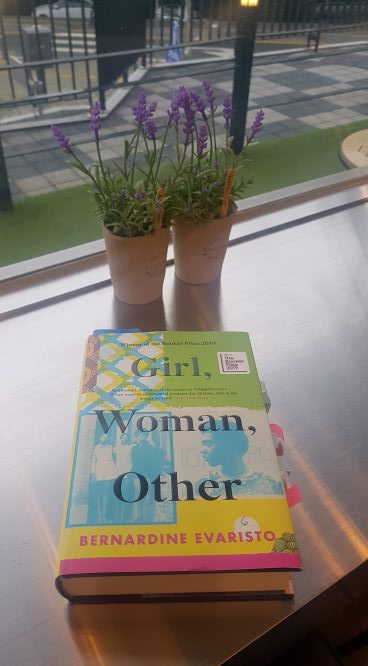
I have no idea what you’re doing messing around with me on the internet when you could be somewhere reading this Booker-prize winning masterpiece. Hurry up and log off so you can get into this ASAP. (Just hit like before you go, ok? 😜 )
Seriously, this is genius, real life made art and set out in deliciously prose-y poetry. Or is it poetic prose? Not sure, but it’s deeply descriptive, unconventional and an absolute joy to read.
Girl, Woman, Other is a journey through Blackness, Britishness, womanhood, queerness and all manner of other things told through the voices of twelve very different people. Most of them are black, most of them are women, many of them are LGBTQIA+ family. They may not all think of themselves with the definitions we might assign while looking at their pages, but they do think of themselves, others and the world they live in with joy, with pain, with resilience, with resentment, with hope, with defeat and most importantly, with nuance.
And you know what? I know these women. In this book I see echoes of conversations and interactions I’ve had with sistahfriends, acquaintances, elders and enemies. I see people who I am very familiar with and sometimes belong to, but rarely have their interiority immortalized on the page in such an accurate, loving and unprejudiced way.
READ THIS. The characters are loving, detailed sketches of people we all know but rarely see. The language is gorgeous and tightly wrapped around the story’s complexities. And the story? Well, all of these people are connected, and realizing how is absolutely delightful (and also quite emotional, in a few cases).
I could go on and on about this book–it’s not only a favorite 2020 read but a favorite lifetime one, I think, and it deserved to win the Booker Prize all on its own instead of being overshadowed by Margaret Atwood’s tepid Testaments–but instead I’ll just tell you again to read it. I won’t even leave you with a quote–you deserve to experience all of these wonderful words fresh and new just like I did. Go. Read. Enjoy.😍
If you want to purchase a copy of this book, consider clicking HEREand purchasing it from Bookshop.org, an online bookseller that supports indie booksellers, writers, and content creators. I’m an affiliate of Bookshop and will earn a commission if you click and purchase through any of the links on this blog.
Back in 2019, long before COVID-19 roamed the earth and drove us all inside brandishing cans of Lysol, the bookish internet was abuzz with news of Tomi Adeyemi’s Children of Virtue and Vengeance. I couldn’t check social media without seeing 50-11 posts anticipating the book and after putting a poll up on the Equal OpportunityFacebookpage, I decided to board the hype train and read it myself.
I didn’t enjoy it. But I struggled through and read it anyway, much the same way I’ll occasionally eat a hog maw or listen to a trap song–for the culture. I’ll get more into that later, but what I thought about the book itself doesn’t matter. Children of Virtue and Vengeance, the Legacy of Orisha, and Tomi Adeyemi herself are actually great things for the state of Black speculative fiction in 2020 and beyond, and perhaps not in the way that you think. They’re good in a way that transcends presence, representation, and diversity. They’re good precisely because they’re not that good, and I’m here to tell you why.
First, a bit of background. Children of Virtue and Vengeance–let’s just call it CVV or we’ll be here all day–is the second book in a YA fantasy series called Legacy of Orisha. The first book was Children of Blood and Bone(which we’ll call CBB, same reason). The third book is as of yet untitled and has no release date but there is a series-themed affirmation journal calledAwaken the Magicthat was released in April 2020.
The series is about a fictional kingdom(Orisha) that is an analog of pre-colonial Nigeria. There’s magic and ancestral clashes between magic users and mundanes that push the plot along. I’ll try to avoid spoilers, but even with them there’s not a lot of surprises, in my opinion. If you’ve ever read a fantasy novel, particularly a YA fantasy novel, you know what’s coming from the first page. The main characters are teenagers. Some of them are royal, some of them are magic users, and some of them are both. The magic users form kind of an oppressed underclass (despite having magic powers), and there’s lots of teenage angst and romance with problematic overtones and NO ADULTS INVOLVED EVER despite this being a whole kingdom with serious political problems and military conflicts going on. In my less charitable moments, I’ve described it to people as Twilight in magic Nigeria.
The books themselves have been very well received so far. The first book debuted at number one on the New York Times bestseller list, won the Andre Norton award for YA Sci-Fi and Fantasy in 2018, the Lodestar Award in 2019, and was a Kirkus Prize finalist. The second book didn’t fare quite as well but was still a best-seller. The series has been optioned for film/television development by Disney and I think it’s pretty safe to say it’s a pop culture phenomenon, taking fantasy even farther into the mainstream and putting an African cultural spin on it.
But, as I said before, I didn’t enjoy reading either book.
I feel guilty saying that. It’s like I’m betraying the culture, the saints and the ancestors. To be honest, even I’m confused by the way I feel about these–I should love them. They’re sword and sorcery fantasy outside of the played-out hyper-European foundation that dominates the genre. Fantasy as a story-telling genre has long been assumed to start from a European cultural basis–think Game of Thrones, the Witcher, The Wheel of Time, and of course the classic Tolkien–so it’s really exciting to see someone create a fantasy world from a different foundation. It’s also a pleasantly feminine series–there are women in this book with agency and character and personalities of their own. They’re not big-breasted murderbots, sex objects, or saintly rewards that only show up at the end of the heroes’ epic quest. They’re young women–how fully realized they are is up for debate–but still, this is a world that contains and recognizes women as people, at last.
Isn’t she darling?
Speaking of women, Tomi Adeyemi herself is somebody I really want to root for. She’s a Harvard-educated Nigerian American who grew up in Chicago and worked in film production in California before writing these books. At the tender age of 26 she’s got a multi-book, film-optioned deal. She’s created a whole world that’s been published and millions of people have read, and she actually got her book deal by winning a pitch competition. I’ve watched a few of her interviews and she’s bubbly, personable, has gorgeous locs, and seems like a really generally cool person. I’m not a hater. I want to love her work. It doesn’t matter if I do or not because she’s a lovely published bazillionaire but there are some public figures whose stories make you want to love everything they make, and she’s one of them.
But her writing just doesn’t do it for me. I am on team Tomi but the land of Orisha is never going to have the same place in my heart as Middle-Earth, Arrakis, Earthsea or the Realm of the Elderlings. It’s certainly not as interesting as post-apocalyptic Jarret-ite California or future Sudan. (If you get any of those references, then you probably know where I’m going with this, but if you don’t, hang in there.)
I’ve already reviewed CVV and I was pretty harsh. There’s not a lot that I liked about it, but as I said, that doesn’t matter. Adeyemi was apparently very methodical about the way that she wrote the book–she scrapped another novel that she had been working on to move on to this series, she worked as a writing coach, and her degree focused on West African mythology and myth-making in general. She’s very clearly studied the craft. The craft ain’t studying her back. You can tell she really plotted and formatted this story meticulously but didn’t go back and erase her literary pencil lines, so ultimately the book didn’t seem very organic to me. Also, it’s the kind of story that really needs the reader to love or at least like the characters and be invested in their relationships but that never happened for me. You don’t even get the sense that the author likes them much. Sometimes that can work. I read an essay by Octavia Butler stating that she really didn’t like the protagonist of the Parablesseries by the time she got to the end of the story, which is why so much of the second book is told through the eyes of her daughter. I’ve read that series probably a dozen times and I’m not sure I like Olamina either, but the difference is that she seems like a living breathing person who really embodies not only an idea or a role in a story but a whole personality and being. I feel like I could see and understand a person like that whether or not I care for her personally. Olamina stays with you as a fully realized person, but our POV characters in CBB and CVV don’t really have that much substance, to the point where I don’t really remember their names and couldn’t be bothered looking them up for this blog post.
I realize that it’s not very fair to compare CVV to Octavia Butler’s Parables series. Butler is the OG Grande Dame of Black speculative fiction, she wrote for adults on arguably far more serious and dark subject matter, and she was more on the sci-fi side of speculative fiction than fantasy, of course. But that brings me to my over-arching point–I’m not writing this just to poo all over the Legacy of Orisha. I’m fine with it just not being my cup of tea. But I feel as though Adeyemi’s work means something peculiarly good for the state of speculative fiction by Black people in 2020 and beyond.
Before we continue–I’m not an expert, and I realize that. I do write speculative fiction myself but it has yet to be published anywhere(Edit: actually, now it has–check out my short story Dragonflies in the magazine Midnight and Indigo.) I read all over the map but my favorite genres have always been and will always be fantasy and sci-fi–slightly more fantasy than sci-fi. I’ve also always set deliberate intentions regarding seeing myself and people like me as the default experience, to the point where it’s very second nature now. That started with being a selective reader in my childhood. Even before it was popular to do so, I was always in the bookstore and the library looking for books that had Black characters, even if they weren’t always by Black authors. For me, Black characters in speculative fiction took some searching but weren’t entirely unusual because I could find them when I looked. The quality wasn’t always good, but blackness has always been in speculative fiction. It isn’t new. What’s changed is the creators.
Some prominent examples of early Black spec-fic characters I enjoyed that come to mind are Steve Perry’s Matadora series–about a pansexual Black woman guerilla mercenary who starts a galactic revolution, which blew my mind when I was 16 and only knew what about two of those words actually meant. I read Ursula K LeGuin’s EarthSea series, which is populated by people of color in a high fantasy setting without being weird about it. (Nobody has chocolate skin, woolly hair, or speaks high court jive.) Glen Cook is another author I read a lot of–people often bring up the Black Company, but for much of the original series they aren’t actually Black. In contrast, his Garrett P.I. series, which is shockingly sexist and homophobic in retrospect, also had one of my favorite Black men in fantasy. I LIVED for the moments when the character of Playmate would show up–he was a happy Black man who took no crap from the main character and just ran his stable, read his books, and knew important things at the right time.
Don’t judge me for this next part…
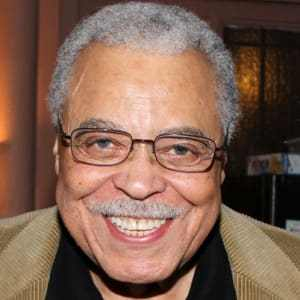
Speaking of Garrett P.I. though, that brings up something else–as a young Black reader of speculative fiction I often did something strange. I recast book characters to reflect my racial reality in my head despite how they were actually described in the book. A lot of the authors were white, but I wasn’t and neither were most of the people I knew in real life. I saw no reason why I had to envision the characters that way unless it was explicitly necessary that they be so. So Morley from Garrett P.I. was always a very dapper Black man (elf?) in my head when I was reading. I was kind of startled when I was looking at some of the book covers last year and realized that the oily little white guy with big ears on the cover of one of the books is supposed to be Morley because in my mind, Morley was always a cross between Sidney Poitier and Sammy Davis Junior. My imagination didn’t always come up with such cool images–the first time I read Two Towers, Treebeard a.k.a Fangorn ,a.k.a. the oldest of all of the Ents was basically reduced to a green James Earl Jones with some leaves on his head. When I read Anne McCaffrey’s Pernseries–the one about the dragon riders who fight space spores on a crapsack planet with the powers of telepathy and relationship drama–everyone was ambiguously brown and multiracial because even then, in my mind it only stood to reason that far in the future on another planet human beings would mix and remix ad infinitum beyond our current racial notions. I was delighted to find out, by the time McCaffrey wrote the prequel DragonsDawn, that I had guessed entirely right and then horrified to go on the internet in the early days and see folk foaming at the mouth insisting that Pern was white and Irish and that I was ruining it by saying F’lar might have some beadie-bees in his kitchen or at least a really good tan.
I’m digressing, I know, but I’ve always loved speculative fiction and my tastes veer towards the far out and intense. My point is, though, that when I couldn’t find a book with characters that looked like me or the people I know, I had no problem racebending them and I doubt I’m the only one.
In any case, you can imagine how I felt when I finally discovered Octavia Butler, starting with the Parables, then Kindred, then on to her deeper darker stuff like Bloodchild and the Patternist series–and everyone was already someone familar to me. People were Black, they were Latino, they were Asian, they were multiracial and multicultural, and they were often white as well but they didn’t exist in a vacuum of white default. It was such a revelation to find communities that really reflected an aspect of my reality in these very unreal, imaginative situations. I suddenly realized that there were other people of color writing speculative fiction as well, with even more characters that reflected the diversity of my own real life and the way I saw myself. I got into Tananarive Due, Nalo Hopkinson, Steven Barnes, and Walter Mosely (who is mostly known for his detective novels but has also written some really good, socially cutting sci fi). There were authors of other races that I liked as well and I’m just going to be really honest with you and say that finding and loving speculative fiction authors of color didn’t make me stop reading white authors, it just broadened my literary world and made me stop putting leaves on James Earl Jones’ head in my mind. It was really a big deal to have favorites in the genre that reflected speculative understandings of my reality.
I say all of this to point out that despite what you might have heard, we been out here representing in the speculative fiction world. Having Black people, Asians, Latinos, multiracial people, Arabs, Muslims, Jews, and everybody else is not new to sci-fi or fantasy, it’s just never been common. We need more, of course. I’d be a fool if I tried to deny that most fantasy often overwhelmingly assumes a pan-European foundation in the world-building, no matter what the characters look like. I mentioned before that I write speculative fiction. I went to a writing group once and shared a piece set in a world much like Pern–far in the future, the result of ages of interracial mixing, everybody is brownish, but the foundations are emphatically NOT European–and a guy at the meeting told me he didn’t like it because he couldn’t figure out any of the cultural references. Welcome to my childhood world, dude. I was creative enough to stick leaves on James Earl Jones’ head and still enjoy myself but he just rejected the work out of hand because the hero didn’t have a name like Grondnir the Brave and wasn’t chasing after a bosomy blond after fighting a suspiciously ethnic orc for the giant mayonnaise knife of destiny. Heaven forbid you have to read something from a totally different culture and use your imagination or gasp, other books to fill in the gaps.
Anyway, my point is that representation isn’t exactly a new thing in the world of speculative fiction books (although there could always be more). Black speculative fiction fans aren’t new either. We’ve just been recasting classics in our heads and searching deep in the shelves for author photos that look like our family and neighbors.
But that brings us to today, when speculative fiction by Black authors seems to be taking off rapidly and really catching hold globally. The last five years have been incredible for the genre. We’ve seen writers like Nnedi Okorafor, P. Djeli Clarkand the Nouvelle Grande Dame N.K. Jemisinreally take off. There are whole magazines now like Fiyahand Black Girl Magicthat exist to publish the work of Black speculative fiction writers and they do it well. There are Black spec-fic writing groups and book clubs, and there is writing set in all facets of global Blackness, from writers all across the diaspora, like Tade Thomson, Cadwell Turnbulland Akwakeke Emezi. We are out here winning awards, topping bestseller lists, bringing up other writers and redefining the speculative imagination so that it has borders beyond romanticized medieval European meatheads walking across kingdoms to smash the heads of ethnically coded villains and the cakes of the bosomy blonde on the book cover who is only wearing armor on her nipples for some reason.
Things are changing for the better across the board. Latinos have had magical realism on lock for decades and Daniel Jose Olderis an author I really enjoy. Asian authors like R.F. Kuang and Ken Liu are also entering our collective speculative imagination. It’s all long overdue.
Into the middle of all of this comes Tomi Adeyemi and Legacy of Orisha and I think I’m being honest, if not polite, in saying that despite the wonder of a fantasy world emphatically filled with Black people, despite its massive success and popularity, despite how lovable and easy to cheer on the author is, the overwhelming contribution of the series to the genre so far is–mediocrity.
BUT–that’s a good thing.
Photo by Retha Ferguson on Pexels.com This is what I get when I type “black fantasy” into WordPress’ image search engine. Perhaps I spoke too soon.
Listen, there’s a reason why genre fiction is often not respected as true literature. A lot of it is pulp. A lot of it is crap. A lot of is just kinda there. Frankly, the things are just kinda there are often the most accessible and popular. Let’s be real. A Song of Ice and Fire, aka Game of Thrones is not great writing. I picked the first one up in my late teens, thought it was awful and was bewildered when it became a huge HBO hit series. But I also watched the whole show and enjoyed it up until season 7. I went back and read the books and didn’t enjoy them as much but I love fantasy worlds and will read almost anything that builds a new universe out of whole cloth even if I don’t love it. I’m picking on GOT but there are lots of huge breakaway fantasy hits that aren’t particularly great writing but are popular and have been or will become TV shows. The Wheel of Time, based on the popular 14 book series, is in production now and those books are so bad that as much I love fantasy I issued a moratorium to myself about 6 books in that if one more female character sniffed I was gonna quit. I gave it three chances. I still quit. In my opinion a lot of fantasy books are tedious, mediocre, and not very well written but they’re massively popular and often do better as a presence beyond the pages of the novels where they got their start. There are other multi-book series that come to mind that are examples of this as well — like The Sword of Truth and The Chronicles of Thomas Covenant.
(Put your pitchforks away about Thomas–we all know there’s no way that creepy, lechy, #MeToo nightmare of a series holds up. There’s a lot of stuff I’m willing to handwave due to the ignorance of the times but NOT THAT. Don’t @ me, I will die on the hill of Thomas Covenant being the Robert William Kelly Cosby of fantasy protagonists.)
The thing is, taste is subjective, genre fandom has different levels of depth and at the end of the day, they don’t all have to be deep or brilliant, they just have to BE. Did I like CVV? Nope. Did I think it was as good as promised? NOPE. But will I read the 3rd installment? Yes, probably. I think there’s something promising and weirdly socially accomplished about Black folks having our own mega-successful speculative fiction C student out here building great worlds with basic blocks. It says a lot for how far we’ve come that not everybody has to be Octavia Butler or Walter Mosley to capture the imagination of the world so totally that the book is going to leap off the page and into other media before the series is even finished.
Not every published Black writer of the past or present is a genius and that’s okay. It takes all levels of talent and depth and appeal to expand society’s collective imagination and even though I didn’t like the books, I’m still here for their presence and their impact on the culture. In a weird way it’s a move towards leveling the playing field–collectively Black people have had this weird restriction where we either have to excel in telling stories that are about our relationship to whiteness in the mainstream or we have to make our own self-defined stories with limited resources outside of the mainstream. CVV and the Orisha series are really changing the game in that way. It’s not a slave story, it’s not centered in a white-Black oppression narrative (although there is a metaphor included that I think is problematic but you know what? Whatever. It speaks to somebody, I don’t have to love everything) and the foundational world-building is thoroughly based on West African imagery, They’re also extremely mainstream and popular. All of that is important. I don’t have to like the books to love what they are doing and see how the presence of Adeyemi is expanding opportunities for other writers, other universes and increased representation.
So. That’s what I think. I’m looking forward to the TV show and would probably enjoy a graphic novel version of this too. Ultimately I’m here for all Black writers, including the mediocre ones. I’ll probably buy the next book in the series and complain about it too–just like I did for A Song of Ice and Fire and Wheel of Time.
(If you want to read any of the books I talk about in this post, click on them and visit Bookshop.org, an alternative to Amazon that supports indie booksellers and online book lovers. I’m an affiliate of Bookshop and will earn a commission if you purchase anything from a link you click on this site. Thanks for reading! Peace!)
P.S. DON’T COME AT ME ABOUT THOMAS COVENANT IN THE COMMENTS. I SAID WHAT I SAID, THAT SERIES CAN KICK ROCKS.
This middle-grade book by Newbery-medal-winning Korean-American author Linda Sue Park explores an episode of history that seems curiously underexposed, if my own world history and Asian history classes in school are any indication. When My Name Is Keoko is set during the oppressive Japanese occupation of Korea in the 1940s. Pause for a second. Did you know that had happened? Personally, I had only the vaguest idea of the extent of it before I moved to Korea myself, and I feel like I’m always learning new things about the struggles both Koreas went through to get to their present realities every time I talk to an old person here for more than five minutes.⠀ 👨👩👧👦⠀ This book introduces us to that under-shared time period by telling the stories of Sun-Hee and her older brother Tae-Yul, Korean school kids growing up in their own occupied country. Father is a school teacher, Mother is a housewife, and beloved Uncle is a newspaper printer with a poorly hidden revolutionary streak. As the siblings grow up, the Japanese close their fist ever tighter around Korea, going so far as to forcibly change the family’s Korean names to Japanese ones. Then WWII breaks out, and the family find themselves making difficult decisions that will change not only their home but the future of their country. ⠀ 📰⠀ Oppression weaves tough threads through cultures that can bind them to each other in surprising ways. While reading this there were things–the theft of names and language, enforced systematic inequality, the power of community conspiracy, and the need to fake subservience while revolution bubbles and smokes in your heart–that resonated very strongly with stories from my own Black American background. Other things were wholly new to me and I found the final act of the story equal parts surprising, fascinating and, well…incredibly cheesy. Whatever, it’s a kid’s book so it gets a pass. Overall, it’s a well-written, sympathetic and enlightening read. 🖌
One more thing–this is a bit controversial, but I think it’s worth mentioning here. No matter who is right and wrong in a war, it is always children who suffer most, and I do want to alert you all to another middle-grade children’s novel told from the opposing perspective, that of the children of Japanese imperialists and what happened to them after occupation. That book is Yoko Kawashima Watkins‘ So Far From The Bamboo Grove, and while it is surrounded by a boatload of controversy and backlash , as a complete outsider to the historical conflicts between Japan and Korea, I found it to be an interesting companion volume. Your mileage may vary. I will say that of the two novels, I enjoyed Park’s much more.
(If you want to read this book, consider buying it HEREfrom Bookshop.organd supporting indie bookshops and local art culture. I’m an affiliate of Bookshop and if you click through to a link and make a purchase, I will earn a commission. Thanks for reading! )
⭐⭐⭐⭐/5⠀ 👤⠀ Few canon classics really stand up to the test of time. It’s nice when I come across something that does and H.G. Wells’ The Invisible Man was a nice surprise. ⠀ 👓⠀ If you live in an English-speaking part of Earth, you already know what to expect here. There is a man. He is invisible. Shenanigans ensue. The story has been told so many times, and in so many ways that it’s hard to imagine any surprises in the original 1897 serial novel. But there were a few! I was not expecting Griffin, our titular un-seeable dude, to start as a grouchy (yet amusing) invisible jerk and slowly reveal himself to be an absolute villain. The story starts as an odd bit of early science fiction full of jokes at the expense of English country people and ends as a thrilling criminal chase story with thoughtful moral overtones. The action is great and at the height of his character arc, Griffin is quite scary. One particular scene in a Victorian department store really had me on the edge of my seat. I don’t remember seeing it in any of the film adaptations of this story but it seems tailor-made for action choreography. 🎩⠀ The book is, however, a product of its time and there is some dated(and in one notable case, potentially offensive) language that mars it. I don’t think it’s fair to hold a book written in 1897 up to 2020 sensitivity standards, and every book has slang and cultural references that will eventually be forgotten. I wasn’t put off by this so much as annoyed at having a pretty good story occasionally interrupted with colonizer nonsense and forgotten fads. It’s not overwhelming, but since the second act of the story is already a little slow, the language kept this from being a perfect read.⠀ 🧥⠀ I enjoyed this far more than I thought I would. 4 stars and a gramophone recording of “Man In The Mirror” to The Invisible Man. 🕴🏻⠀
(If you want to read this for yourself, consider purchasing it HEREfrom Bookshop and supporting indie bookshops, sustainable small business, and this blog. )
I feel so many ways about this book. Let me start by saying that this is not an enjoyable read at all, but it is important. It isn’t dramatic, but it is realistic. And it isn’t entertaining, but it is necessary, I think. ⠀
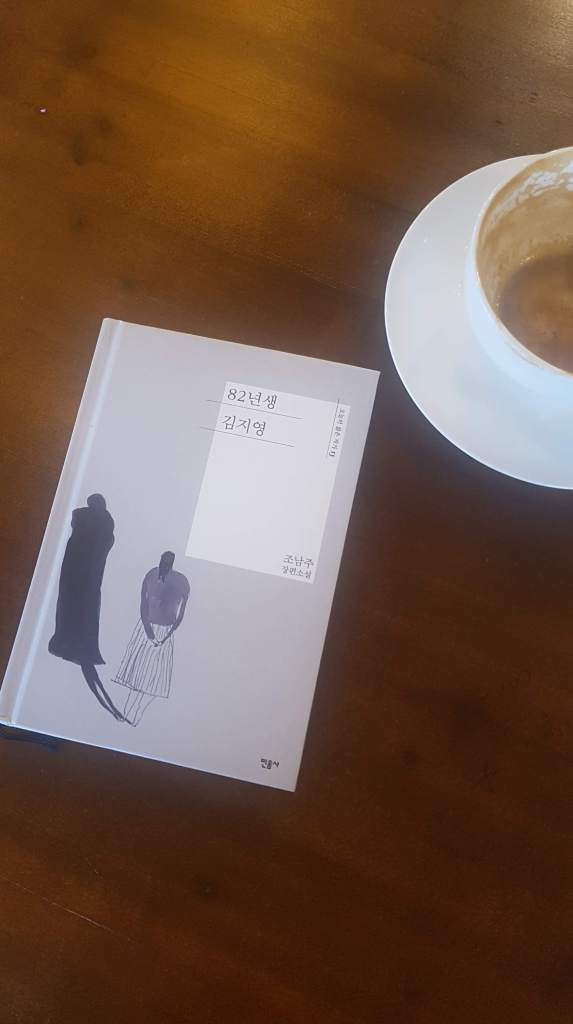
Kim Ji-Young was the most common baby girl’s name in Korea in 1982. Fittingly, the protagonist of this book is a very ordinary Korean woman. She’s a 33-year-old former marketer, well-married with a one-year-old daughter and a fairly pleasant, stable life. However, one day she starts channeling the voices and personalities of other women and her concerned husband takes her to a psychiatrist, who dutifully records her life history. If that story formed the bulk of the book it would be great, but instead, the narrative is mostly a very dry recital of Ji-Young’s childhood and coming of age up to the point of her breakdown. It’s stultifyingly normal, but there are moments that any woman can relate to–being forced to tolerate the bullying of little boys in school, being blamed for unwanted attention from men, the difficulties of moving up in the professional world and the thousand small irritations that come from marrying a well-meaning but basic man in a world determined to favor him over you. While there are a lot of Korea-specific cultural references, Ji-Young really is an everywoman and I’ve had many similar experiences to hers, even though I was born a year earlier and literally half a world (and another culture) away. One thing that resonated with me that a lot of book bloggers are assuming is Korea-specific were the scenes involving Ji-Young’s parents favoring her younger brother over her and her older sister. Miles away, at around the same time, my younger sister and I both had the same worries when our mother had a baby boy. Family jury’s out on whether or not she ever favored him, but the cultural framework was there for me, at the age of seven or eight, to talk to my mother about it with all the gravity I could muster up at that stage of development.
However, despite the familiarity of her experiences, Ji-Young herself is nearly impossible for me to relate to. She has an infuriating lack of agency and inner thought–she’s a perfect victim and it’s only her privilege as a member of a stable family who support her financially that keeps her life from being far, far, worse. I found myself frustrated by how safe and protected she actually was and how little she did with that foundation. She’s a flabby marshmallow of a woman who goes along with everything that happens to her and comes out far better than a lot of women do despite that. This is only highlighted by the fact that most of the other women in the story–her mother, her sister, her first boss–all have much more developed, layered personalities, in my opinion. ⠀
Photo 2020, M Watkins
This book is important, and I get that. It speaks to a nation, a gender, and a generation. But in the end, its dry style and meticulous footnotes on gender inequality seem to reach a rather cold conclusion–that women should be treated better because it’s good for the economy and social logistics, not because we are also living breathing human beings with minds and hearts and desires of our own. I recognized Ji-Young’s struggle, but through her story neither she nor I see any way forward for women in society. Fortunately, this is just a book and there are in fact ways to claim agency and equity as a woman in the world, but this book certainly doesn’t approach any of them. ⠀
An observation about the English translation of this book; I read the original Korean and the English simultaneously and can’t help but hope for a good clean re-edit for the next printing. The dialogue is strangely slangified in some places, the choices of which cultural points to explain over others is rather peculiar at times, and there’s a lack of attention to small details–for example, a few names have their syllables transposed–that shocked me. It speaks to the overall style of the original novel though, that none of these gaffes change the overall sense of the work, only muddling the details. ⠀
A few final notes; this book was made into a film in 2019. I haven’t seen it yet, but if the trailer is any indication, it’s gone a long way to make Ji-Young and her blandly progressive husband much more sympathetic human beings(which is what happens when you cast A-list actors, I suppose.)
if you find yourself wanting to read this book, consider doing so in a way that supports sustainability, community, and this blog–through your local library, or by ordering it from indie bookshop portal Bookshop, HERE.
(As a Bookshop affiliate, I earn a commission from all purchases at that link.)
That’s it for now, fellow readers. On to some fantasy fiction next.
3 stars and a banner of burning bras to Kim Ji-Young, Born 1982.
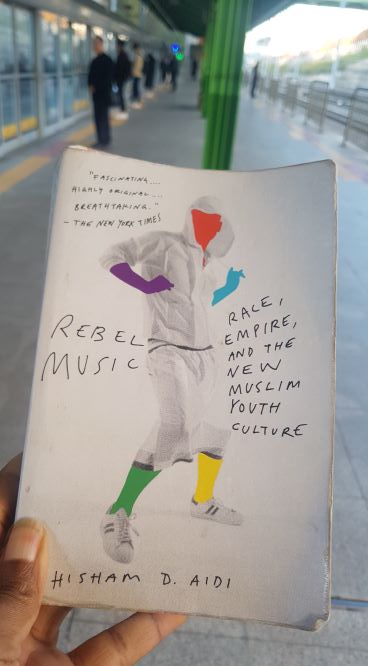
⭐⭐⭐⭐⭐ It is *really* hard to try and write a concise review of Rebel Music simply because there’s so much to talk about. In contrast to the polemics of a lot of popular writing about Islam, Aidi instead takes us on a cultural tour of music in and of the Muslim world.
It’s a vast and intricate experience with lots of stops along the way. Some of those stops–the US, the UK, France, Turkey and of course North Africa and the Middle East–are familiar and expected. Others–Poland, Belgium, Brazil–are full of surprises. All along the way Aidi interweaves threads of race, class, migration, politics and public discourse, but the focus always tilts back towards how that has shaped music and what the meaning of “cool” has been in Islamic culture in different places over time. A lot of it is connected to Blackness, specifically the American variety–I was surprised to see how tightly interwoven the stories of Black Americans and Muslim migrants have been at various points across history.
Even though I was pretty familiar with Islam before receiving this book as a gift, it still took me over a year to read it in slow savory bites that pointed me towards questions to ask and places to visit in the real world. This isn’t a particularly religious book but it’s heavy on the art/history/culture/race theory/music. I’ve learned a lot from it. I’ve also added about 10 new artists to my regular music rotation, like Algerian jazz supergroup El Gusto. (You’re welcome.)
This is a deep, intense, world-spanning read written by a true expert and I highly recommend it. Buy it HERE. 5 out of 5 stars.
(I am an affiliate of Bookshop.org— if you click through and make a purchase at any of the links on this page, I will earn a commission. Thanks for reading! )
It took me a long time to re-read The Bluest Eyethis go-round–not because it’s a difficult or complicated read, but because the prose is so dense and delicious that reading it is like eating an expensive dessert. I savored each sentence slowly, not wanting the book to end.
From the first simple sentence, (“Here is the house.”) Morrison immerses us in 1940s Ohio and the intense world of sad little Pecola Breedlove and her schoolgirl friends Frieda and Claudia. The girls are black and female in a time and place with no great love for either of those things, and Pecola is so marked by external and internal hatred that she longs for blue eyes. This takes her to the point of mental catastrophe–that isn’t a spoiler. If anything, it’s a trigger warning, because this book does get quite grim and it has nothing to do with Pecola’s eyes, in the end.
The story explores issues of race, class, gender, the impossibility of beauty standards, and the deep vulnerability and systemic victimization of women, specifically black women, deftly and painfully. More than that, though, it struck me on this re-read that this book is also an exploration of what happens in communities when people are made powerless by their desperation to be loved in a world which has no intention of loving them.
The prose is beautiful and the story is poignant and hauntingly personal while maintaining a respect for the people represented within. There is violence, abuse, assault, deep pain, misguided attempts at healing and all the horrifying aftermaths of those things–but there are also beautiful days, deep family bonds and enduring friendships. No one is entirely a villain, a hero, or any other trope. Ultimately, this book is a truthful and unflinching examination of a slice of humanity and well worth a read or re-read.
(If you want to read Pecola’s story, consider ordering it HERE from Bookshop.organd supporting indie booksellers and this blog. I am an affiliate of Bookshop and will earn a commission if you click through and purchase. Thanks! )
⭐⭐⭐/5⠀ 💑⠀ A while ago I re-read the classic, yet embarrassingly dated and racially insensitive Indian Romance Career Achievement award-nominated novel Brave Heart. Ever since then I’ve been keeping an eye out for something to read by an indigenous author as penance because there are alarmingly few Native American authors in my overall reading rotation. ⠀ 💏⠀ I first heard of Heartbeat Braves via a review by @thunderbirdwomanreadsand added it to my reading list immediately. It’s the first of a 4-part series about the love lives of workers at the fictional Crooked Rock Urban Indian center, somewhere in California. The author, Pamela Sanderson, is a citizen of the Karuk tribe. I’d never seen a romance novel written by and about indigenous American people before so this seemed like a great choice for something light and fun. 👫🏽⠀
It’s a typical romance novel. The central couple, Henry and Rayanne, are young but also relatively drama free–the main plot conflicts come from their jobs. They themselves have an astonishingly healthy relationship (emotionally), as romance novels go. However, Henry, our male protagonist is–sorry, y’all–kind of a loser. He doesn’t mean to but he’s got definite bum tendencies. His lady love Rayanne, in contrast, is very type A, organized, on top of everything and doesn’t ever seem dumb enough to fall for a dude who manages a band and squats in a condemned building just because he’s fine–yet she does. I guess opposites attract. There are plenty of real life couples like this, sure, but I didn’t enjoy reading about one in a straightforward romance, and it lowered the rating of the book quite a bit for me. Otherwise, it’s cute, light and sweet with some interesting cultural touches and a welcome sense of social awareness. 💘⠀ Three stars and gainful employment to Heartbeat Braves. ⠀ 😁⠀
(If you’re interested in reading this book yourself, consider ordering it HEREfrom Bookshop.org and supporting indie booksellers and this blog. I’m an affiliate of Bookshop and will earn a commission if you click and order! Thanks!)
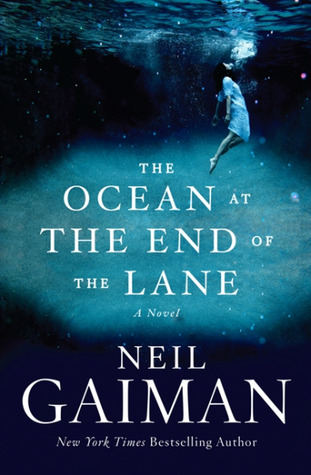
This book is like a collaboration between Stephen King and Roald Dahlafter a brief consultation with C.S. Lewis and H.P. Lovecraft. It’s weird and whimsical and dark and otherworldly and veddy, veddy British. It should be awesome but it’s mostly just…okay.
It took me a long time to get into this short tale of British farmhouse faerie and an abrupt end to childhood. The first quarter of the book is so rambling and aimlessly melancholic that by the time things really began happening, I felt unprepared. This is unlike anything Gaiman has ever written, and in that way is a bit disappointing for me as a long-time fan. I can’t help but think that if this is a reader’s introduction to him, they’d be disappointed by his other work.
It’s not a bad book, though. The ending is one of the more emotionally interesting ones I’ve come across lately, the story has a classic fairy tale grace and triumph, and it’s descriptively lush. It’s not particularly compelling either–as stated before, it takes too long to get going and the characters are all a bit too familiar–precocious children, mean adults and a lot of one-dimensional not-quite-women. It’s worth borrowing but not buying.
(However, if you insist on buying it, please consider doing so HEREvia Bookshop.org, supporting both indie booksellers and this blog. I am an affiliate of Bookshop and will earn a commission if you click on any of the links in this blog to make a purchase. Thanks! )
“I have spent most of my life adrift in hollow silos, a bee whirling around in an empty can.”
Landa Mabenge is a very interesting person. He grew up in an abusive home and struggled through alcoholism, poor mental health, and bad relationships as a young adult in addition to struggling to find support through coming out and getting gender affirmation treatment. Now, he’s an activist and advocate for transgender health issues and adult recovery from abuse. He describes this journey with such a clear desire for personal purpose that readers can’t help but be in his corner from the first page, even through some very dark experiences.
Despite the title, Becoming Himis not really a memoir about being trans. It is the memoir of a trans man–a small distinction but an important one, I feel. Mabenge himself says that the gender affirmation process was only one part of his life–an important part, but not his entire life. There’s a lot more to Landa than just his gender and he makes it clear that he’s very much a normal man living an extraordinary life. While there are abnormal and dysfunctional things in his story, being transgender isn’t one of them. He writes with himself as default, a powerful thing for a “diverse” writer to do, and very effective. Ultimately, the memoir is about recovery, affirmation, and moving continually upward through life towards one’s personal purpose. I personally found it very relatable and inspiring.
Relatable as I found this, it’s the first book by a Black South African writer I’ve ever read, and only the second book I’ve read about a transgender man.(The first was Parrotfish, if you’re curious.) I know that there were plenty of references to transgender experience and South African culture in the text that I missed completely. As it was, I looked up a lot of things while reading. I didn’t mind it since that’s part of why I read. I did mind the TedTalk tone of some parts of the book, and the Jedi hand waving over what seems to be an abusive streak in Mabenge’s own personality as well.
This review was originally written in 2019–imagine my surprise when I discovered that Mabenge has, in fact, given a TedTalk–and its quite good!